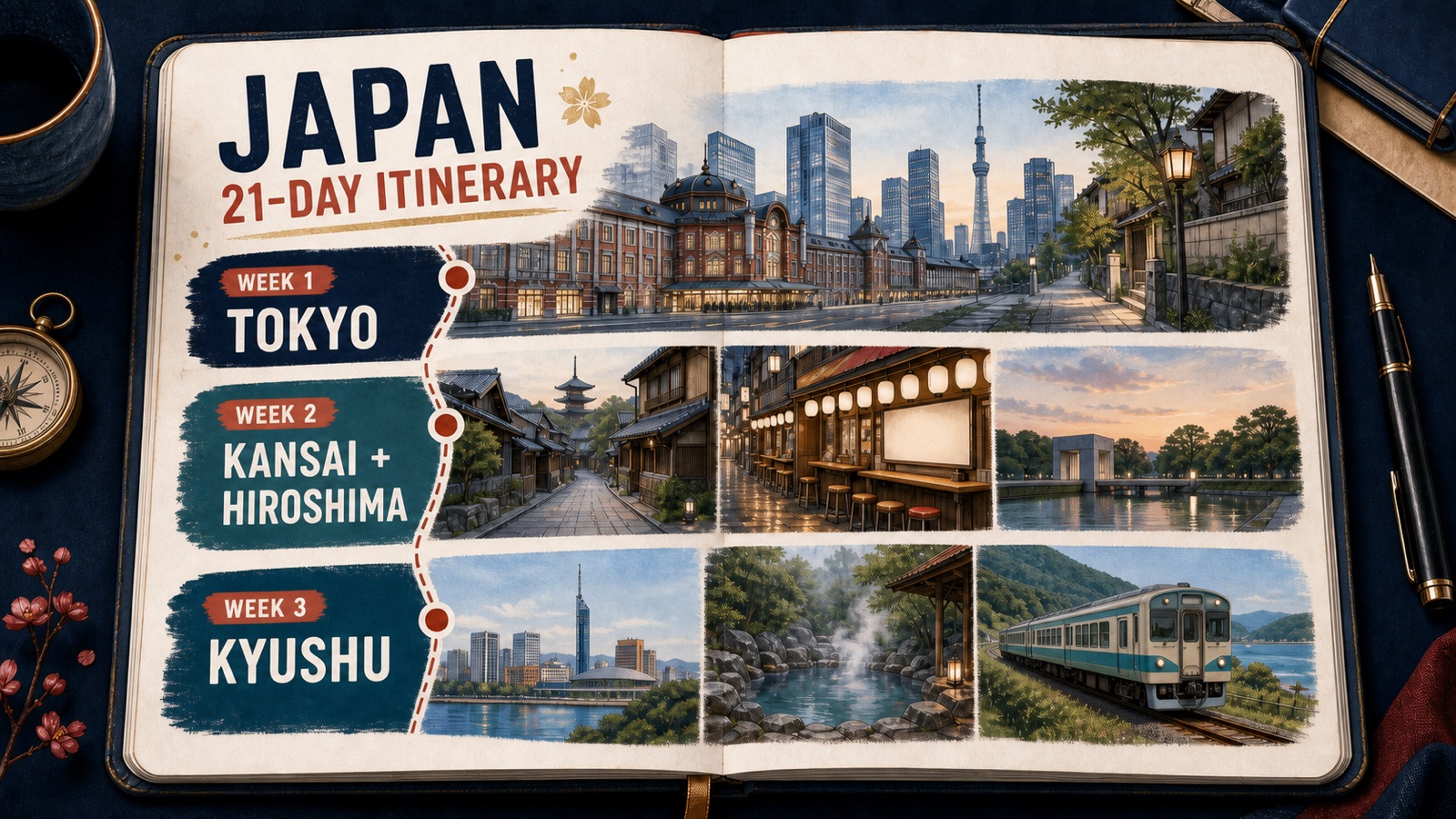
Original AI-assisted editorial illustration
A non-geographic three-week trip journal that separates Tokyo, western Honshu, and Kyushu planning stages. AI-generated by Japan Trip Tools; schematic and not an official operator graphic.
- Origin
- AI-generated original
- Credit
- Japan Trip Tools Editorial Desk
- Source
- Original image created for Japan Trip Tools
- Method
- OpenAI image generation via Codex
- Reviewed
- 2026-08-20
- Rights note
- Generated from an original editorial brief; online references were used only for factual context, not as image edit targets.
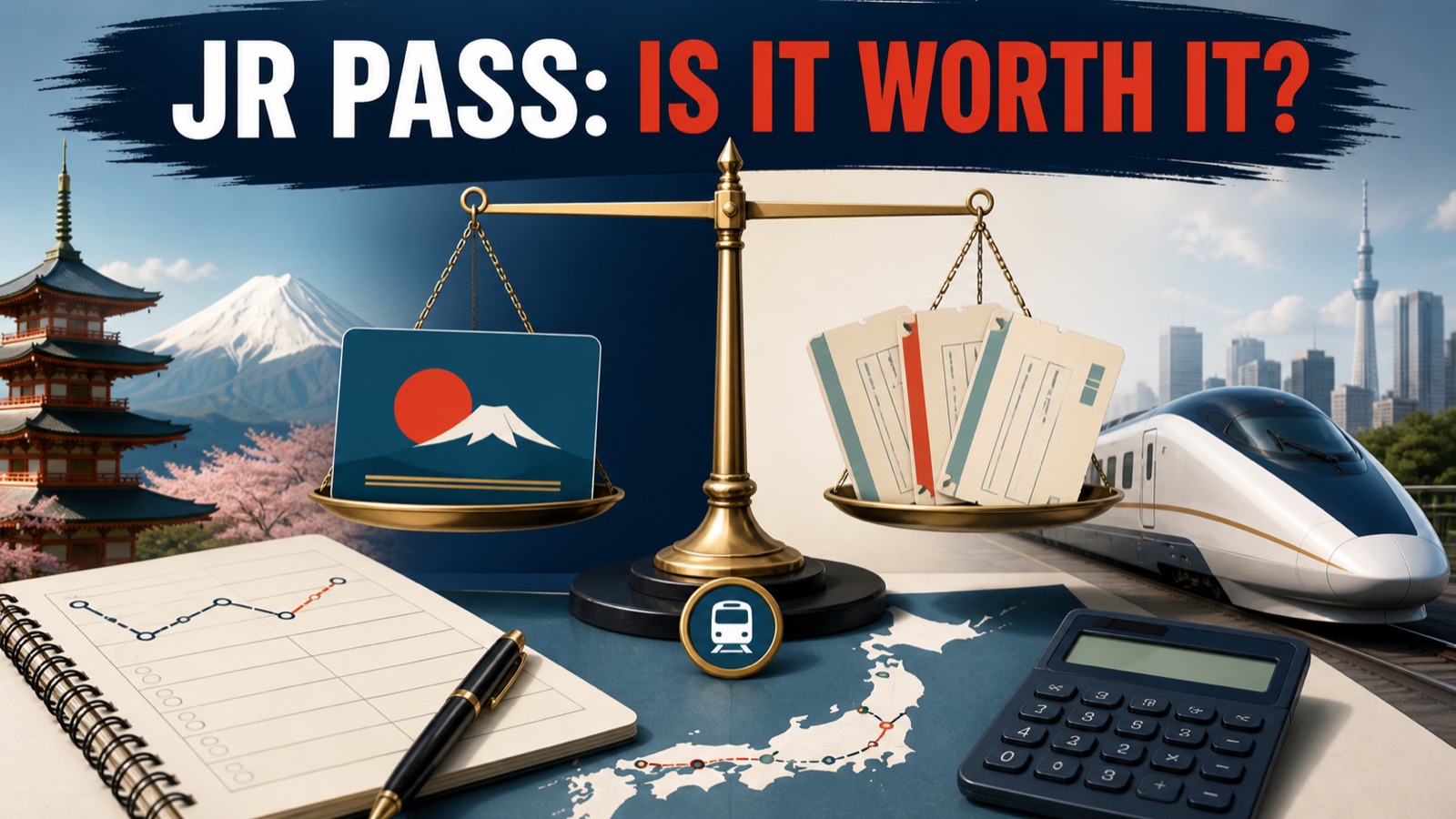
Original AI-assisted editorial illustration
A schematic comparison that reminds travelers to calculate their actual rail route before buying a pass. AI-generated by Japan Trip Tools; schematic and not an official operator graphic.
- Origin
- AI-generated original
- Credit
- Japan Trip Tools Editorial Desk
- Source
- Original image created for Japan Trip Tools
- Method
- OpenAI image generation via Codex
- Reviewed
- 2026-08-20
- Rights note
- Generated from an original editorial brief; online references were used only for factual context, not as image edit targets.
Original AI-assisted editorial illustration
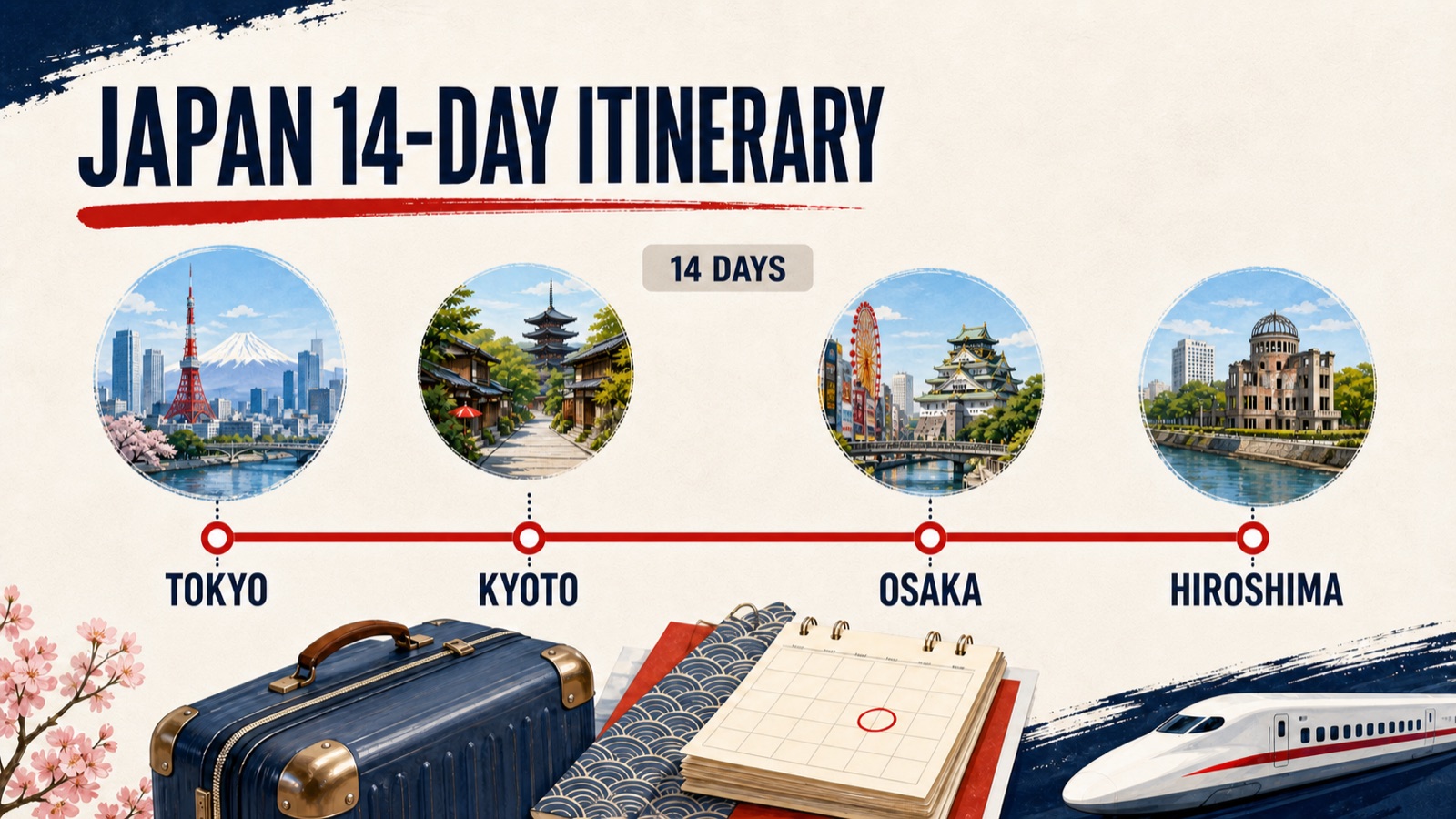
Destination overview, not the order of overnight stays: the revised route below visits Hiroshima before the final Osaka stay. AI-generated by Japan Trip Tools; schematic and not an official operator graphic.
- Origin
- AI-generated original
- Credit
- Japan Trip Tools Editorial Desk
- Source
- Original image created for Japan Trip Tools
- Method
- OpenAI image generation via Codex
- Reviewed
- 2026-08-20
- Rights note
- Generated from an original editorial brief; online references were used only for factual context, not as image edit targets.
Original AI-assisted editorial illustration
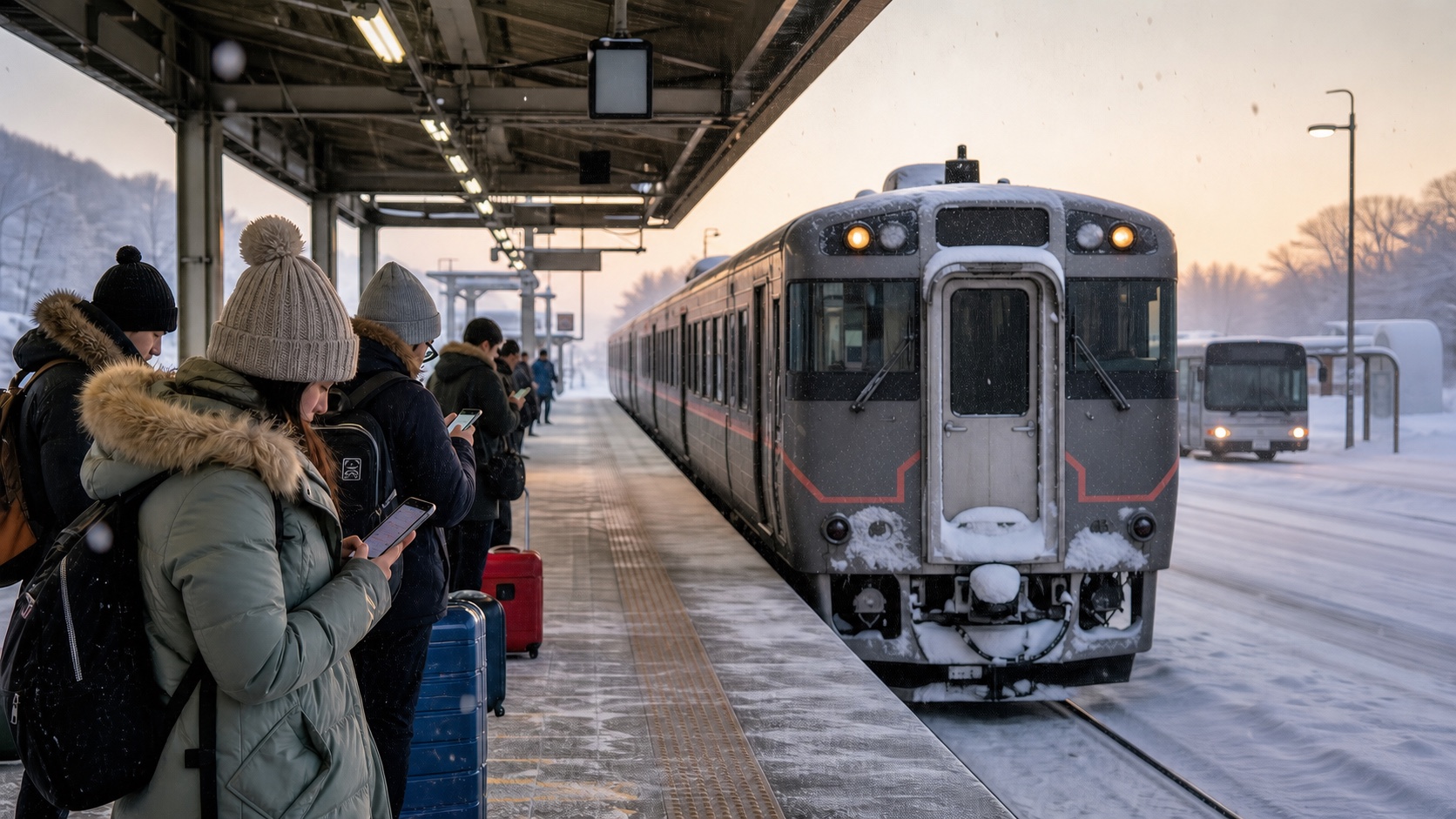
Check weather, operator status, and the next safe alternative before leaving the hotel, then protect fixed connections with an earlier transfer. AI-generated by Japan Trip Tools; schematic and not an official operator graphic.
- Origin
- AI-generated original
- Credit
- Japan Trip Tools Editorial Desk
- Source
- Original image created for Japan Trip Tools
- Method
- OpenAI image generation via Codex
- Reviewed
- 2026-08-30
- Rights note
- Generated from an original editorial brief; online references were used only for factual context, not as image edit targets.
Original AI-assisted editorial illustration
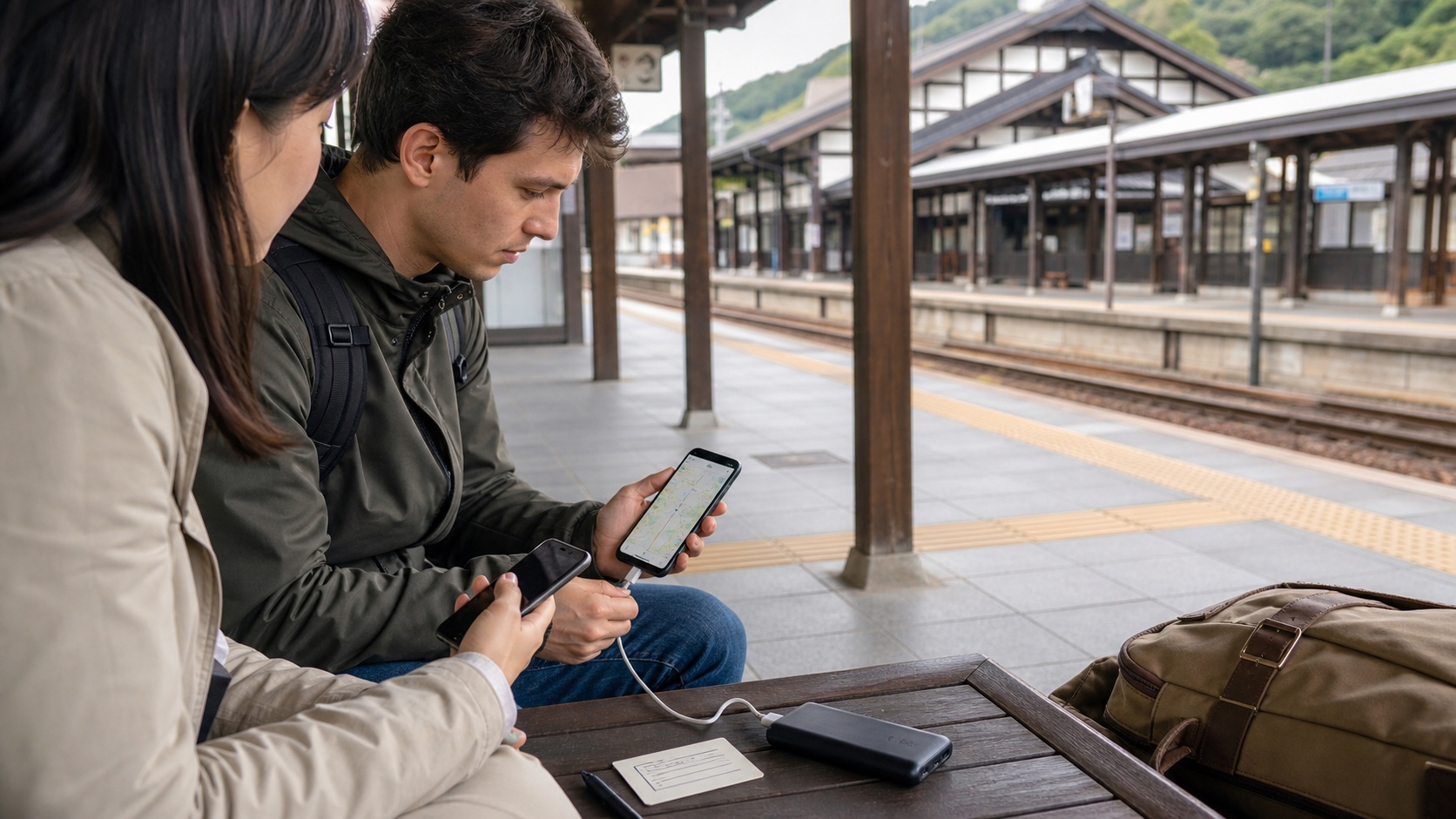
A resilient phone setup combines live data with offline addresses, tested maps, power, and a second adult who can continue the route. AI-generated by Japan Trip Tools; schematic and not an official operator graphic.
- Origin
- AI-generated original
- Credit
- Japan Trip Tools Editorial Desk
- Source
- Original image created for Japan Trip Tools
- Method
- OpenAI image generation via Codex
- Reviewed
- 2026-08-30
- Rights note
- Generated from an original editorial brief; online references were used only for factual context, not as image edit targets.
Original AI-assisted editorial illustration
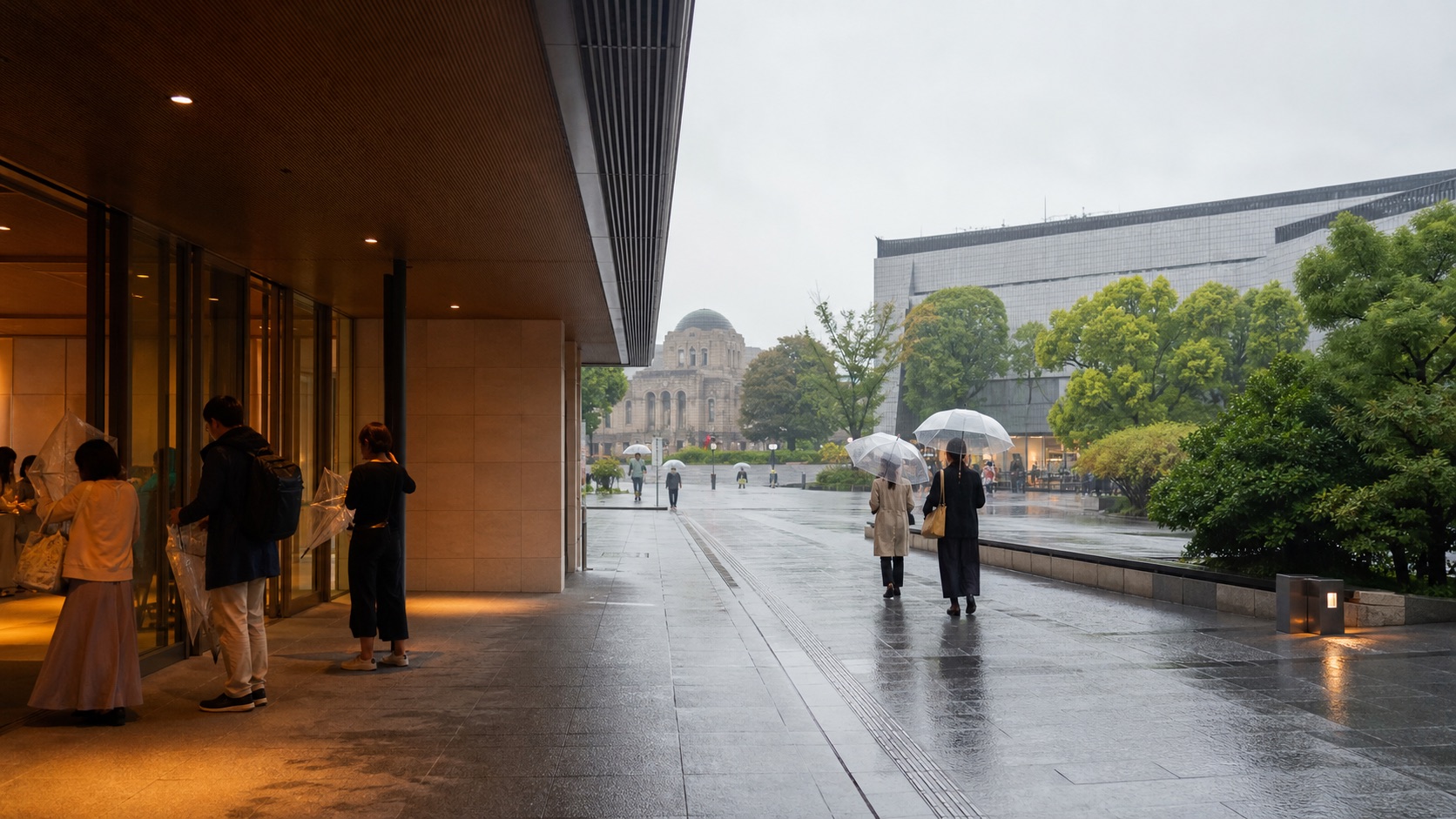
A good rainy-day museum plan chooses one Tokyo district, verifies one anchor exhibition, and keeps a nearby flexible backup. AI-generated by Japan Trip Tools; schematic and not an official operator graphic.
- Origin
- AI-generated original
- Credit
- Japan Trip Tools Editorial Desk
- Source
- Original image created for Japan Trip Tools
- Method
- OpenAI image generation via Codex
- Reviewed
- 2026-08-30
- Rights note
- Generated from an original editorial brief; online references were used only for factual context, not as image edit targets.
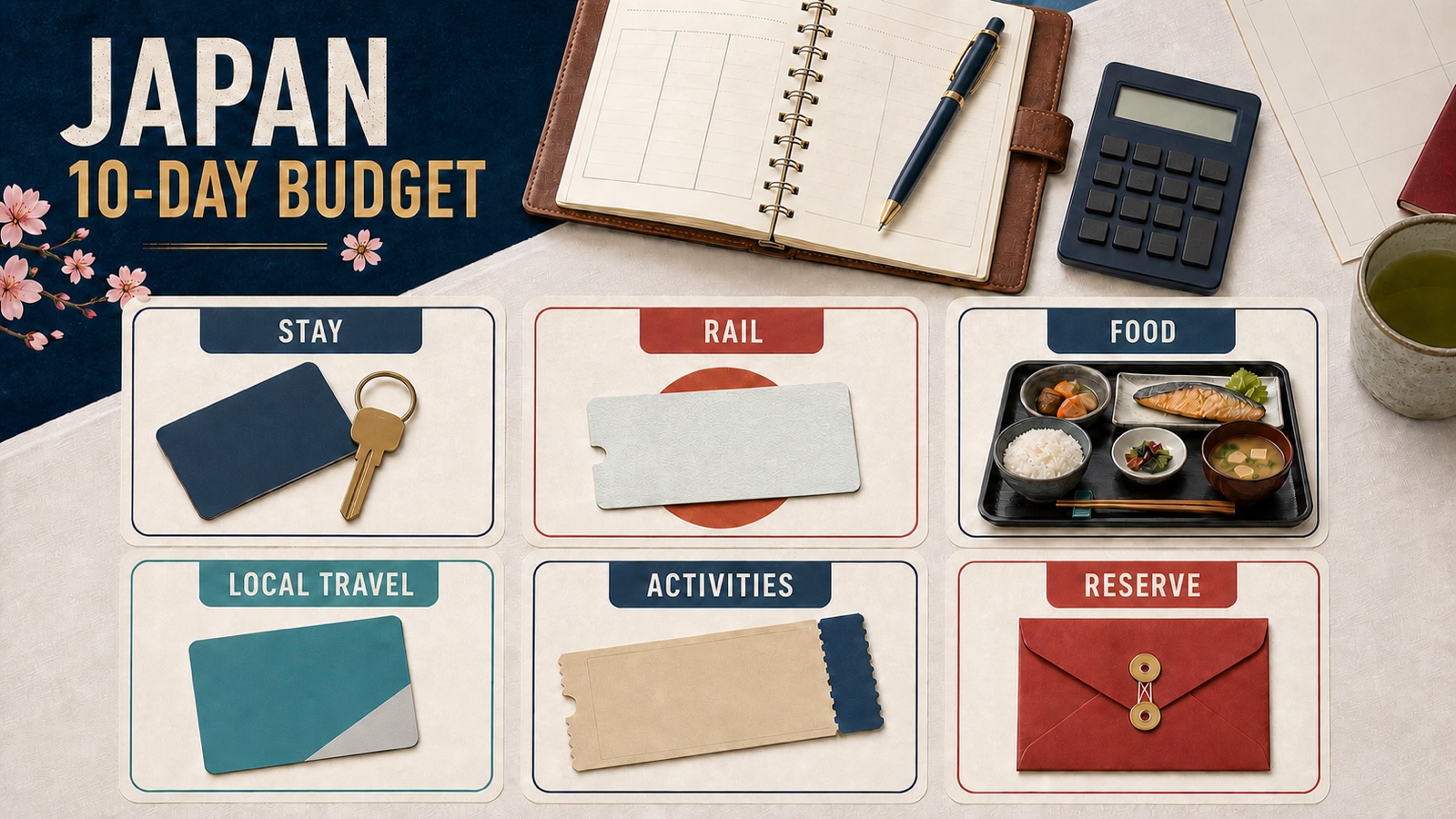
Original AI-assisted editorial illustration
Six budget categories to estimate before booking, shown without sample prices or savings claims. AI-generated by Japan Trip Tools; schematic and not an official operator graphic.
- Origin
- AI-generated original
- Credit
- Japan Trip Tools Editorial Desk
- Source
- Original image created for Japan Trip Tools
- Method
- OpenAI image generation via Codex
- Reviewed
- 2026-08-20
- Rights note
- Generated from an original editorial brief; online references were used only for factual context, not as image edit targets.
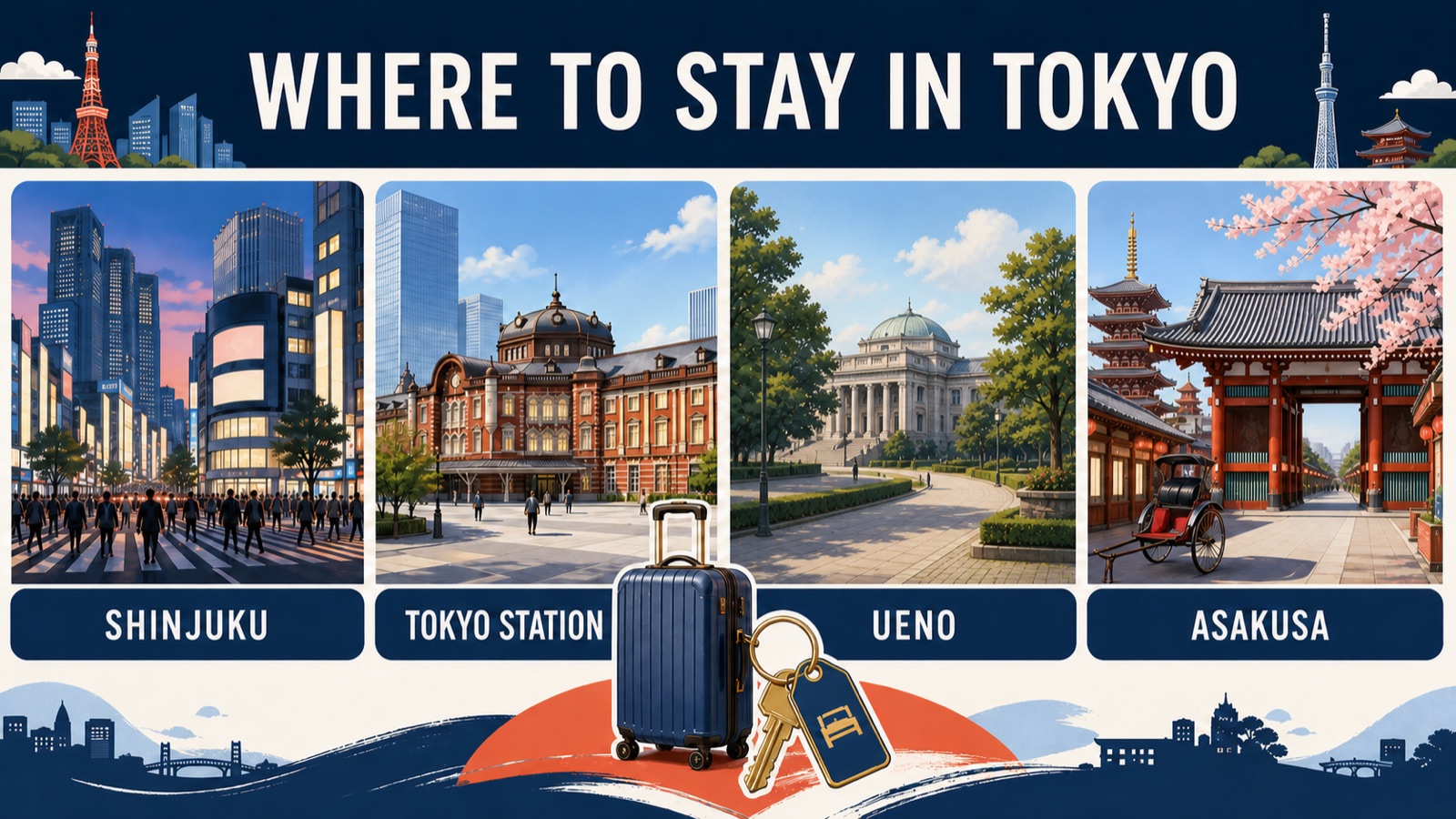
Original AI-assisted editorial illustration
Four Tokyo base styles shown as a neutral area comparison rather than a hotel ranking. AI-generated by Japan Trip Tools; schematic and not an official operator graphic.
- Origin
- AI-generated original
- Credit
- Japan Trip Tools Editorial Desk
- Source
- Original image created for Japan Trip Tools
- Method
- OpenAI image generation via Codex
- Reviewed
- 2026-08-20
- Rights note
- Generated from an original editorial brief; online references were used only for factual context, not as image edit targets.
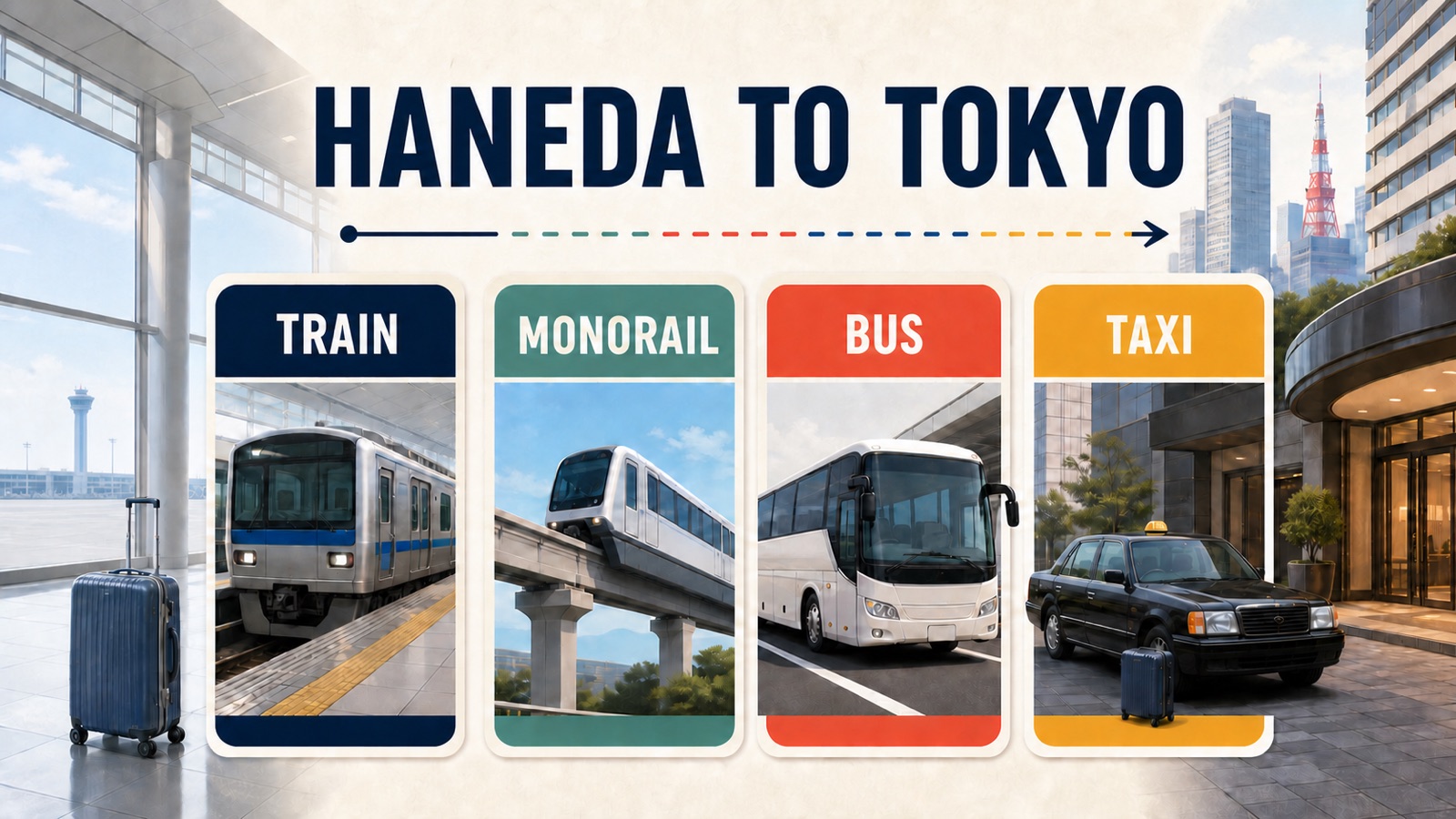
Original AI-assisted editorial illustration
A neutral Haneda transfer comparison showing four transport types without fares or time claims. AI-generated by Japan Trip Tools; schematic and not an official operator graphic.
- Origin
- AI-generated original
- Credit
- Japan Trip Tools Editorial Desk
- Source
- Original image created for Japan Trip Tools
- Method
- OpenAI image generation via Codex
- Reviewed
- 2026-08-20
- Rights note
- Generated from an original editorial brief; online references were used only for factual context, not as image edit targets.
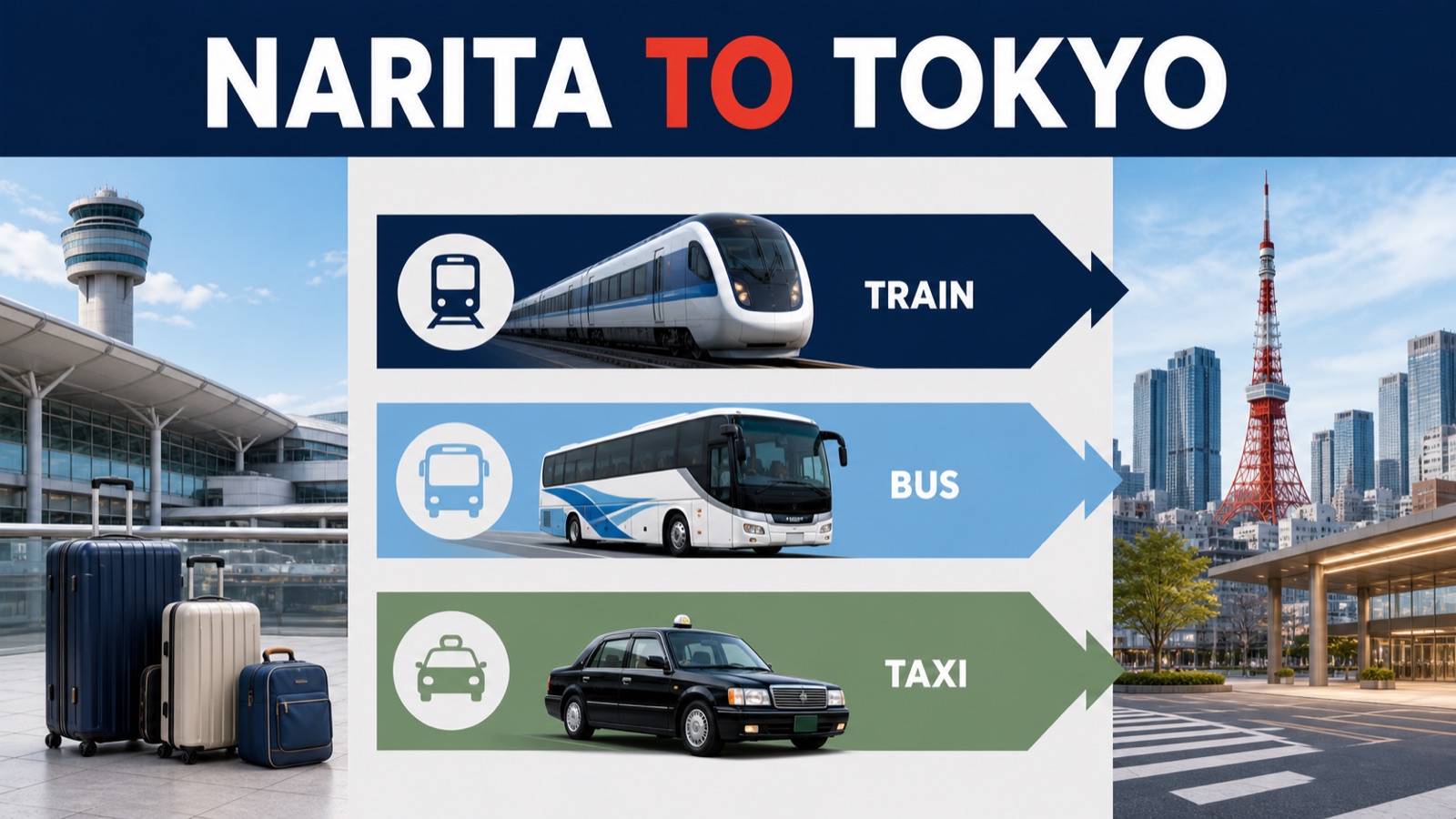
Original AI-assisted editorial illustration
A schematic airport-to-city comparison of train, bus, and taxi transfer choices. AI-generated by Japan Trip Tools; schematic and not an official operator graphic.
- Origin
- AI-generated original
- Credit
- Japan Trip Tools Editorial Desk
- Source
- Original image created for Japan Trip Tools
- Method
- OpenAI image generation via Codex
- Reviewed
- 2026-08-20
- Rights note
- Generated from an original editorial brief; online references were used only for factual context, not as image edit targets.
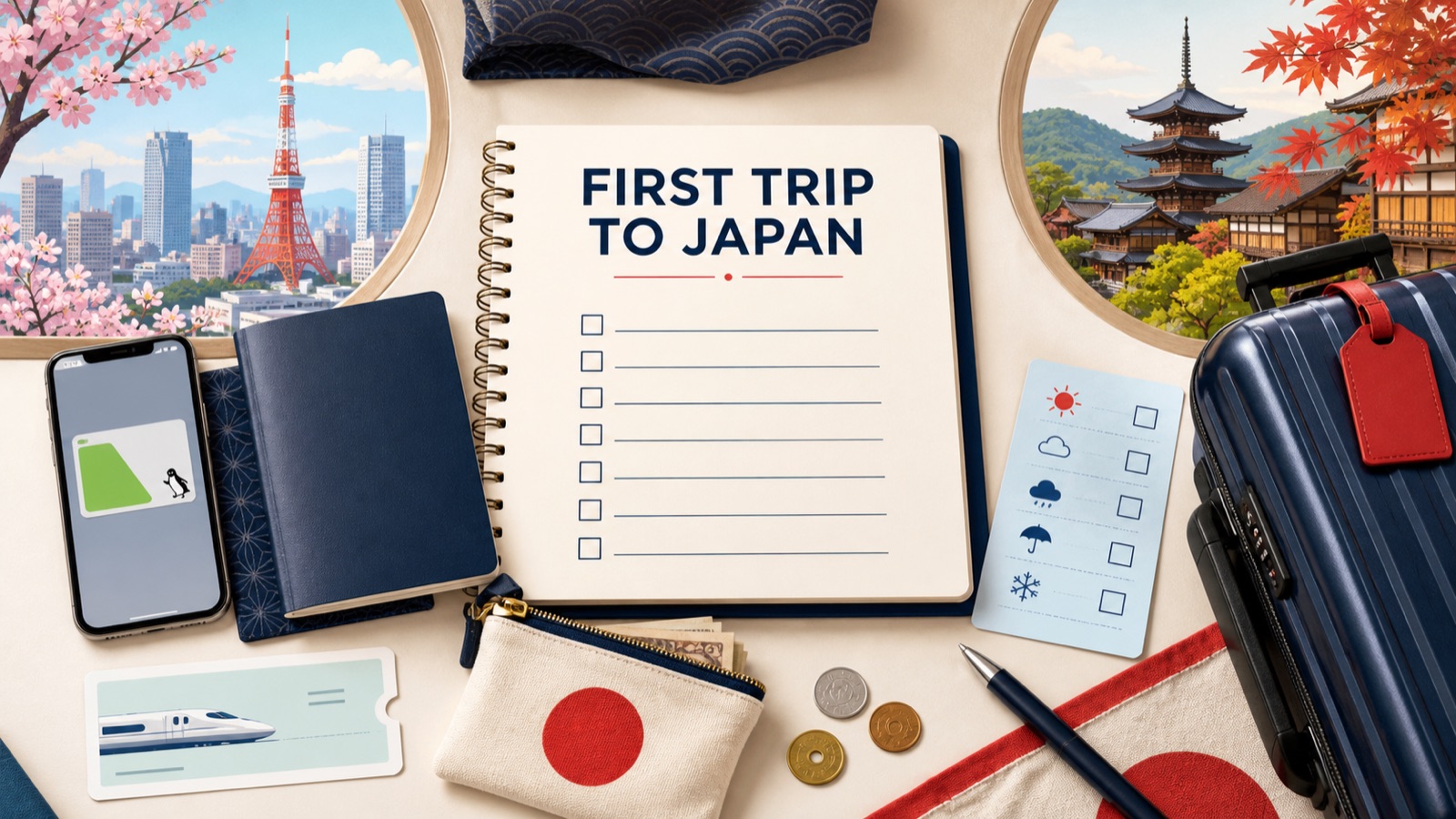
Original AI-assisted editorial illustration
A first-trip planning desk that emphasizes decisions to check before booking Japan travel. AI-generated by Japan Trip Tools; schematic and not an official operator graphic.
- Origin
- AI-generated original
- Credit
- Japan Trip Tools Editorial Desk
- Source
- Original image created for Japan Trip Tools
- Method
- OpenAI image generation via Codex
- Reviewed
- 2026-08-20
- Rights note
- Generated from an original editorial brief; online references were used only for factual context, not as image edit targets.
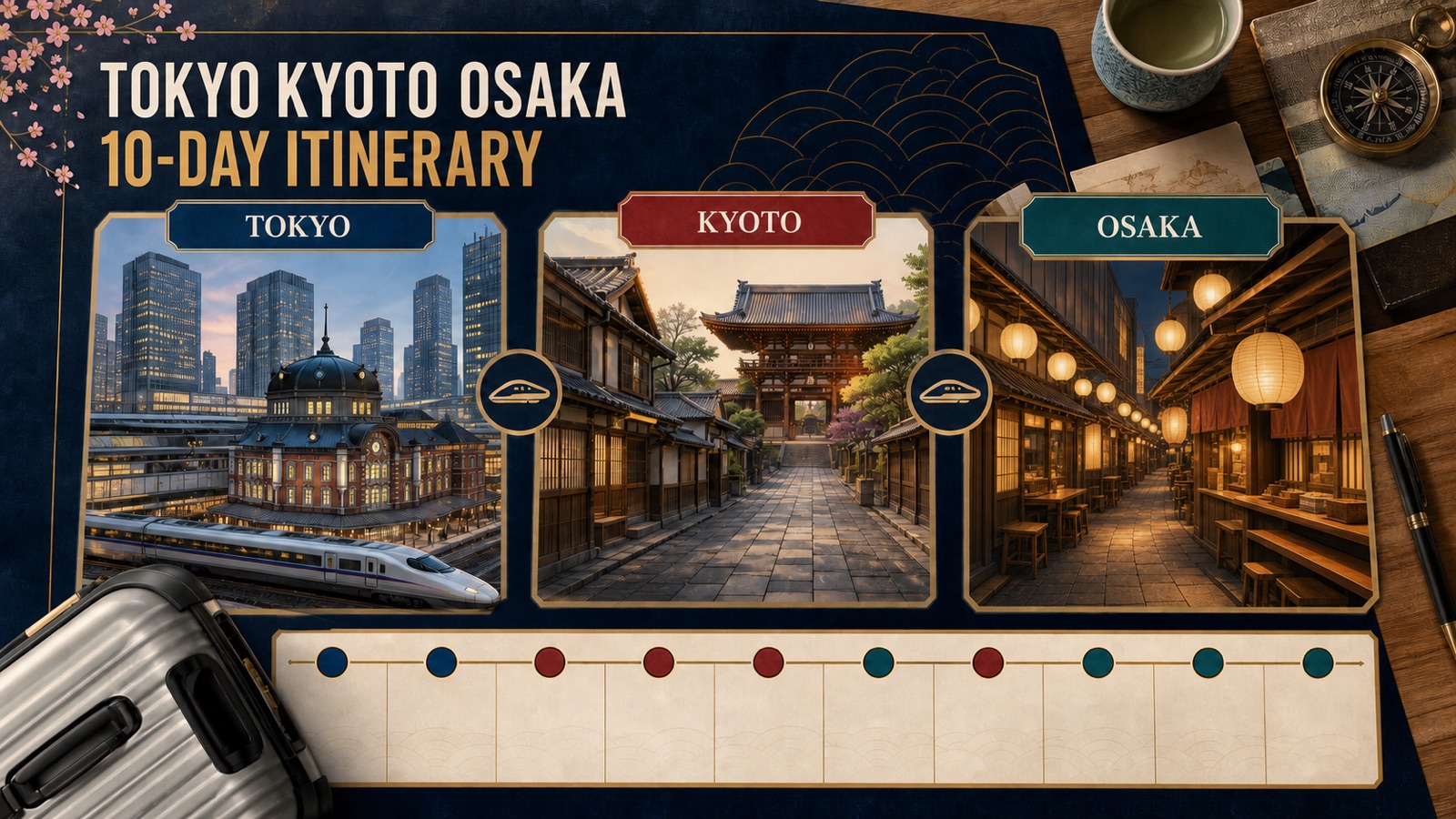
Original AI-assisted editorial illustration
A three-base planning board for organizing a first trip through Tokyo, Kyoto, and Osaka. AI-generated by Japan Trip Tools; schematic and not an official operator graphic.
- Origin
- AI-generated original
- Credit
- Japan Trip Tools Editorial Desk
- Source
- Original image created for Japan Trip Tools
- Method
- OpenAI image generation via Codex
- Reviewed
- 2026-08-20
- Rights note
- Generated from an original editorial brief; online references were used only for factual context, not as image edit targets.
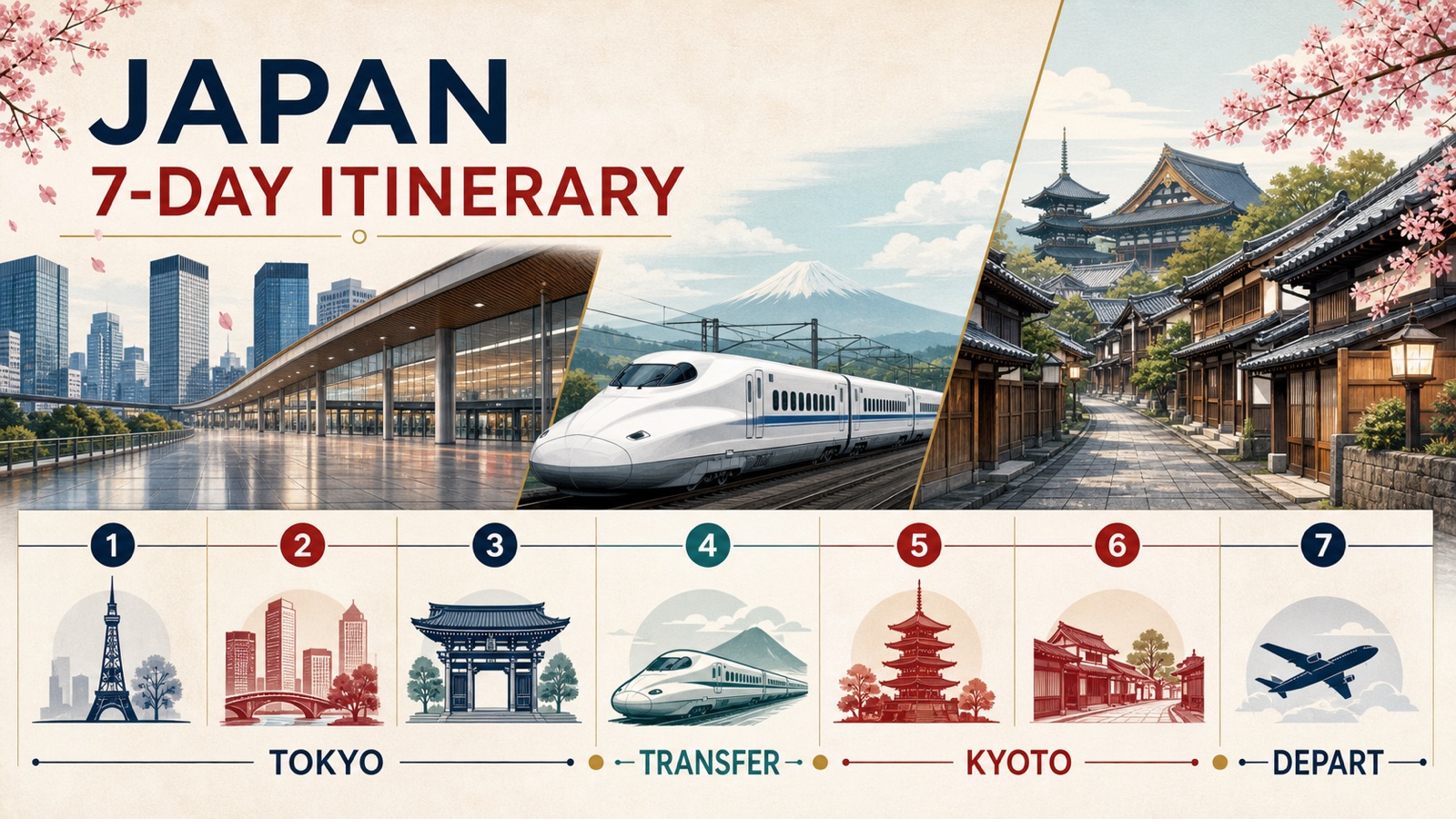
Original AI-assisted editorial illustration
A schematic seven-day route that keeps Tokyo and Kyoto as the two main travel bases. AI-generated by Japan Trip Tools; schematic and not an official operator graphic.
- Origin
- AI-generated original
- Credit
- Japan Trip Tools Editorial Desk
- Source
- Original image created for Japan Trip Tools
- Method
- OpenAI image generation via Codex
- Reviewed
- 2026-08-20
- Rights note
- Generated from an original editorial brief; online references were used only for factual context, not as image edit targets.

Original AI-assisted editorial illustration
A convenience store is a backup, not a guarantee: assemble a meal from verified ingredients and keep a second option nearby. AI-generated by Japan Trip Tools; schematic and not an official operator graphic.
- Origin
- AI-generated original
- Credit
- Japan Trip Tools Editorial Desk
- Source
- Original image created for Japan Trip Tools
- Method
- OpenAI image generation via Codex
- Reviewed
- 2026-08-30
- Rights note
- Generated from an original editorial brief; online references were used only for factual context, not as image edit targets.
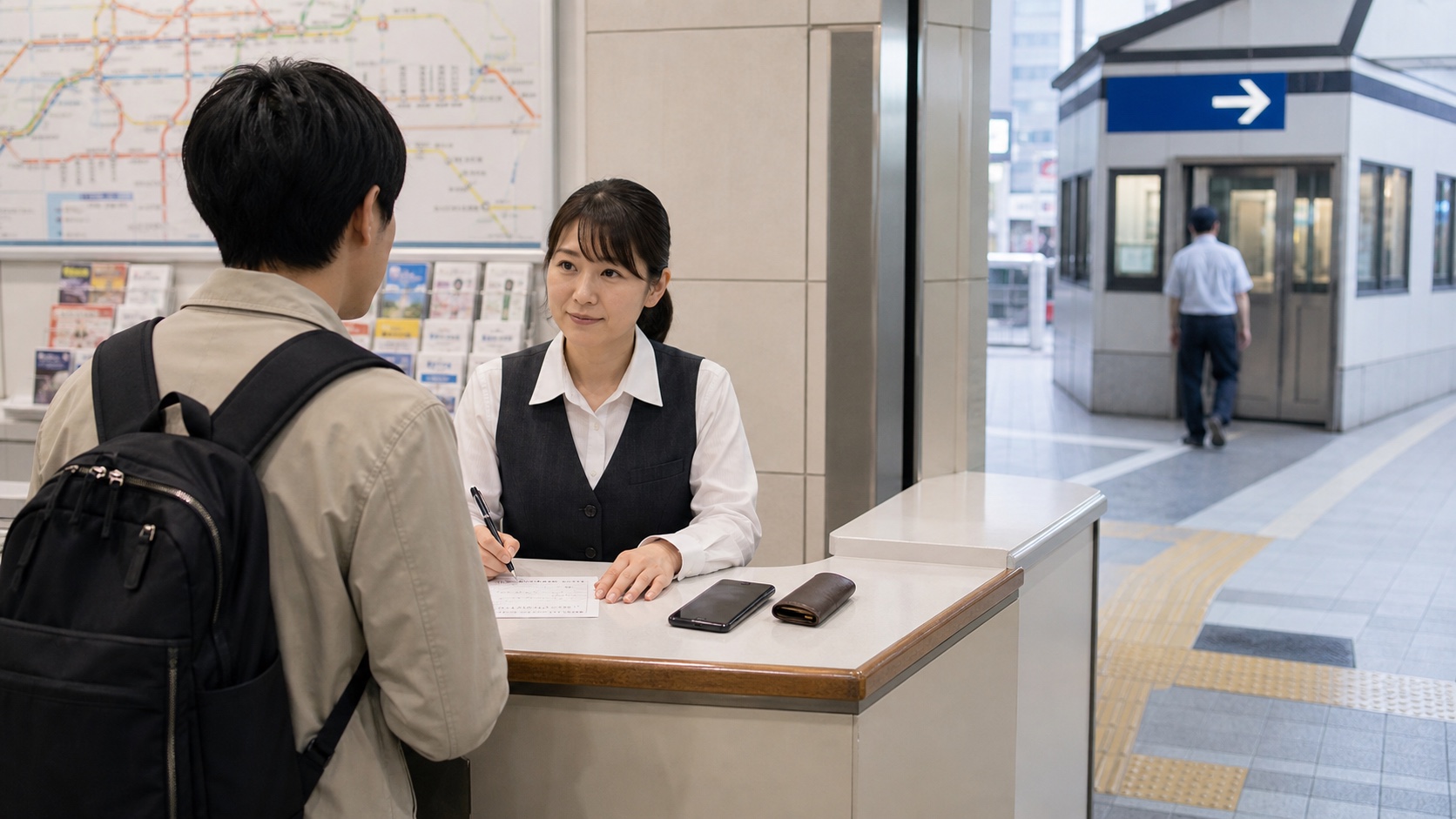
Original AI-assisted editorial illustration
Start with the place that controlled the space, protect cards and phones immediately, and keep every operator, police, and consular reference number. AI-generated by Japan Trip Tools; schematic and not an official operator graphic.
- Origin
- AI-generated original
- Credit
- Japan Trip Tools Editorial Desk
- Source
- Original image created for Japan Trip Tools
- Method
- OpenAI image generation via Codex
- Reviewed
- 2026-08-30
- Rights note
- Generated from an original editorial brief; online references were used only for factual context, not as image edit targets.
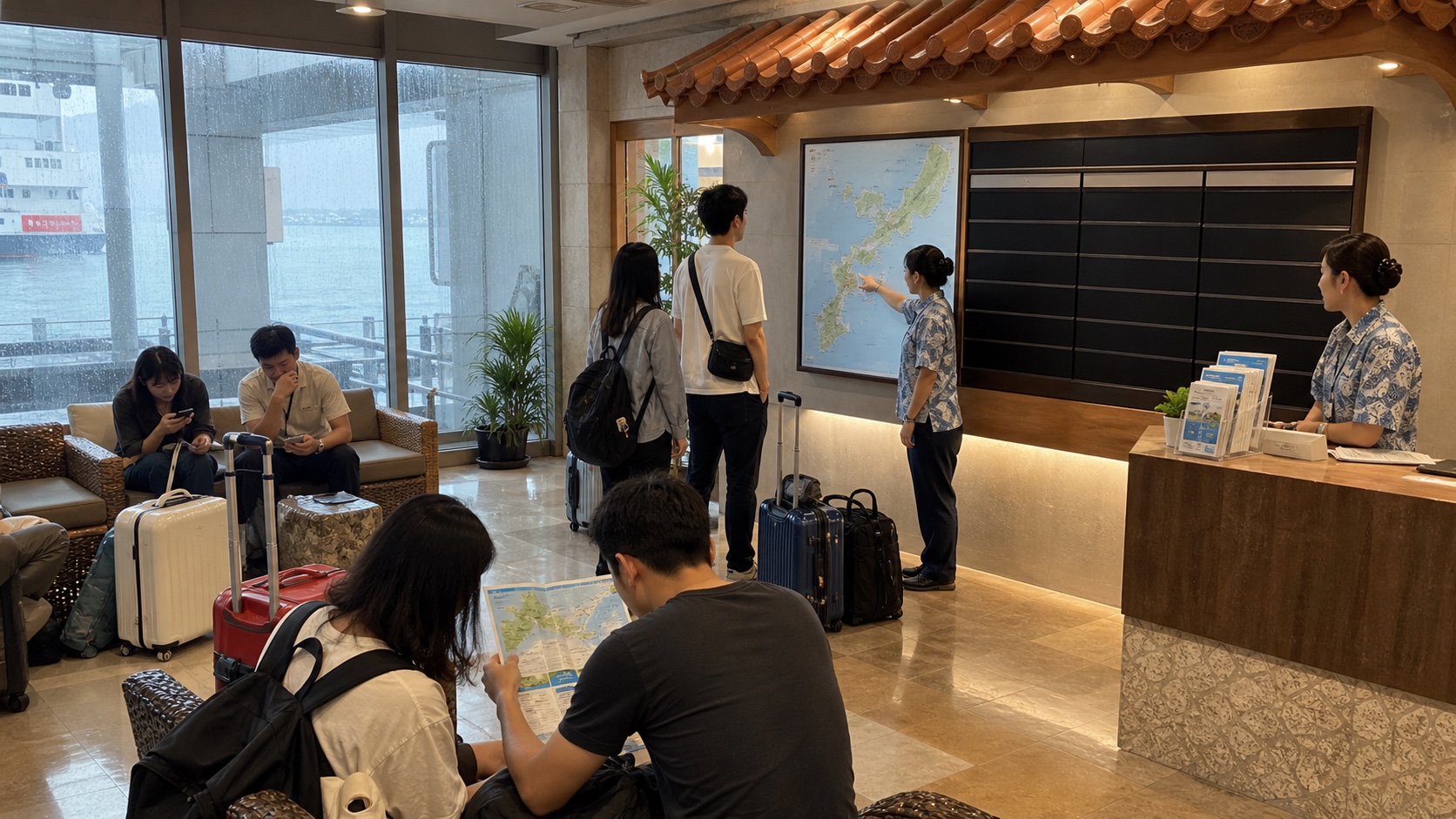
Original AI-assisted editorial illustration
A safe Okinawa typhoon plan protects the departure island, checks every operator, and treats the hotel as the fallback during an active warning. AI-generated by Japan Trip Tools; schematic and not an official operator graphic.
- Origin
- AI-generated original
- Credit
- Japan Trip Tools Editorial Desk
- Source
- Original image created for Japan Trip Tools
- Method
- OpenAI image generation via Codex
- Reviewed
- 2026-08-30
- Rights note
- Generated from an original editorial brief; online references were used only for factual context, not as image edit targets.
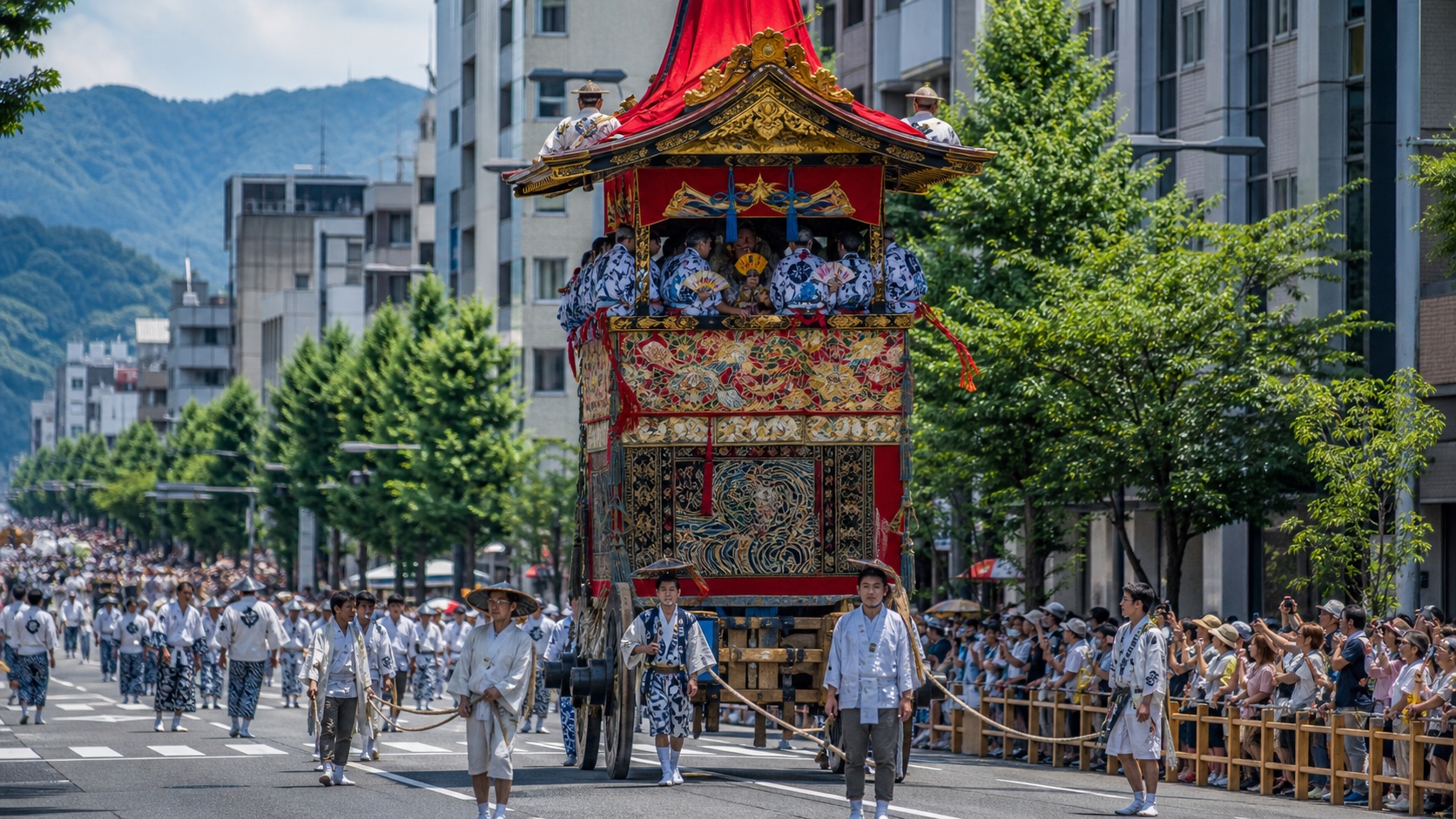
Original AI-assisted editorial illustration
Gion Matsuri planning begins with the current official calendar, the correct procession, heat safety, and respect for a living religious festival. AI-generated by Japan Trip Tools; schematic and not an official operator graphic.
- Origin
- AI-generated original
- Credit
- Japan Trip Tools Editorial Desk
- Source
- Original image created for Japan Trip Tools
- Method
- OpenAI image generation via Codex
- Reviewed
- 2026-08-30
- Rights note
- Generated from an original editorial brief; online references were used only for factual context, not as image edit targets.
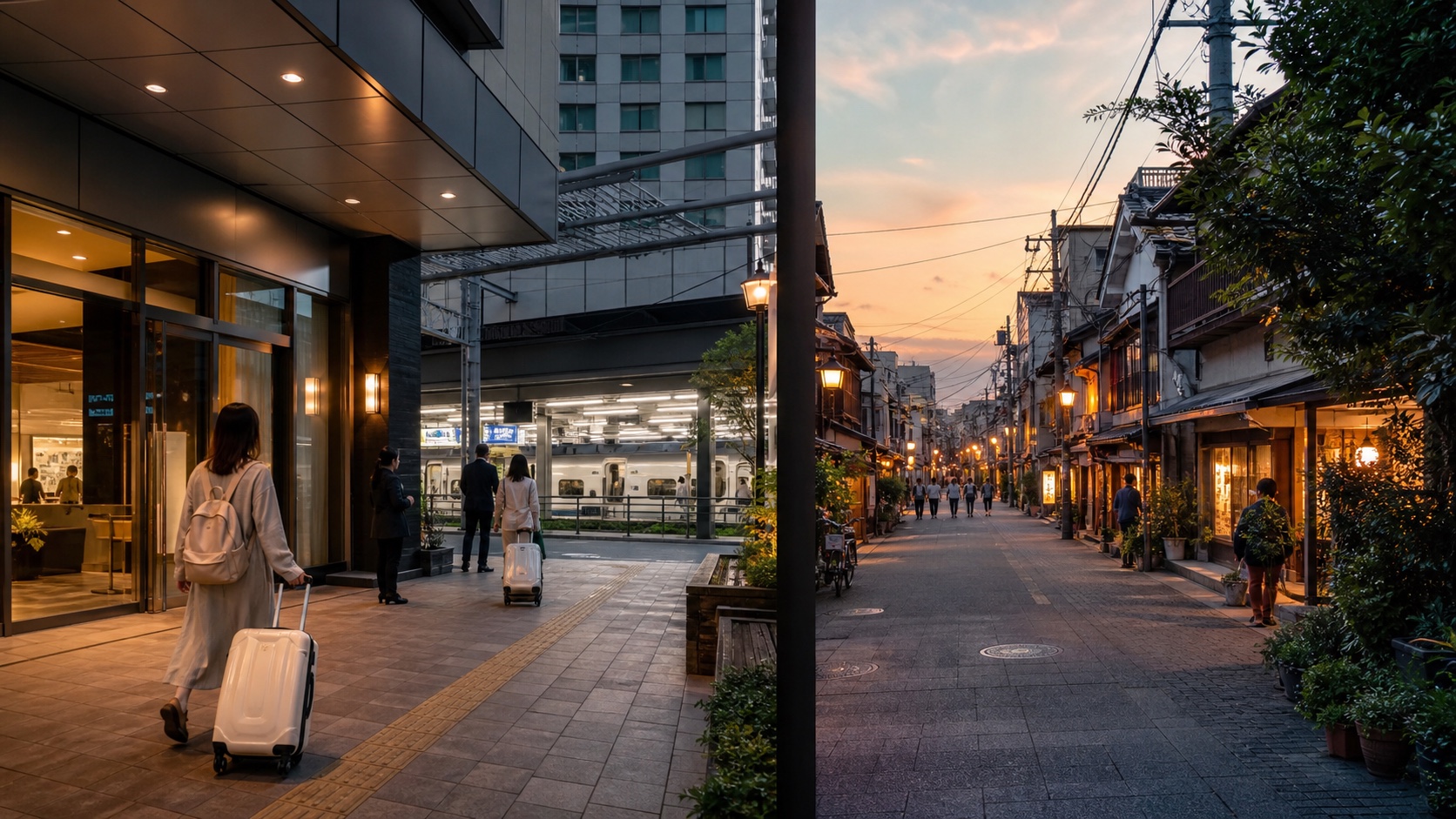
Original AI-assisted editorial illustration
The right hotel base reduces the hardest repeated movement: platform access for travel-heavy days or neighborhood comfort for a longer city stay. AI-generated by Japan Trip Tools; schematic and not an official operator graphic.
- Origin
- AI-generated original
- Credit
- Japan Trip Tools Editorial Desk
- Source
- Original image created for Japan Trip Tools
- Method
- OpenAI image generation via Codex
- Reviewed
- 2026-08-30
- Rights note
- Generated from an original editorial brief; online references were used only for factual context, not as image edit targets.
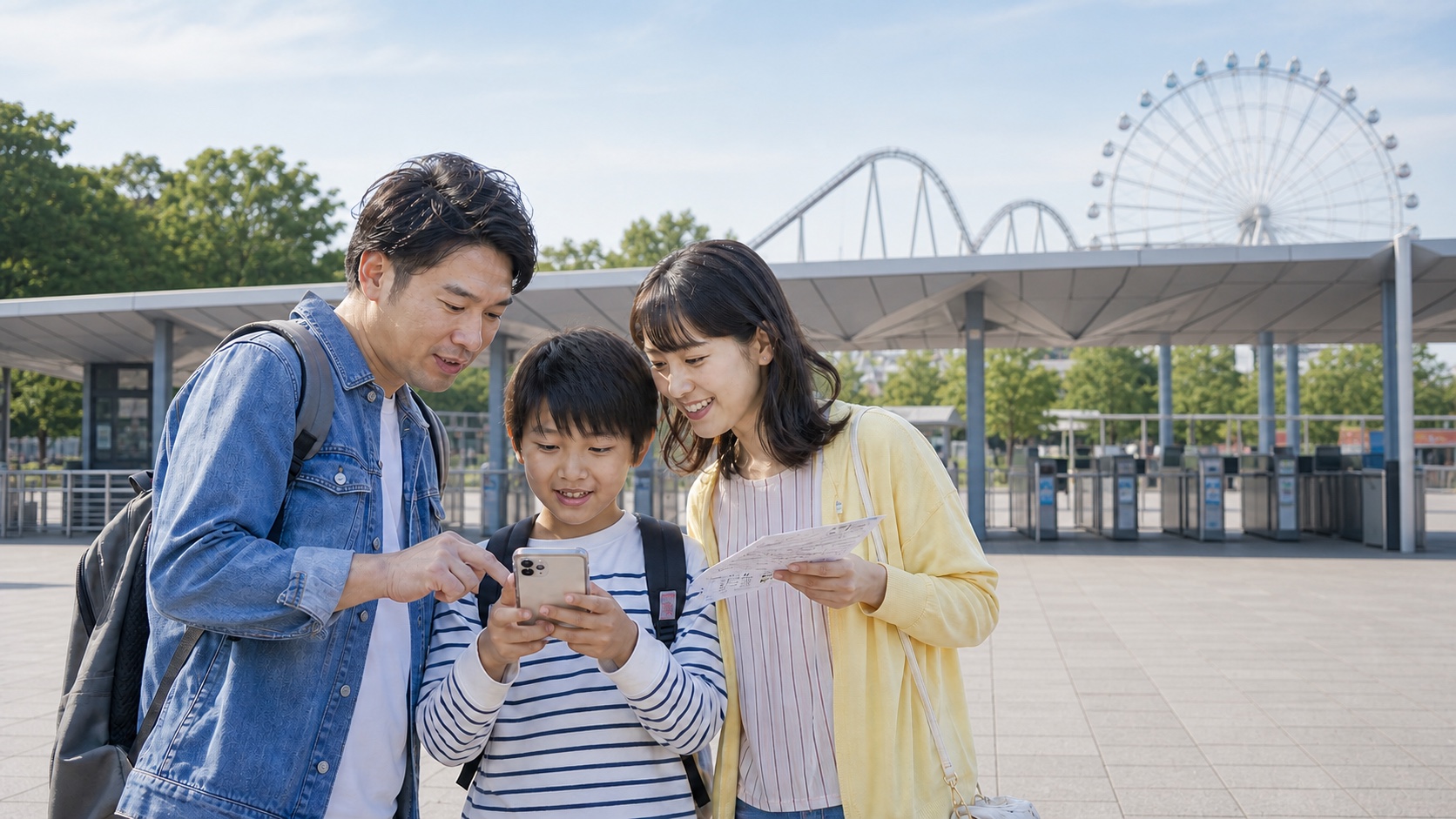
Original AI-assisted editorial illustration
A good theme-park day starts with current app rules, one attraction priority, and a fallback that does not depend on a discontinued service. AI-generated by Japan Trip Tools; schematic and not an official operator graphic.
- Origin
- AI-generated original
- Credit
- Japan Trip Tools Editorial Desk
- Source
- Original image created for Japan Trip Tools
- Method
- OpenAI image generation via Codex
- Reviewed
- 2026-08-30
- Rights note
- Generated from an original editorial brief; online references were used only for factual context, not as image edit targets.
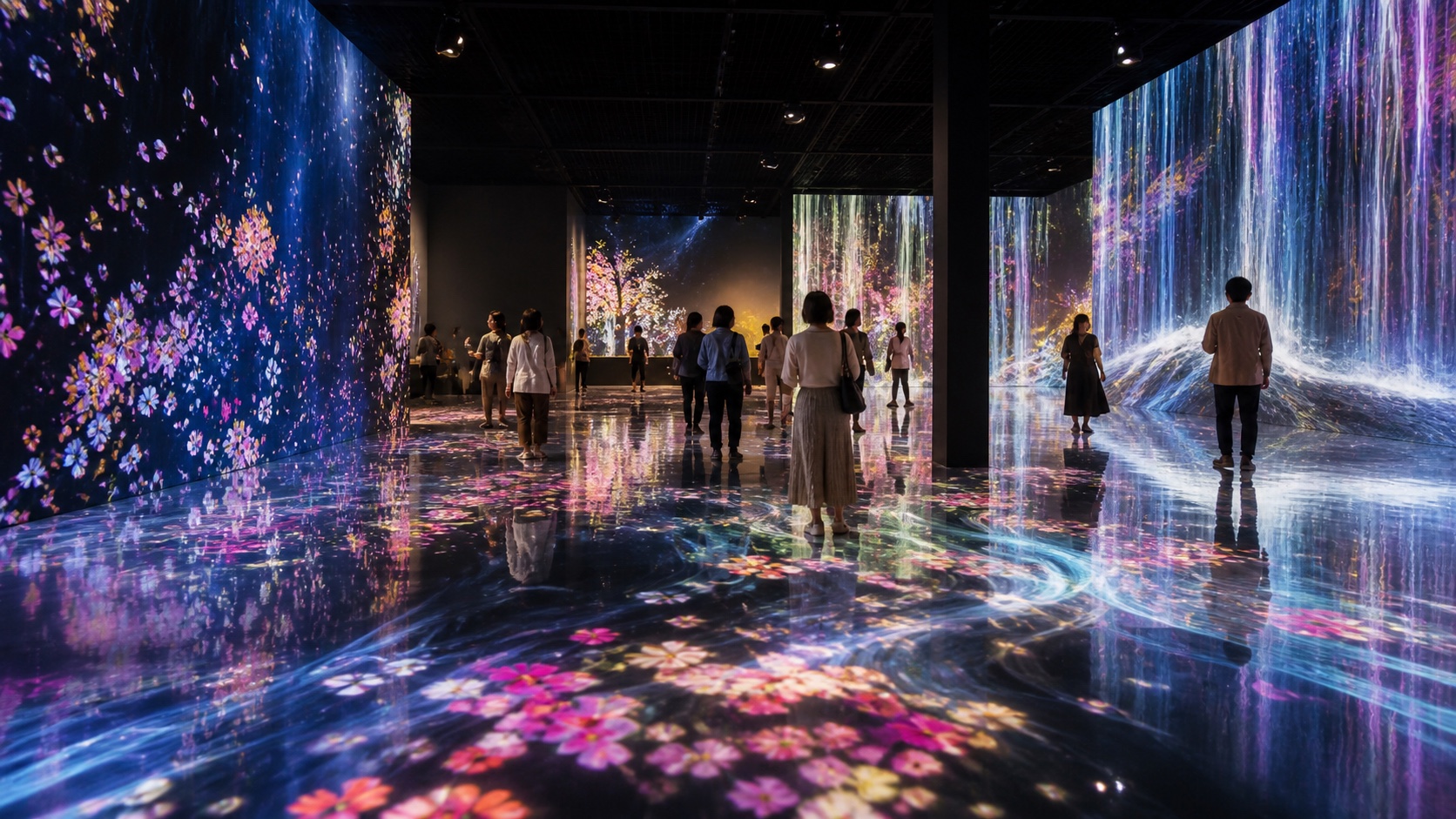
Original AI-assisted editorial illustration
A good immersive-art visit protects the timed entry, keeps children supervised, and respects sensory and mobility limits. AI-generated by Japan Trip Tools; schematic and not an official operator graphic.
- Origin
- AI-generated original
- Credit
- Japan Trip Tools Editorial Desk
- Source
- Original image created for Japan Trip Tools
- Method
- OpenAI image generation via Codex
- Reviewed
- 2026-08-30
- Rights note
- Generated from an original editorial brief; online references were used only for factual context, not as image edit targets.
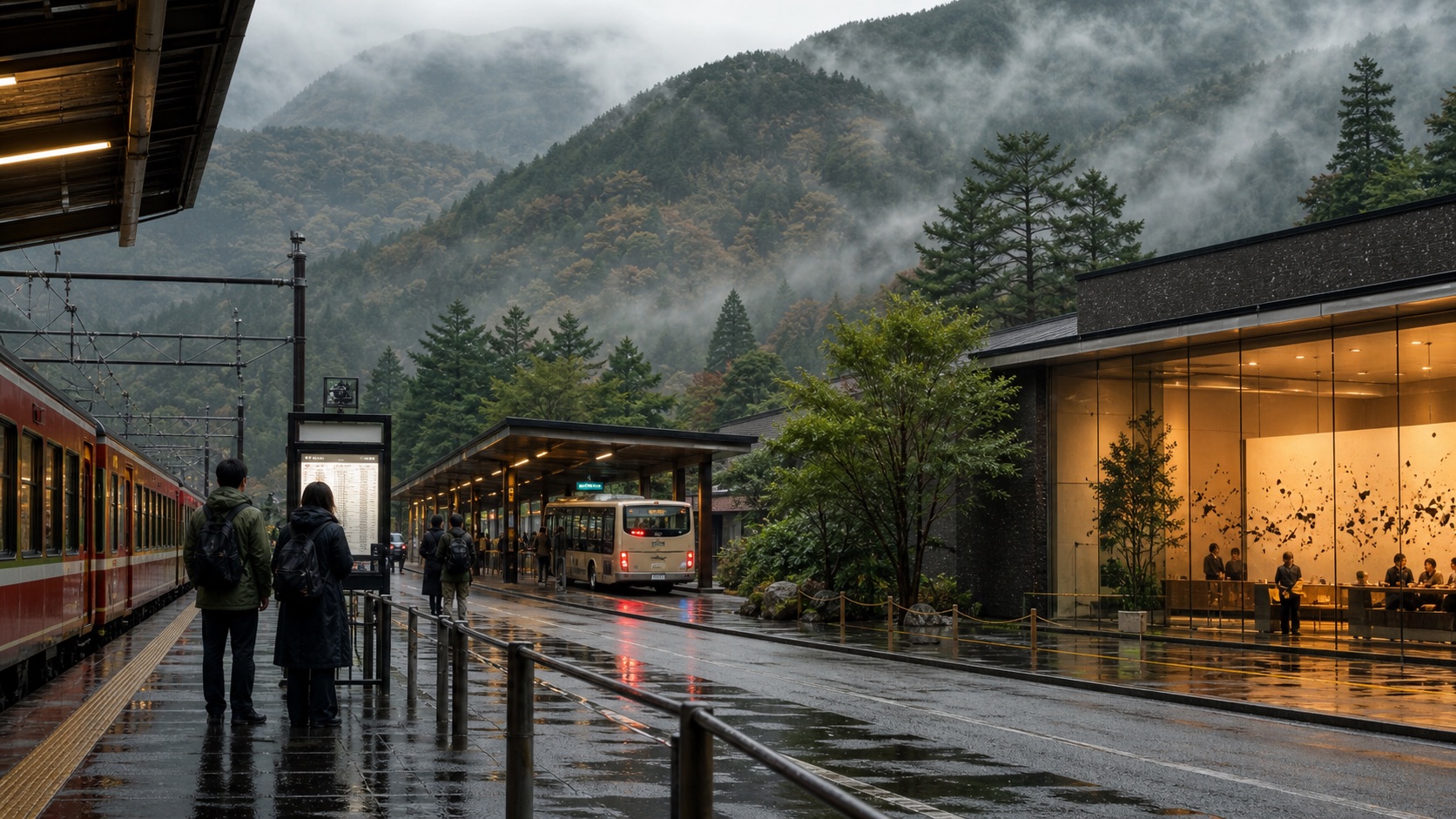
Original AI-assisted editorial illustration
When visibility or one transport link fails, Hakone works best as a shorter one-area day anchored by art, onsen, or another confirmed indoor stop. AI-generated by Japan Trip Tools; schematic and not an official operator graphic.
- Origin
- AI-generated original
- Credit
- Japan Trip Tools Editorial Desk
- Source
- Original image created for Japan Trip Tools
- Method
- OpenAI image generation via Codex
- Reviewed
- 2026-08-30
- Rights note
- Generated from an original editorial brief; online references were used only for factual context, not as image edit targets.
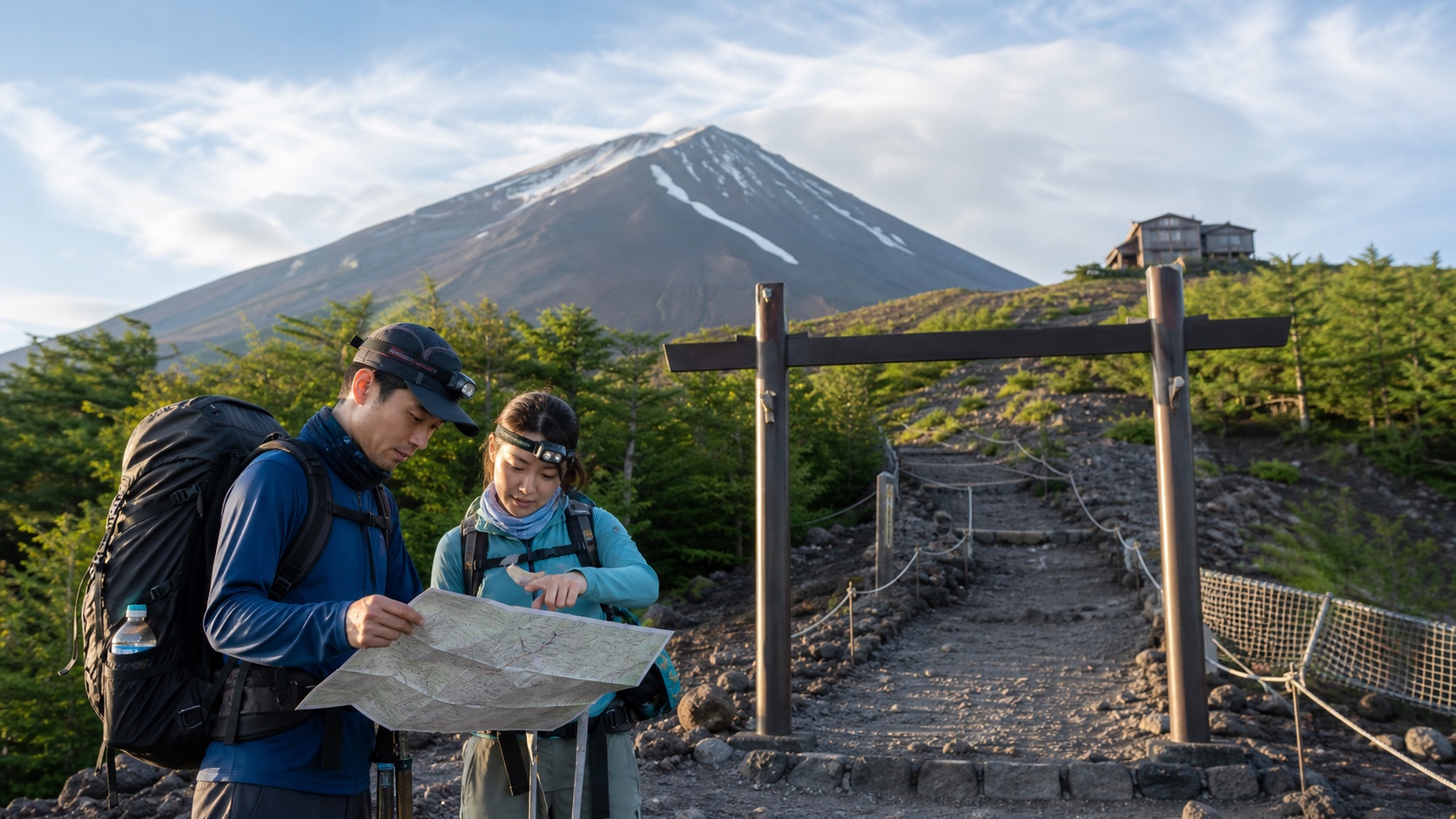
Original AI-assisted editorial illustration
Choose the trail first, then match the current registration, hut, trailhead transport, equipment, weather, and descent to that route. AI-generated by Japan Trip Tools; schematic and not an official operator graphic.
- Origin
- AI-generated original
- Credit
- Japan Trip Tools Editorial Desk
- Source
- Original image created for Japan Trip Tools
- Method
- OpenAI image generation via Codex
- Reviewed
- 2026-08-30
- Rights note
- Generated from an original editorial brief; online references were used only for factual context, not as image edit targets.
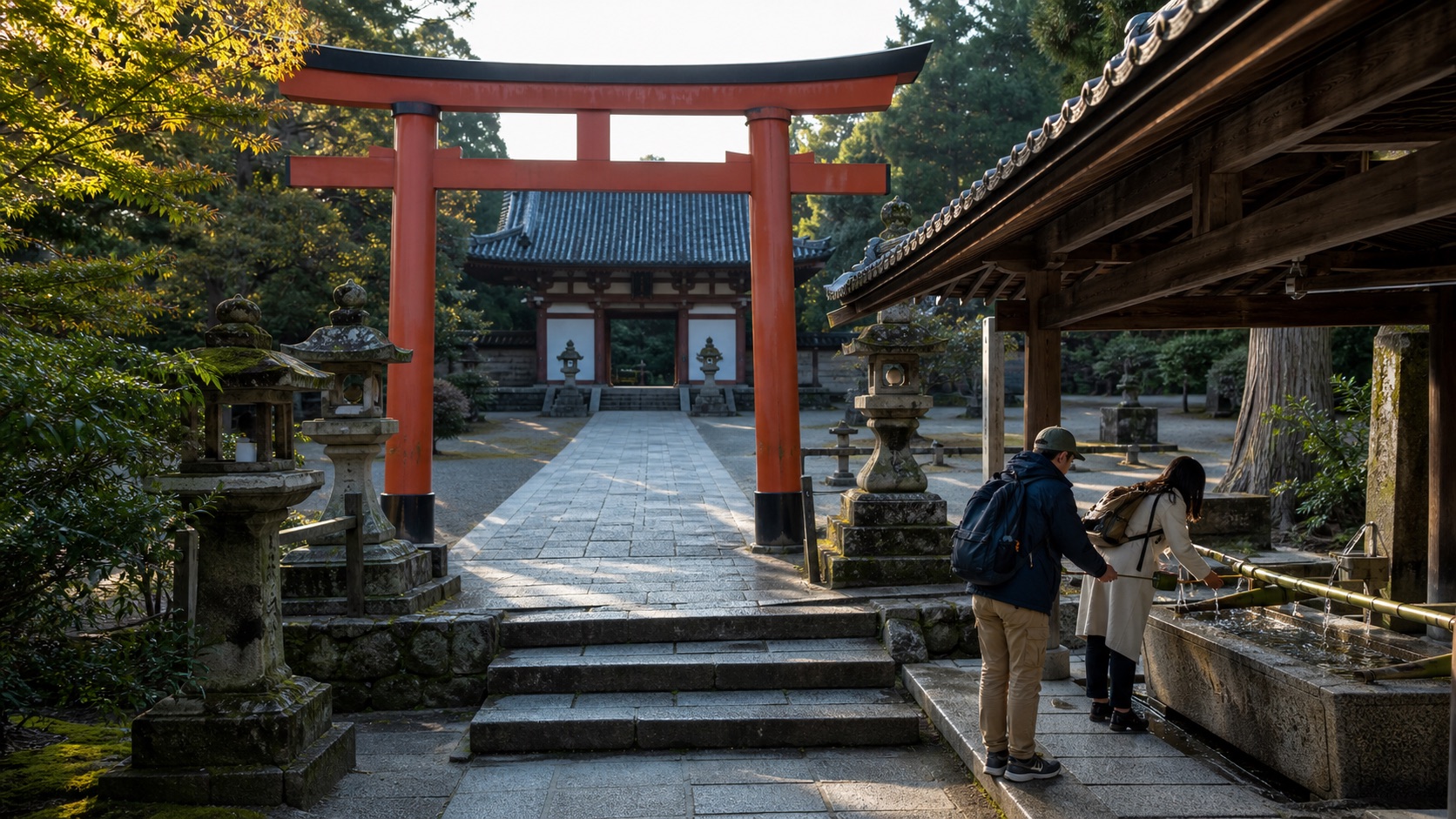
Original AI-assisted editorial illustration
Respectful religious-site visits begin with the local signs, quiet behavior, and a clear distinction between shrine and temple customs. AI-generated by Japan Trip Tools; schematic and not an official operator graphic.
- Origin
- AI-generated original
- Credit
- Japan Trip Tools Editorial Desk
- Source
- Original image created for Japan Trip Tools
- Method
- OpenAI image generation via Codex
- Reviewed
- 2026-08-30
- Rights note
- Generated from an original editorial brief; online references were used only for factual context, not as image edit targets.
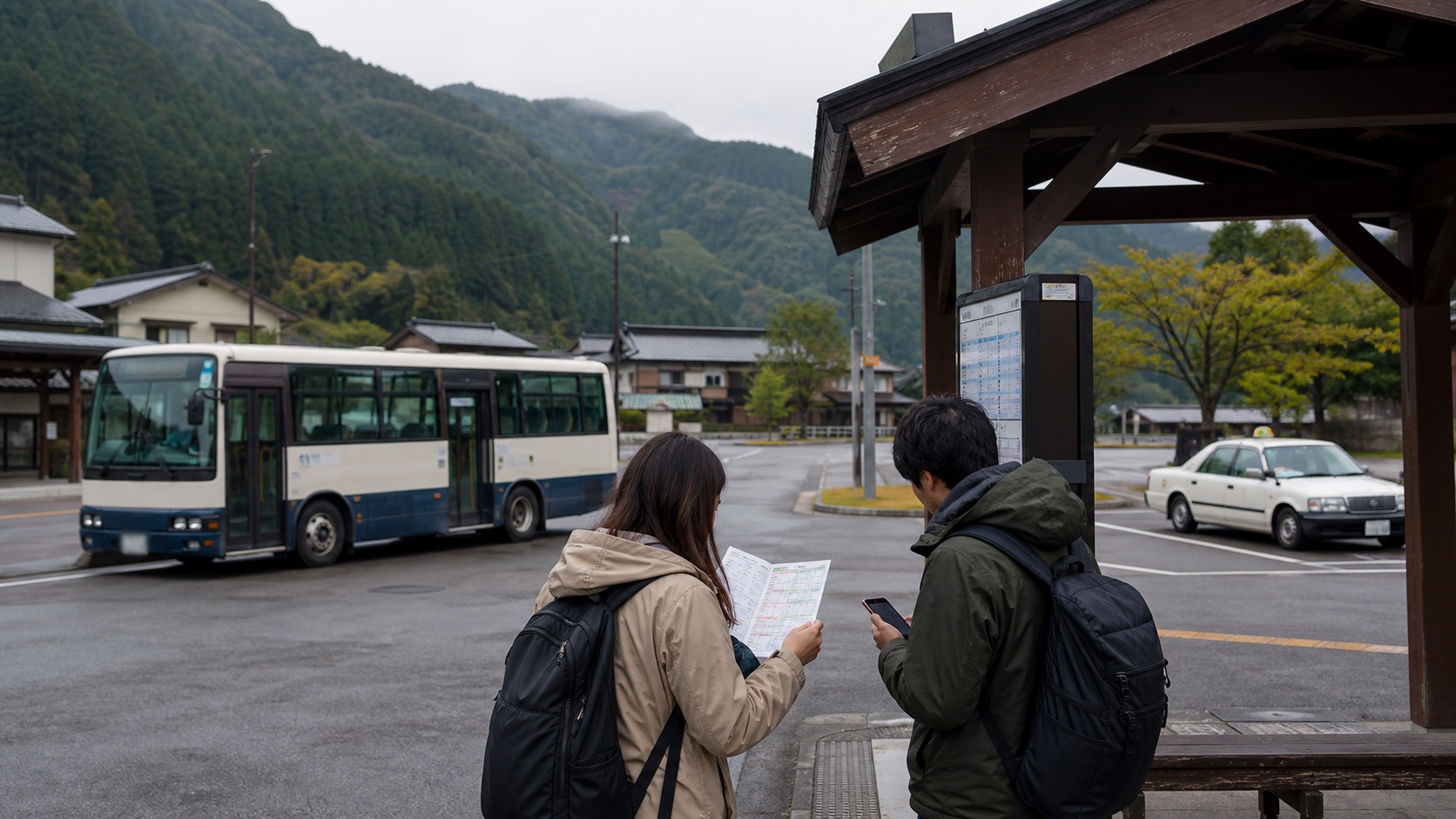
Original AI-assisted editorial illustration
A rural transport backup is real only when the final bus, payment method, pickup point, and taxi availability have been confirmed. AI-generated by Japan Trip Tools; schematic and not an official operator graphic.
- Origin
- AI-generated original
- Credit
- Japan Trip Tools Editorial Desk
- Source
- Original image created for Japan Trip Tools
- Method
- OpenAI image generation via Codex
- Reviewed
- 2026-08-30
- Rights note
- Generated from an original editorial brief; online references were used only for factual context, not as image edit targets.
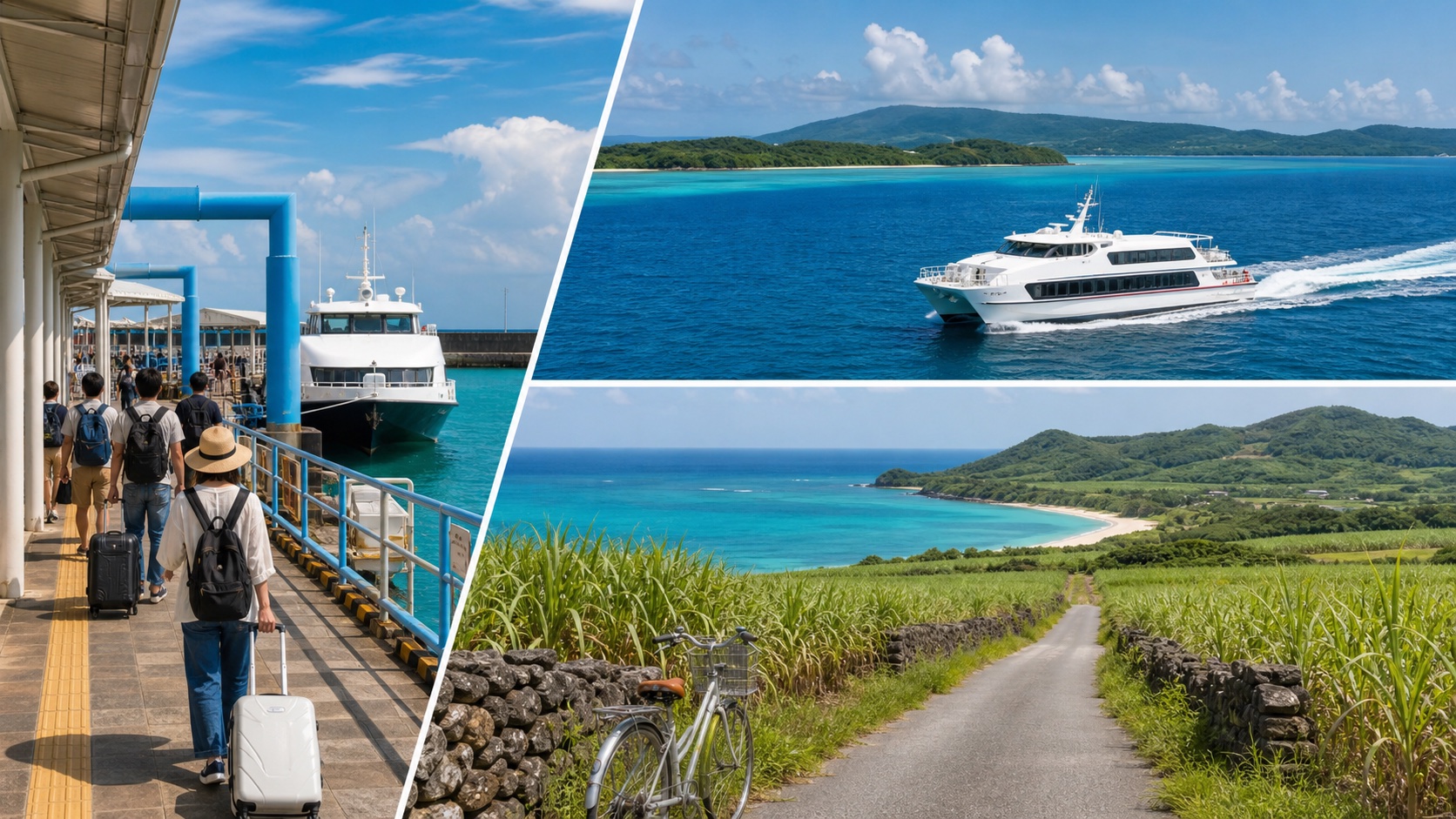
Original AI-assisted editorial illustration
A reliable Kohama day begins at Ishigaki Port, uses the current ferry status, and leaves enough time for the island itself. AI-generated by Japan Trip Tools; schematic and not an official operator graphic.
- Origin
- AI-generated original
- Credit
- Japan Trip Tools Editorial Desk
- Source
- Original image created for Japan Trip Tools
- Method
- OpenAI image generation via Codex
- Reviewed
- 2026-08-30
- Rights note
- Generated from an original editorial brief; online references were used only for factual context, not as image edit targets.
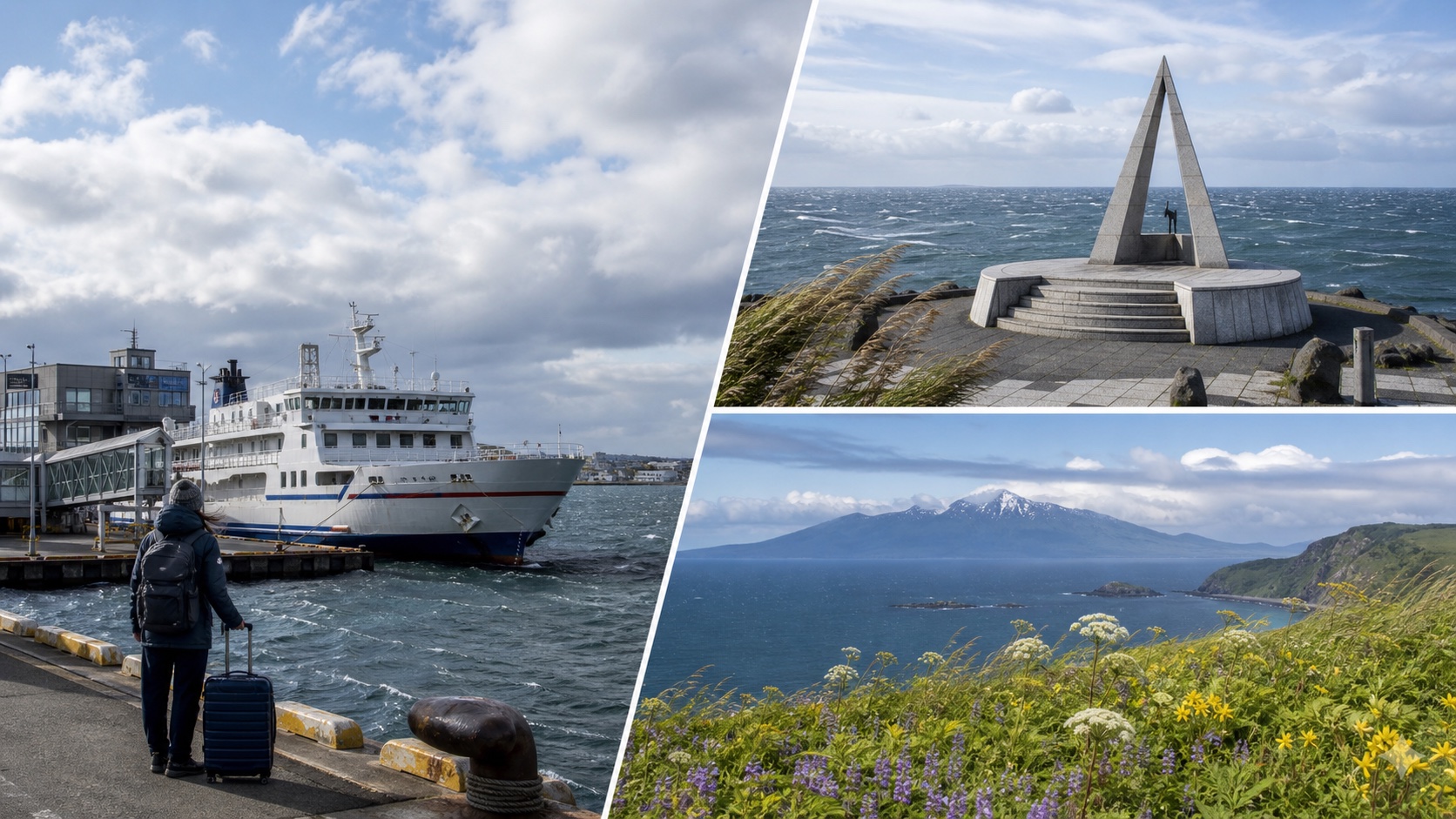
Original AI-assisted editorial illustration
Wakkanai is the operational base; Cape Soya, Rishiri, and Rebun each need a separate weather-aware decision. AI-generated by Japan Trip Tools; schematic and not an official operator graphic.
- Origin
- AI-generated original
- Credit
- Japan Trip Tools Editorial Desk
- Source
- Original image created for Japan Trip Tools
- Method
- OpenAI image generation via Codex
- Reviewed
- 2026-08-30
- Rights note
- Generated from an original editorial brief; online references were used only for factual context, not as image edit targets.
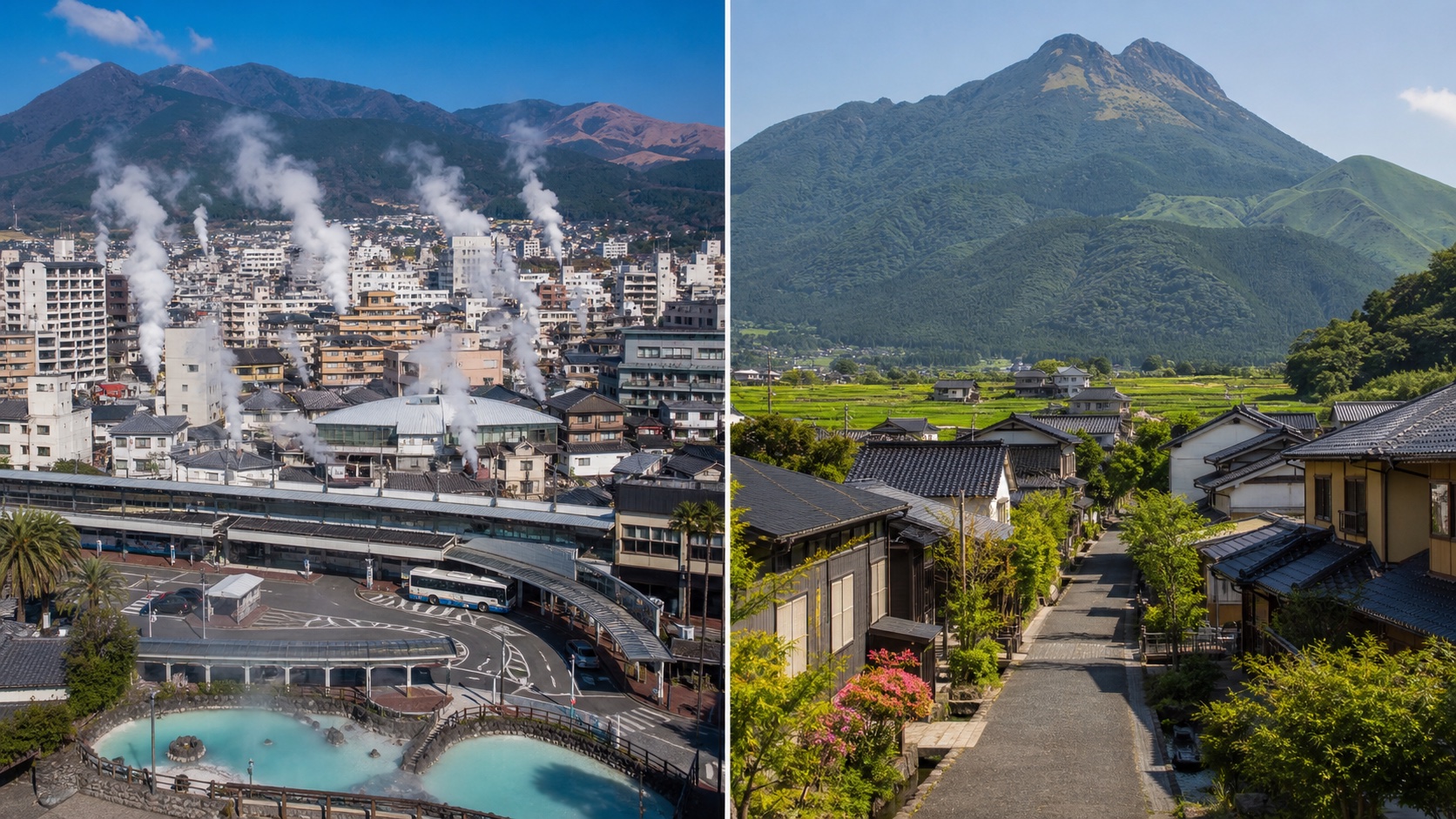
Original AI-assisted editorial illustration
Beppu offers transport and onsen variety, while Yufuin is strongest when the quiet ryokan stay is the main purpose. AI-generated by Japan Trip Tools; schematic and not an official operator graphic.
- Origin
- AI-generated original
- Credit
- Japan Trip Tools Editorial Desk
- Source
- Original image created for Japan Trip Tools
- Method
- OpenAI image generation via Codex
- Reviewed
- 2026-08-30
- Rights note
- Generated from an original editorial brief; online references were used only for factual context, not as image edit targets.
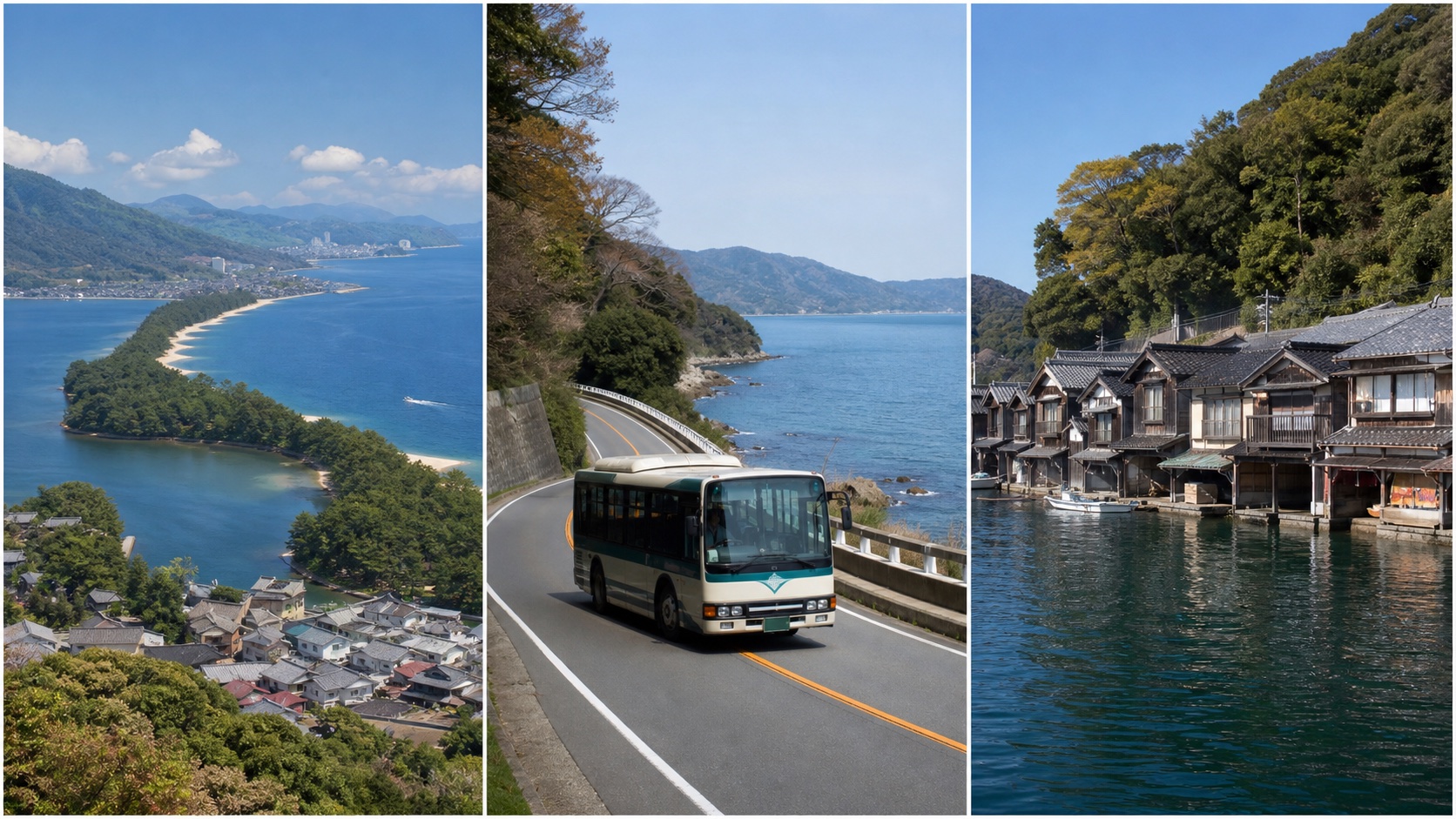
Original AI-assisted editorial illustration
The car-free route depends on treating Amanohashidate, the coastal bus, and Ine as three separate planning decisions. AI-generated by Japan Trip Tools; schematic and not an official operator graphic.
- Origin
- AI-generated original
- Credit
- Japan Trip Tools Editorial Desk
- Source
- Original image created for Japan Trip Tools
- Method
- OpenAI image generation via Codex
- Reviewed
- 2026-08-30
- Rights note
- Generated from an original editorial brief; online references were used only for factual context, not as image edit targets.
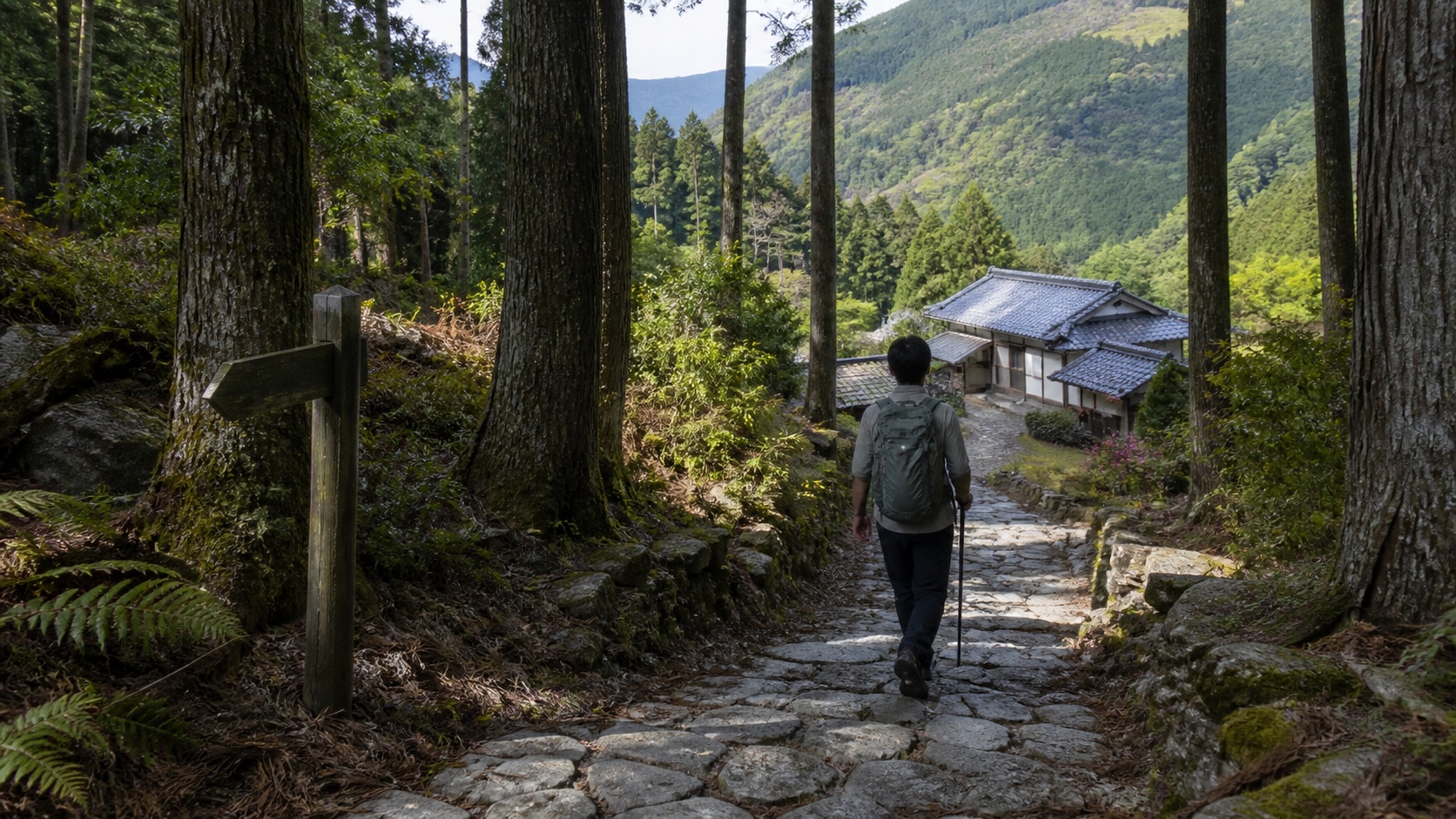
Original AI-assisted editorial illustration
A first Nakahechi overnight works best when the walking segment, village stay, luggage, and exit are decided together. AI-generated by Japan Trip Tools; schematic and not an official operator graphic.
- Origin
- AI-generated original
- Credit
- Japan Trip Tools Editorial Desk
- Source
- Original image created for Japan Trip Tools
- Method
- OpenAI image generation via Codex
- Reviewed
- 2026-08-30
- Rights note
- Generated from an original editorial brief; online references were used only for factual context, not as image edit targets.
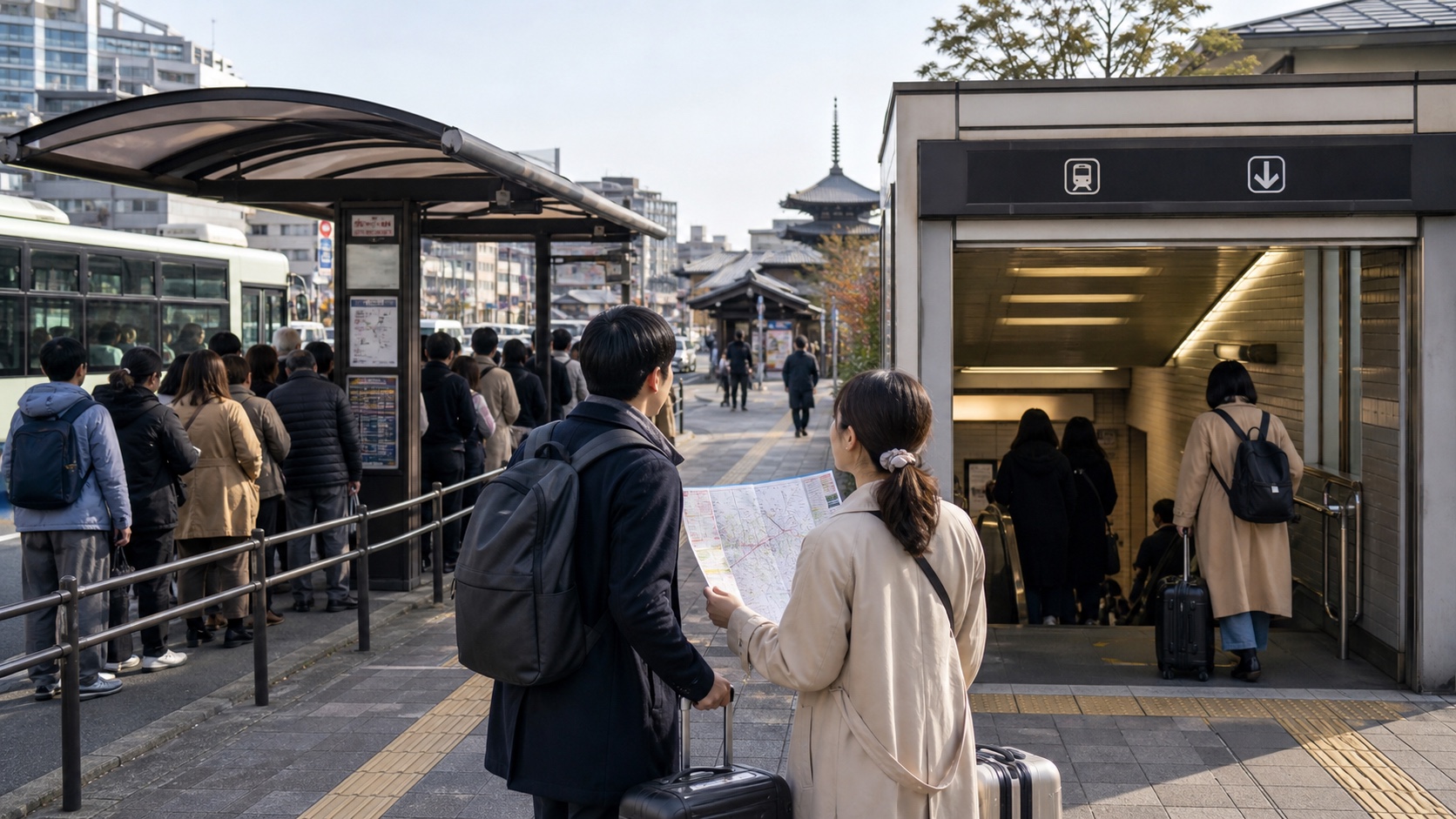
Original AI-assisted editorial illustration
A rail-first Kyoto plan uses buses for the last mile and keeps a same-area alternative for crowded periods. AI-generated by Japan Trip Tools; schematic and not an official operator graphic.
- Origin
- AI-generated original
- Credit
- Japan Trip Tools Editorial Desk
- Source
- Original image created for Japan Trip Tools
- Method
- OpenAI image generation via Codex
- Reviewed
- 2026-08-30
- Rights note
- Generated from an original editorial brief; online references were used only for factual context, not as image edit targets.
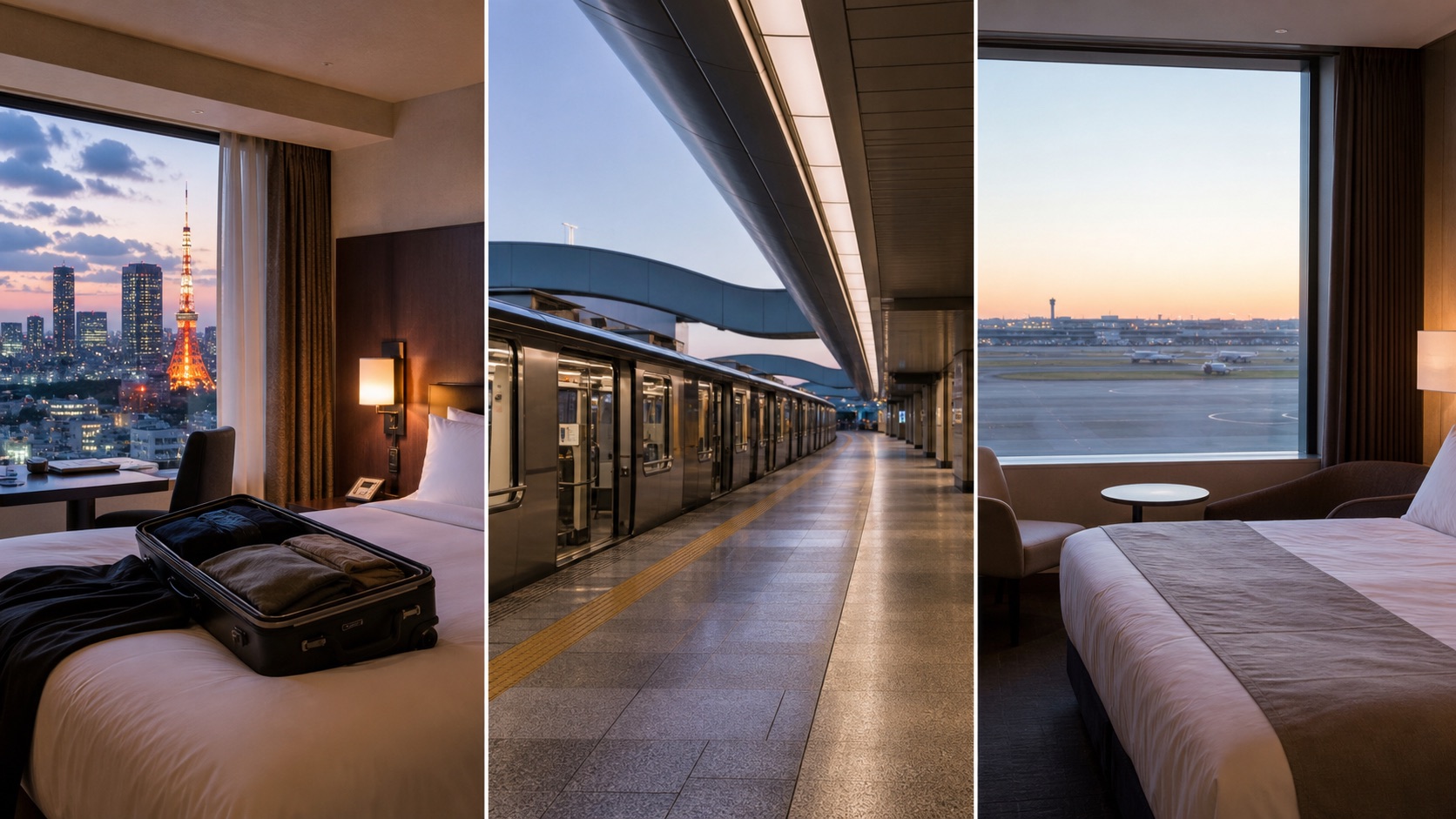
Original AI-assisted editorial illustration
The final-night choice depends on the complete hotel-to-terminal route, not whether a property uses the words airport or Tokyo. AI-generated by Japan Trip Tools; schematic and not an official operator graphic.
- Origin
- AI-generated original
- Credit
- Japan Trip Tools Editorial Desk
- Source
- Original image created for Japan Trip Tools
- Method
- OpenAI image generation via Codex
- Reviewed
- 2026-08-30
- Rights note
- Generated from an original editorial brief; online references were used only for factual context, not as image edit targets.
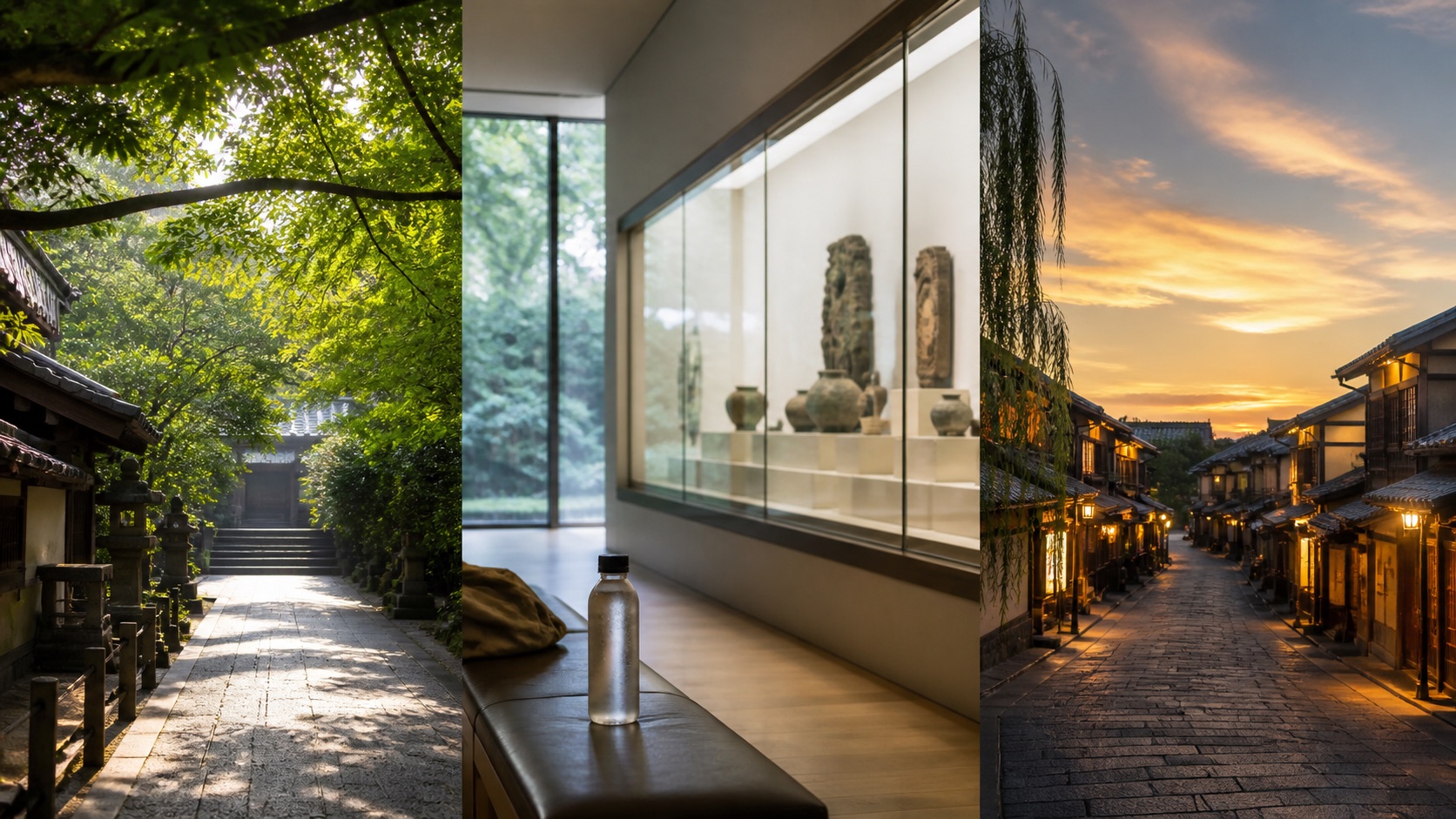
Original AI-assisted editorial illustration
A heat-aware sightseeing day protects one outdoor priority, a real indoor recovery block, and an optional evening. AI-generated by Japan Trip Tools; schematic and not an official operator graphic.
- Origin
- AI-generated original
- Credit
- Japan Trip Tools Editorial Desk
- Source
- Original image created for Japan Trip Tools
- Method
- OpenAI image generation via Codex
- Reviewed
- 2026-08-30
- Rights note
- Generated from an original editorial brief; online references were used only for factual context, not as image edit targets.
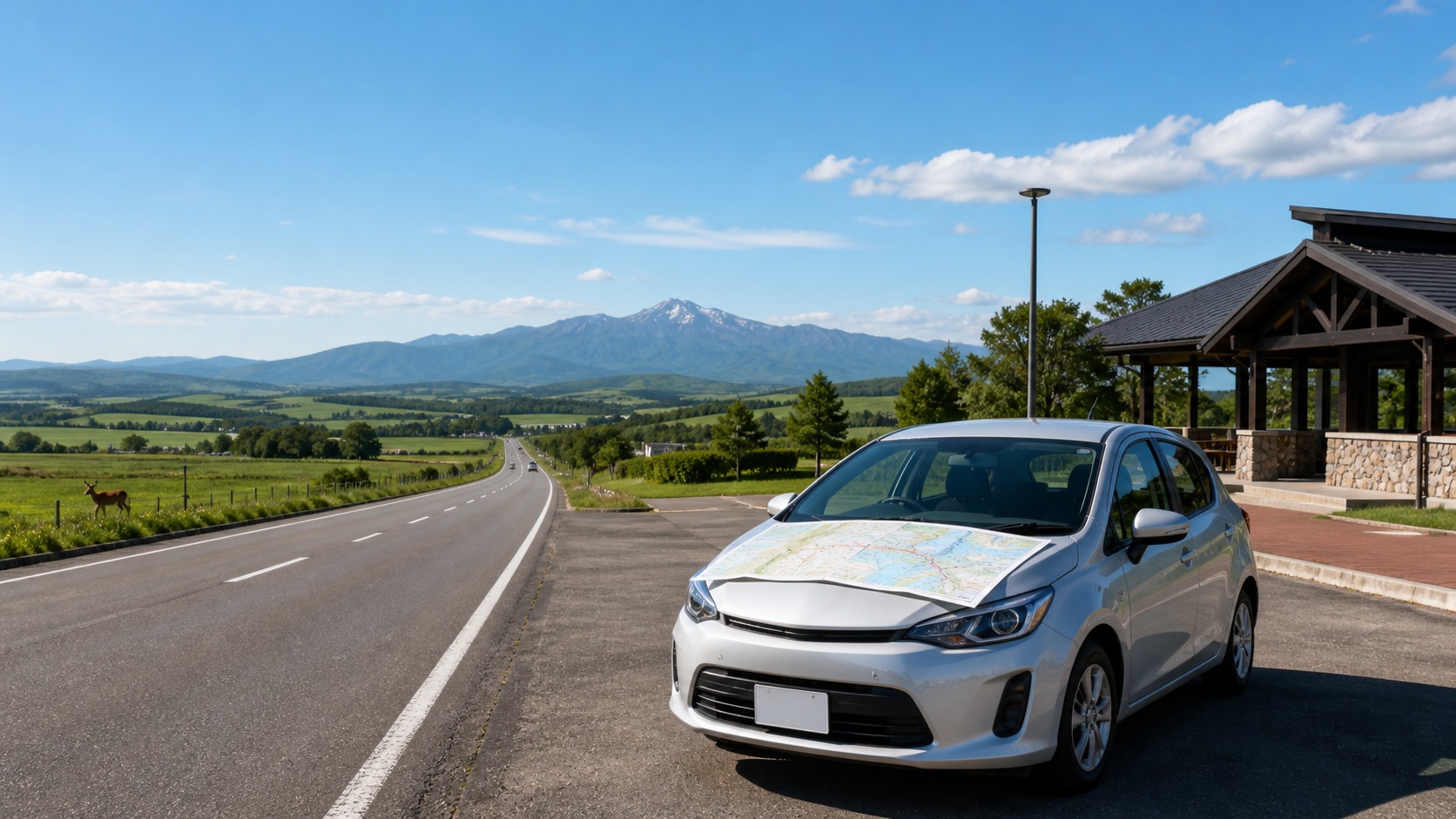
Original AI-assisted editorial illustration
A realistic Hokkaido driving plan includes regional scale, planned rest, road conditions, fuel, and wildlife awareness. AI-generated by Japan Trip Tools; schematic and not an official operator graphic.
- Origin
- AI-generated original
- Credit
- Japan Trip Tools Editorial Desk
- Source
- Original image created for Japan Trip Tools
- Method
- OpenAI image generation via Codex
- Reviewed
- 2026-08-30
- Rights note
- Generated from an original editorial brief; online references were used only for factual context, not as image edit targets.
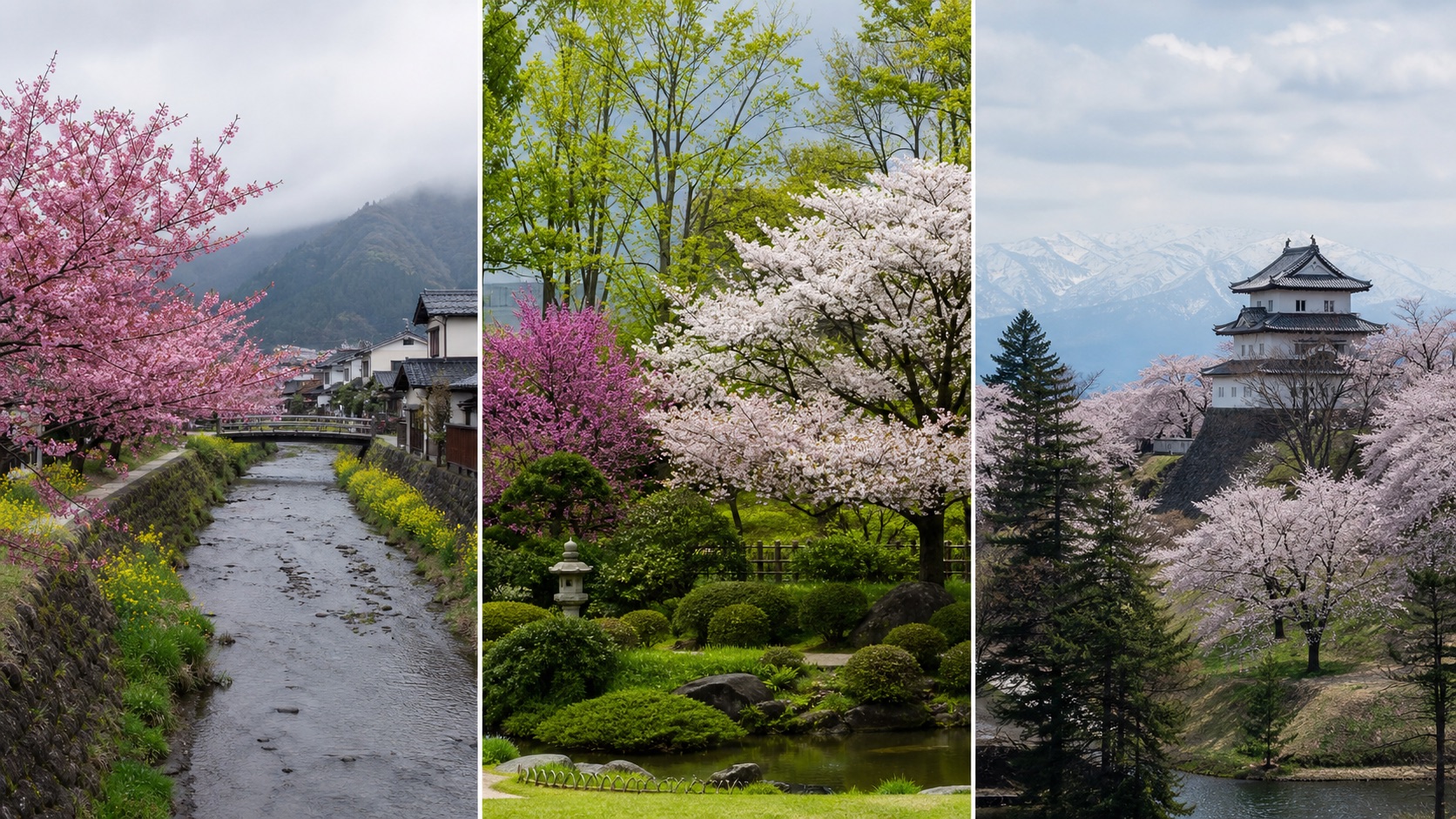
Original AI-assisted editorial illustration
Different varieties, climates, and elevations create alternatives, but each panel represents a separate destination decision. AI-generated by Japan Trip Tools; schematic and not an official operator graphic.
- Origin
- AI-generated original
- Credit
- Japan Trip Tools Editorial Desk
- Source
- Original image created for Japan Trip Tools
- Method
- OpenAI image generation via Codex
- Reviewed
- 2026-08-30
- Rights note
- Generated from an original editorial brief; online references were used only for factual context, not as image edit targets.
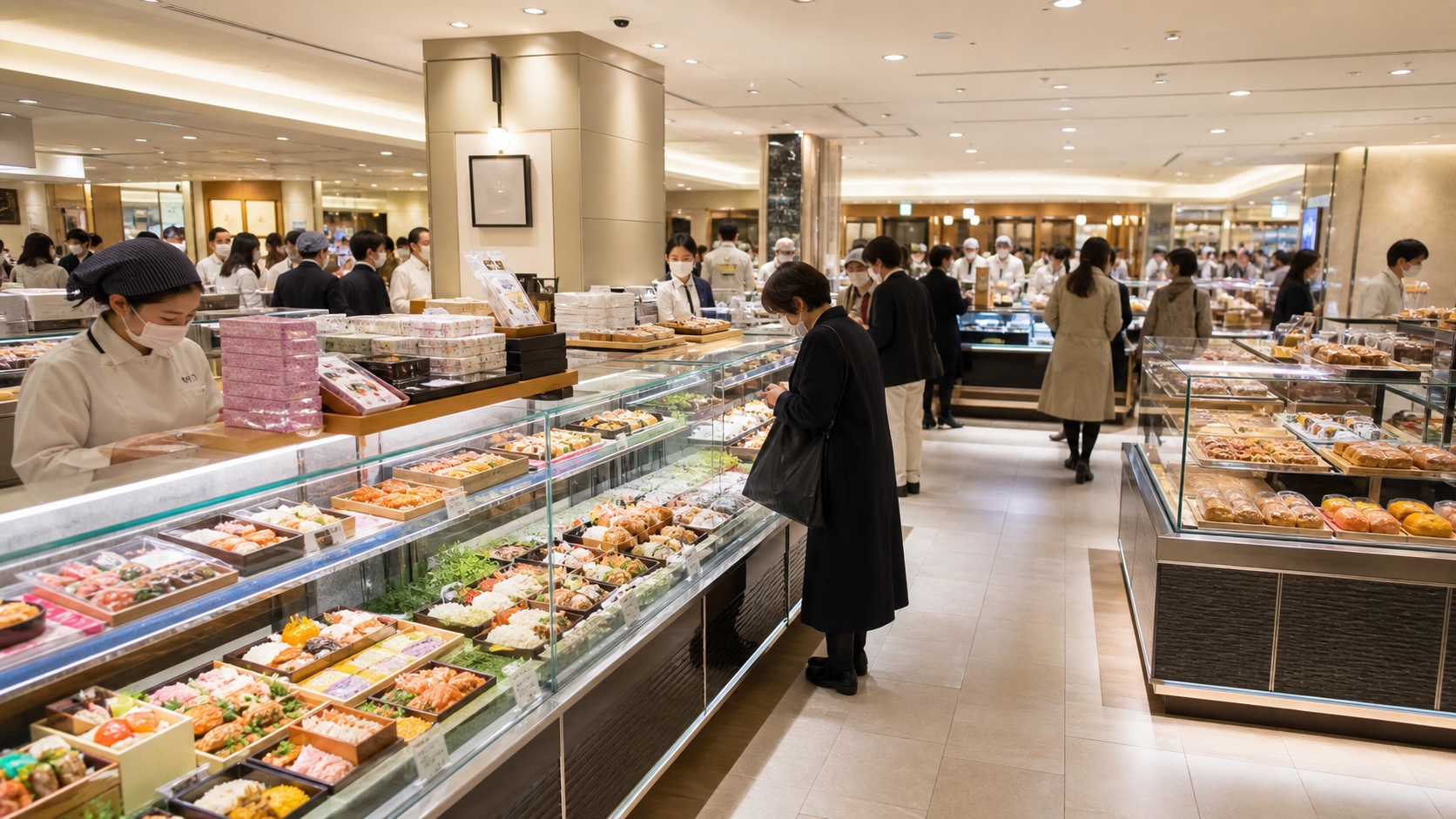
Original AI-assisted editorial illustration
A depachika works best when the eating place, timing, storage, dietary needs, and transport are decided before the food is purchased. AI-generated by Japan Trip Tools; schematic and not an official operator graphic.
- Origin
- AI-generated original
- Credit
- Japan Trip Tools Editorial Desk
- Source
- Original image created for Japan Trip Tools
- Method
- OpenAI image generation via Codex
- Reviewed
- 2026-08-30
- Rights note
- Generated from an original editorial brief; online references were used only for factual context, not as image edit targets.
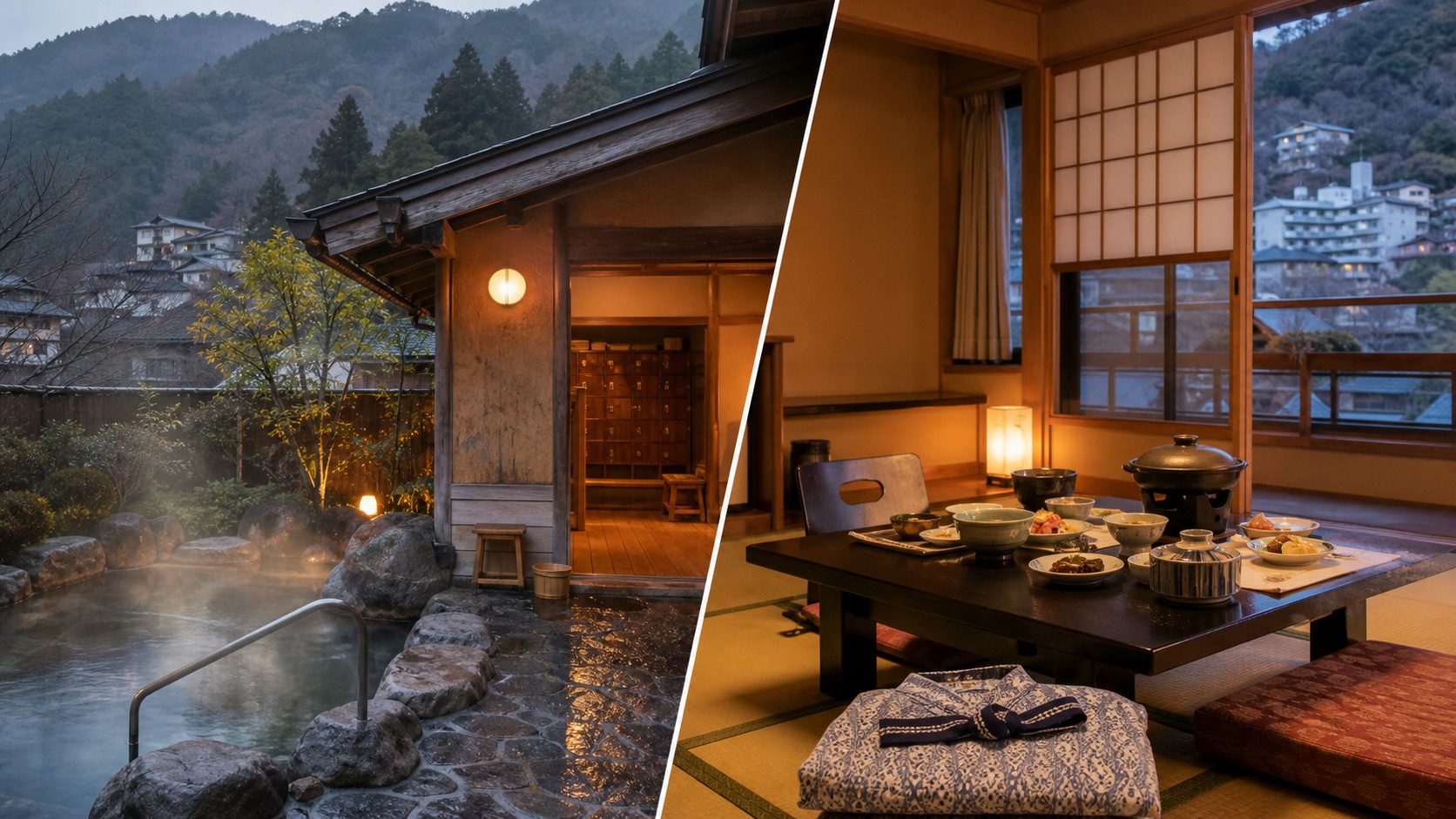
Original AI-assisted editorial illustration
A day bath buys flexible onsen time, while a ryokan stay adds the room, meal schedule, evening, and morning experience. AI-generated by Japan Trip Tools; schematic and not an official operator graphic.
- Origin
- AI-generated original
- Credit
- Japan Trip Tools Editorial Desk
- Source
- Original image created for Japan Trip Tools
- Method
- OpenAI image generation via Codex
- Reviewed
- 2026-08-30
- Rights note
- Generated from an original editorial brief; online references were used only for factual context, not as image edit targets.

CC BY 2.5
Byodoin gives a Uji half-day a clear cultural anchor before tea, matcha sweets, and a quieter riverside walk. Image: 663highland / CC BY 2.5.
- Origin
- Licensed source image
- Credit
- 663highland
- Source
- https://commons.wikimedia.org/wiki/File:Byodoin_Phoenix_Hall_Uji_2009.jpg
- License
- CC BY 2.5

CC BY-SA 4.0
The Magome–Tsumago walk is most rewarding when trail time, luggage, daylight, and the final bus are planned before village stops. Image: Steven16091984 / CC BY-SA 4.0.
- Origin
- Licensed source image
- Credit
- Steven16091984
- Source
- https://commons.wikimedia.org/wiki/File:Nakasendo_Trail.jpg
- License
- CC BY-SA 4.0

CC BY-SA 4.0
Dazaifu works best when the shrine, approach street, and national museum are treated as one connected cultural day. Image: Jakub Halun / CC BY-SA 4.0.
- Origin
- Licensed source image
- Credit
- Jakub Halun
- Source
- https://commons.wikimedia.org/wiki/File:20100719_Dazaifu_Tenmangu_Shrine_3328.jpg
- License
- CC BY-SA 4.0

CC BY-SA 2.0
The Shimanami Kaido rewards beginners who match the distance to their riding experience and decide the exit before setting off. Image: redlegsfan21 / CC BY-SA 2.0.
- Origin
- Licensed source image
- Credit
- redlegsfan21
- Source
- https://commons.wikimedia.org/wiki/File:Shimanami_Kaido_Bikeway_Banner.jpg
- License
- CC BY-SA 2.0
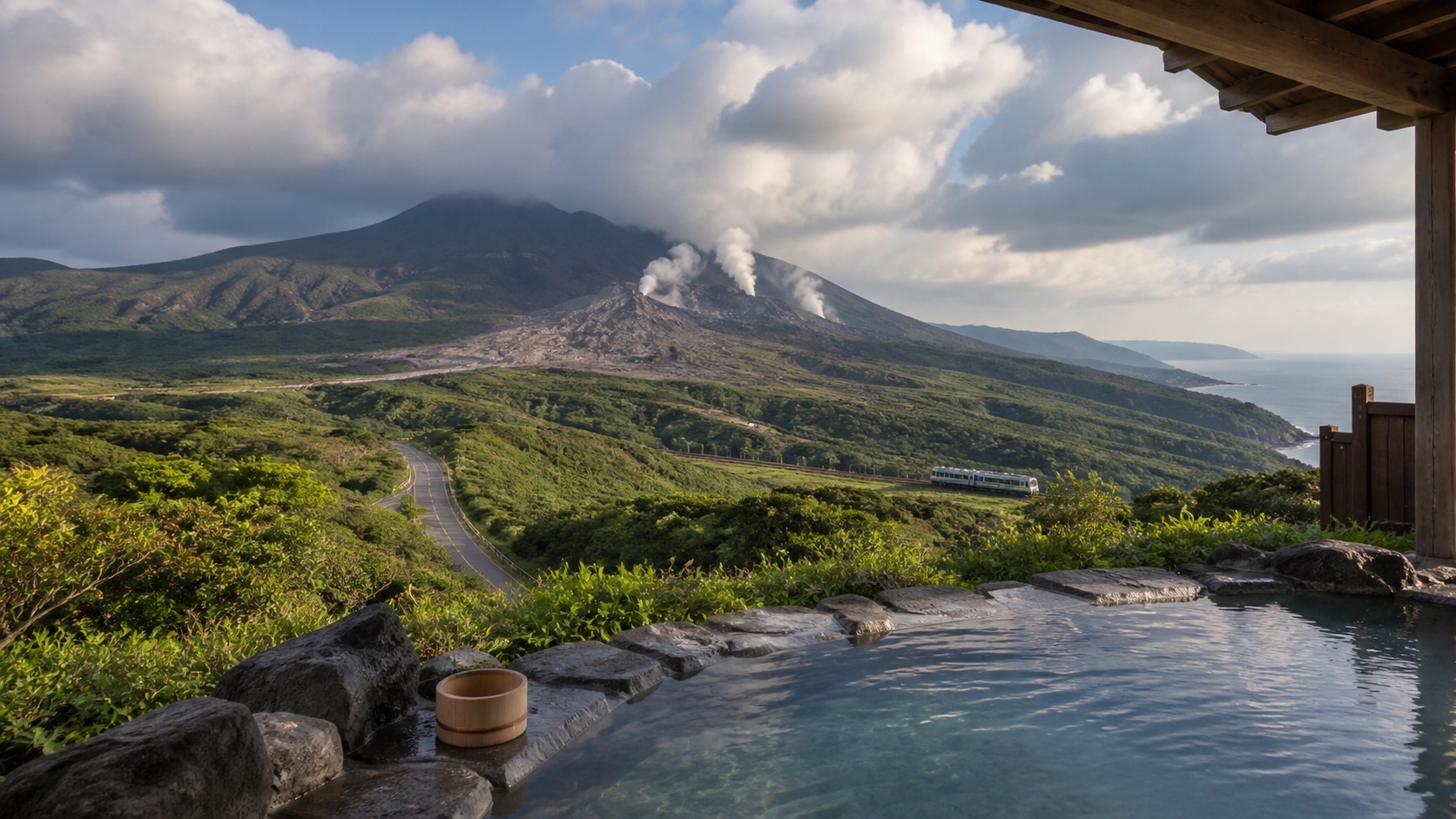
Original AI-assisted editorial illustration
A Southern Kyushu route needs weather and volcanic-alert checks, realistic transfer time, and a confirmed overnight onsen plan. AI-generated by Japan Trip Tools; schematic and not an official operator graphic.
- Origin
- AI-generated original
- Credit
- Japan Trip Tools Editorial Desk
- Source
- Original image created for Japan Trip Tools
- Method
- OpenAI image generation via Codex
- Reviewed
- 2026-08-30
- Rights note
- Generated from an original editorial brief; online references were used only for factual context, not as image edit targets.
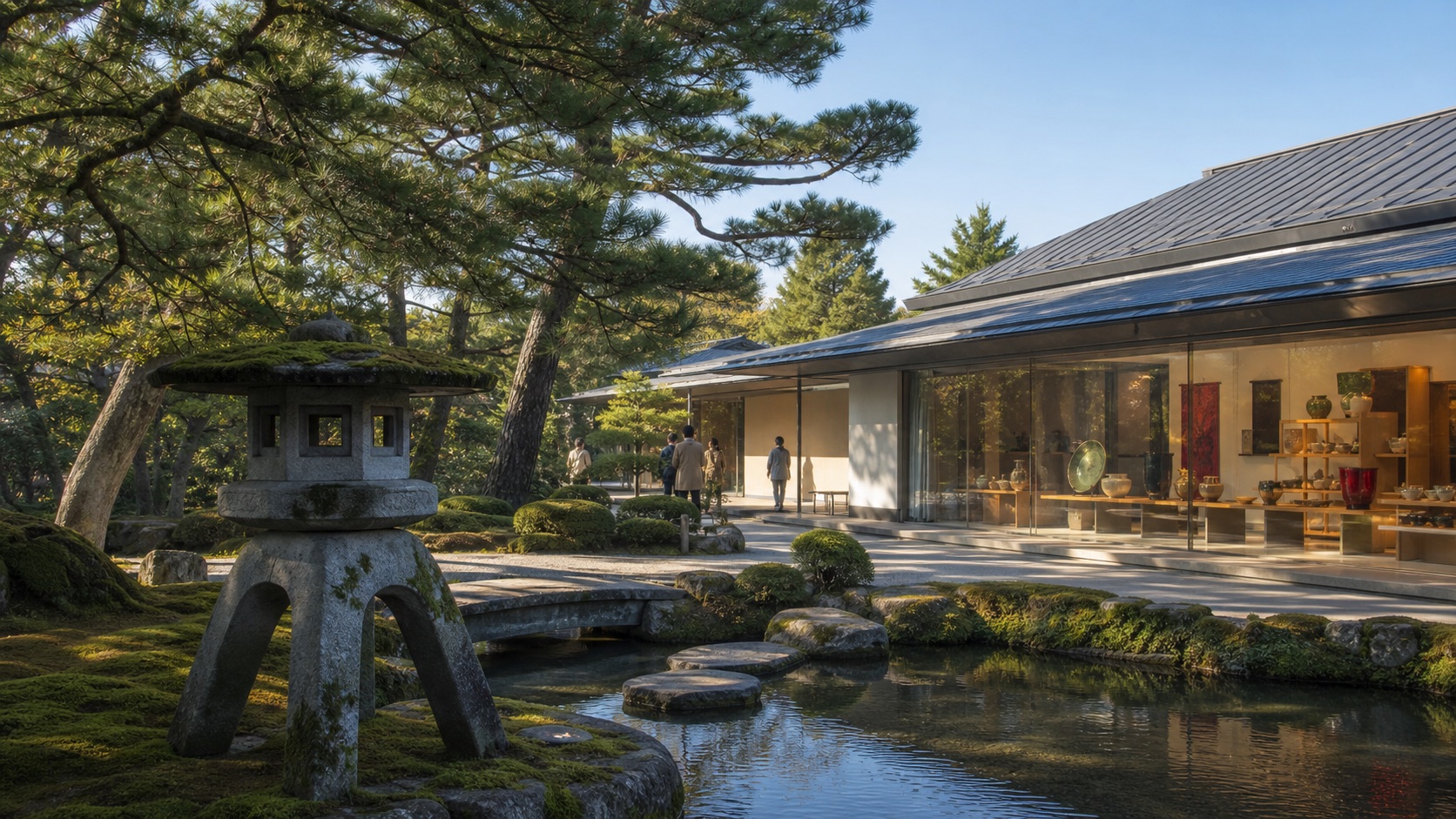
Original AI-assisted editorial illustration
Kanazawa's compact garden and museum district rewards two strong anchors before a second museum or heritage district is added. AI-generated by Japan Trip Tools; schematic and not an official operator graphic.
- Origin
- AI-generated original
- Credit
- Japan Trip Tools Editorial Desk
- Source
- Original image created for Japan Trip Tools
- Method
- OpenAI image generation via Codex
- Reviewed
- 2026-08-30
- Rights note
- Generated from an original editorial brief; online references were used only for factual context, not as image edit targets.
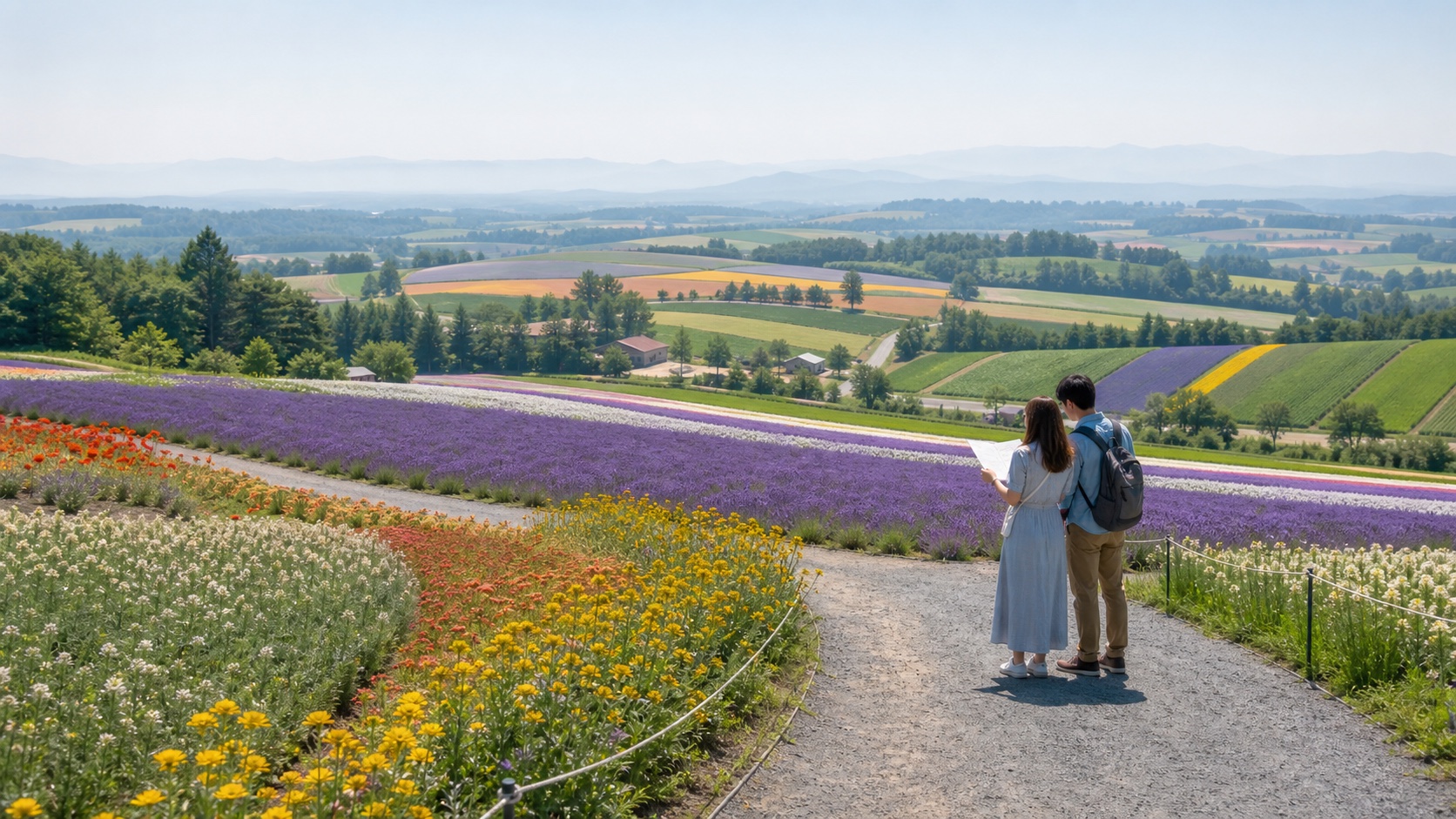
Original AI-assisted editorial illustration
Use current bloom reports to choose two or three route anchors, then respect public paths, parking, transport dates, and the return journey. AI-generated by Japan Trip Tools; schematic and not an official operator graphic.
- Origin
- AI-generated original
- Credit
- Japan Trip Tools Editorial Desk
- Source
- Original image created for Japan Trip Tools
- Method
- OpenAI image generation via Codex
- Reviewed
- 2026-08-30
- Rights note
- Generated from an original editorial brief; online references were used only for factual context, not as image edit targets.