
Japan Summer Heat: How to Pace a Safe Itinerary
Rebuild a summer sightseeing day around current WBGT, shade, indoor recovery, shorter routes, hydration, and a clear stop rule for heat illness symptoms.
At a glance
- Best for
- First-time
- Main decision
- Which bases and transfer days make the route realistic
- Time needed
- 30-45 minutes to compare route options
- Official checks
- Opening hours, transport schedules, weather, reservations
- Related tool
- Budget Calculator
remove one outdoor stop before the day starts whenever the local WBGT or alert is worse than your original plan assumed.
Quick answer
A Japan summer itinerary should not use the same walking volume as a mild spring day. Put the most important outdoor activity in the coolest workable part of the day, use an air-conditioned or deeply shaded recovery block during the highest heat stress, shorten transfers, and keep the evening optional. Check the Ministry of the Environment's current WBGT information rather than relying on temperature alone.
WBGT combines environmental conditions related to heat stress. The official English service provides current and forecast levels plus Heat Stroke Alerts. The Ministry of Health advises frequent fluid and salt replacement, avoiding heat, and moving a person with suspected heat illness to a cool place. If someone cannot drink independently or is unconscious, seek emergency help immediately.
If you only do one thing: remove one outdoor stop before the day starts whenever the local WBGT or alert is worse than your original plan assumed.
Who needs to slow the plan
This guide is for visitors traveling in Japan's hot and humid months, especially first-time visitors who normally tolerate dry heat, families with children, older travelers, pregnant travelers, people taking medication, and anyone walking long urban routes. Personal health advice belongs with a clinician; this page helps with itinerary structure, not diagnosis.
Heat risk also rises when a traveler is sleep-deprived, unwell, dehydrated, carrying heavy luggage, drinking alcohol, or arriving from a cooler climate. A fit traveler can still become ill. The correct pace is based on conditions and symptoms, not pride or a daily step target.
| Official WBGT band | Itinerary response | Do not assume |
|---|---|---|
| Below 21: almost safe | Keep normal hydration and sun protection | Direct sun and personal factors do not matter |
| 21 to under 25: caution | Drink often and schedule shade | Thirst will always arrive before risk |
| 25 to under 28: warning | Reduce walking and add frequent recovery | A planned route must be completed |
| 28 to under 31: severe warning | Prioritize indoor plans and avoid demanding activity | Cloud or breeze makes prolonged effort safe |
| 31 or above: danger | Use the official guidance and redesign the day | Vacation plans outweigh health risk |
Build a three-part summer day
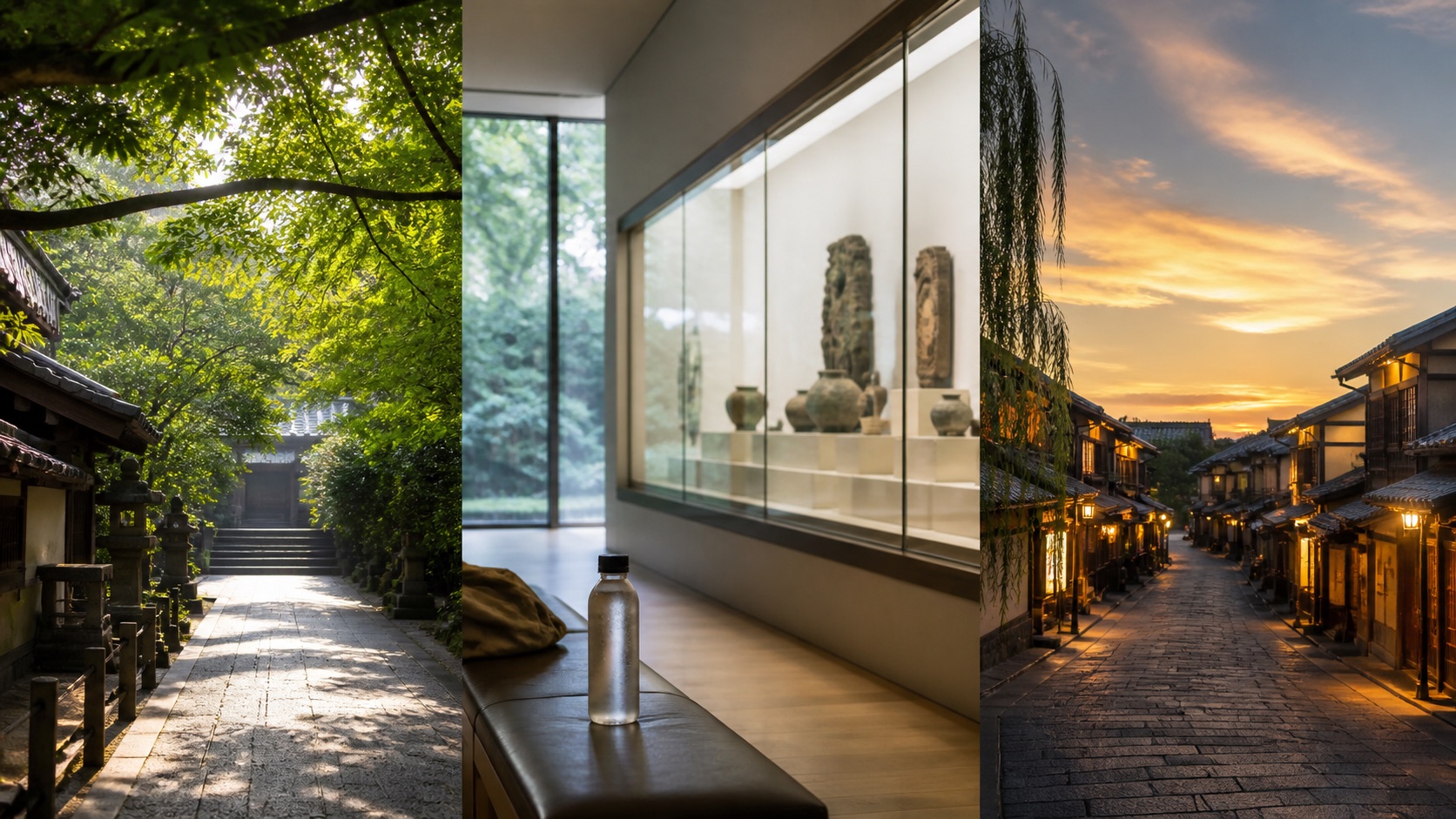
Part 1: protected outdoor priority. Use the coolest practical period for the one outdoor place that matters most. Choose a compact area and direct route. A temple, market, garden, neighborhood, and observation point should not all compete for the same morning.
Part 2: genuine recovery. Move indoors or to a reliably cool space before fatigue becomes obvious. A museum, aquarium, shopping complex, long lunch, hotel break, or reserved indoor activity should provide seating and time, not merely a five-minute convenience-store stop.
Part 3: optional evening. Recheck conditions and how the group feels. A short local dinner walk can be enough. Festivals and illuminations may be enjoyable after sunset, but humidity and crowding can still add heat stress.
The clock alone does not determine safety. Check current conditions, because a humid morning can be difficult and an evening can remain hot.
Compress the route before adding cooling products
The strongest heat adaptation is less exposure. Group sights within one neighborhood, use the closest station exit, choose buses or taxis for an awkward gap when appropriate, and avoid carrying luggage during sightseeing. A cooling towel or fan cannot rescue a route with two hours of unnecessary pavement.
Replace an exposed cross-city sequence with one outdoor anchor and one indoor anchor. In Kyoto, that may mean one early temple area plus a museum or hotel break, not three distant temple districts. In Tokyo, use one neighborhood rather than repeated station changes and long surface walks.
Check whether queues are outside. A nominally indoor attraction can still require prolonged sun at entry. Timed admission, a less crowded branch, or a different day can reduce exposure.
Hydration, food, clothing, and rest
Follow official health guidance: drink regularly before strong thirst, and replace salt appropriately. Individual medical conditions can affect fluid and salt needs, so travelers with restrictions should follow their clinician's advice. Alcohol is not hydration, and a large cold drink after hours without water is not a pacing strategy.
Wear breathable clothing, sun protection, and footwear that remains comfortable when feet swell or become wet. Carry a refillable bottle, but also know where the next drink and cool space are. Eat regular meals; poor sleep and skipped food can make a demanding day harder.
Use air conditioning for recovery. Japan's heat illness guidance applies indoors as well as outside. A small room or unventilated space can become dangerous even without walking.
Recognize the stop rule
Ministry of Health guidance lists warning symptoms including dizziness, light-headedness, numbness, muscle cramps, headache, nausea, vomiting, unusual fatigue, and weakness. Confusion, loss of consciousness, convulsions, or a very hot body are severe signs. Do not debate whether the next attraction is refundable.
Move the person to a cool place, loosen clothing, cool the body, and provide appropriate fluids only when the person can drink safely. Seek emergency assistance when symptoms are severe, the person cannot drink independently, or consciousness is affected. Do not leave an unwell traveler alone to “catch up later.”
The itinerary stop rule should be agreed before the day: symptoms end the sightseeing plan. Recovery is the destination.
Families, older travelers, and mixed groups
Children may not report risk clearly, and strollers can be hotter near the road surface. Older adults may feel thirst less strongly. Build more indoor time, fewer stairs, shorter station walks, and a direct return. Confirm elevators and accessible exits before reaching the station.
Split the group when needs differ. One traveler can keep an indoor activity while another takes a short outdoor walk. Reuniting at the hotel is better than forcing the slowest or most vulnerable traveler through the full plan.
Store large bags. Use luggage forwarding or station storage only after checking current acceptance and pickup conditions. Dragging luggage through summer heat is a preventable exposure.
Weather, rain, and event backups
Summer can bring heavy rain, thunderstorms, and typhoons in addition to heat. Check Japan Meteorological Agency forecasts and warnings. Do not treat rain as automatic cooling: humidity can remain high, and wet surfaces or transport disruption create new risks.
For outdoor festivals, verify the official event status, entry rules, shade, water access, and exit route. Keep an indoor alternative near the same station. A canceled or shortened event should not strand the day far from the hotel.
Mountain and coastal alternatives can be cooler in some conditions, but they introduce transport, sun, storm, and activity risks. Verify the exact destination rather than relying on a general “escape the city” label.
Common mistakes and fixes
| Common mistake | Better action |
|---|---|
| Using air temperature alone | Check WBGT, alerts, sun, humidity, and the group. |
| Keeping a spring walking route | Remove a stop and cluster the remaining day. |
| Waiting for thirst or exhaustion | Drink and rest on a schedule before symptoms. |
| Treating a cafe queue as recovery | Choose a confirmed cool place with seating. |
| Pushing through dizziness or nausea | Stop, cool, assess, and seek help as appropriate. |
What to verify on official sources
Check the Ministry of the Environment's current WBGT and Heat Stroke Alert information, Ministry of Health prevention and first-aid guidance, and Japan Meteorological Agency weather and warnings. Check each attraction and event for opening, queues, closures, reservations, and access.
Recheck on the travel morning and during the day. A summer plan is allowed to shrink when conditions worsen.
Related tools and next steps
- Trip Planner — build the outdoor, recovery, and optional evening blocks.
- Season Packing Planner — prepare heat, rain, and indoor layers.
- Japan itinerary hub — reduce route distance before booking.
- Japan regions — compare climates without assuming a destination is cool.
Official sources
- Ministry of the Environment: Heat Illness Prevention Information (checked 2026-08-30)
- Ministry of Health: heatstroke prevention and response (checked 2026-08-30)
- JNTO: Summer in Japan (checked 2026-08-30)
- JNTO: Enjoying Nature Responsibly (checked 2026-08-30)
Plan your next step
FAQ
What is WBGT and why should travelers check it?
WBGT is an official heat-stress index that reflects more than air temperature. Japan provides current and forecast levels plus heat alerts for itinerary decisions.
What time should outdoor sightseeing start in summer?
Use the coolest workable period, but do not rely on a fixed clock. Check current WBGT, weather, sunlight, opening hours, and the group.
How many sights should I plan on a hot day?
There is no universal number. One compact outdoor priority plus a substantial indoor recovery block is often more realistic than a spring-style multi-district route.
Is drinking water enough to prevent heat illness?
Hydration matters, but exposure, rest, cooling, salt replacement, health, and symptoms also matter. Follow official guidance and personal medical advice.
What should I do if someone feels dizzy or nauseated?
Stop the itinerary, move to a cool place, cool the body, and follow official first-aid guidance. Seek emergency help for severe symptoms or inability to drink.
Are Hokkaido and mountain areas always cool in summer?
No. Conditions vary by day and location. Check the exact destination's forecast, WBGT, transport, and activity requirements.