
Japan Department Store Food Hall Guide: Dinner, Bento, and Gifts
Use a Japanese depachika for a practical hotel dinner, train bento, picnic, or food gift with clear timing, allergy checks, storage, payment, waste, and transport planning.
At a glance
- Best for
- Family
- Main decision
- Which spending range fits the route
- Time needed
- 15-30 minutes for a planning pass
- Official checks
- Opening hours, transport schedules, weather, reservations
- Related tool
- Japan Costs And Tips
ask where the food can be eaten and how long it can stay unrefrigerated before paying.
Quick answer
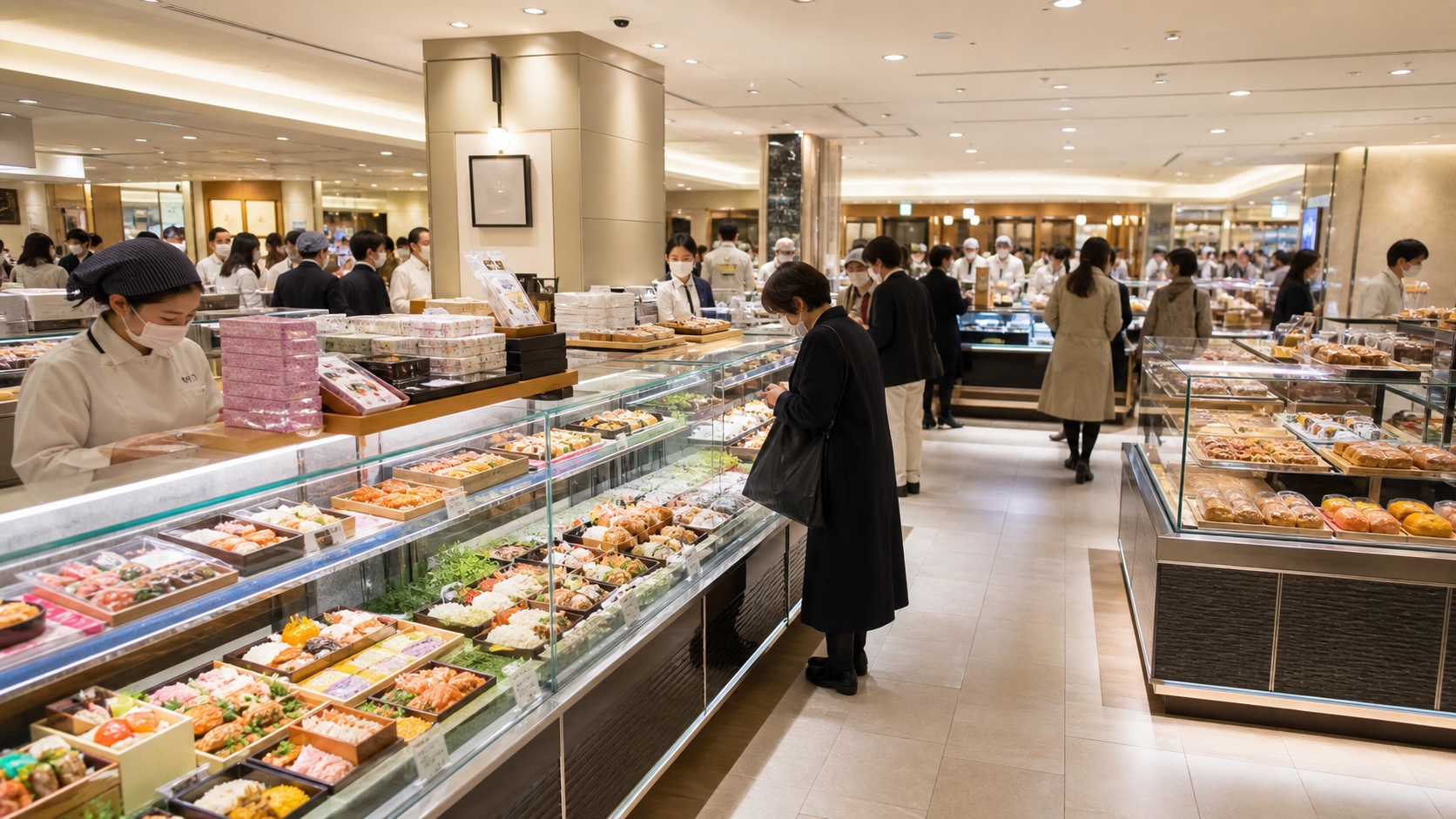
A Japanese department-store basement food hall, or depachika, is most useful when you need a high-quality takeaway dinner, train bento, picnic, dessert, or gift near a major station. Decide where and when the food will be eaten before buying. Prepared dishes may need refrigeration, gift sweets may have short best-before dates, and the food hall may not provide a general seating area.
JNTO's official depachika guide describes basement food floors with prepared dishes, bento, sweets, bakery goods, groceries, alcohol, and regional products, often connected to stations. It recommends visiting outside peak meal periods and identifies takeaway as a core use. Individual department stores and counters control today's tenants, hours, ingredients, discounts, tax-free service, and eating spaces.
If you only do one thing: ask where the food can be eaten and how long it can stay unrefrigerated before paying.
Who this guide is for
This guide is for travelers wanting an easy hotel-room dinner, food for a shinkansen, a rainy-day meal, a picnic, small-group variety, or packaged gifts. It is especially helpful when restaurant queues, language, children, fatigue, or different dietary preferences make one sit-down meal difficult.
A depachika is not a buffet and not necessarily a dining hall. Many counters sell takeaway only. Freshness, allergens, reheating, and disposal remain the buyer's responsibility after purchase.
| Use | Best purchase pattern | Main check |
|---|---|---|
| Hotel dinner | One main, vegetables, rice, and dessert | Hotel eating rules, utensils, and refrigeration |
| Train meal | Stable bento and sealed drink | Train etiquette, timing, smell, and waste |
| Picnic | Portable food with a confirmed eating area | Weather, local rules, and trash return |
| Food gift | Sealed shelf-stable product | Best-before date and destination customs |
Choose the food hall by the next journey
JNTO highlights food halls at major department stores and notes that station connections make them practical. Choose the store attached to the station, hotel route, or final activity you already use. Crossing a city for a famous basement can turn an easy meal into a fragile transfer with perishable food.
At Tokyo Station, for example, GO TOKYO describes food, shopping, underground malls, and a department store clustered around the rail hub. The useful choice depends on the train gate, building, and exit. A department store can have more than one basement level or a separate closing time for restaurants and food counters.
Save the department-store name in Japanese and identify the food-floor entrance. Large stations can make a simple map pin misleading.
Visit at the right time for the goal
For the widest selection and calmer questions, shop before the main dinner rush. For a train, buy close enough to departure to protect food quality but early enough to find the platform. Late discounts may appear on perishable dishes, but they are not guaranteed and popular products can sell out first.
Do not wait for closing when the group has allergies, children, or a specific meal requirement. A lower price is poor value if only unsuitable food remains. Check the building's official hours and temporary notices, then give enough time for queues and payment.
Holiday periods, regional fairs, and special counters can change crowd flow. Use a simple fallback such as a convenience store or station bento shop when the department store is closed.
Build a balanced meal instead of collecting snacks
Walk once before purchasing. Decide on a main dish, vegetables or salad, staple such as rice or bread, and one dessert. Shared variety is a strength, but every counter uses separate packaging and payment, so uncontrolled browsing creates cost and waste.
Ask whether an item is ready to eat, should be reheated, contains bones, or includes sauce separately. Hotel microwaves and plates are not guaranteed. Hot and cold foods should remain separated where practical.
Use the label's consumption guidance and ask staff when uncertain. Do not keep raw seafood, cream desserts, or other perishable food for the next day merely because the hotel room feels cool.
Handle allergies and dietary needs cautiously
A visible dish does not reveal stock, sauce, shared oil, garnish, alcohol, gelatin, fish stock, shellfish, sesame, nuts, wheat, egg, or dairy. Ask the counter about the exact item and current ingredient information. A translated card can support the conversation but cannot guarantee the production environment.
For a severe allergy or medical diet, choose clearly labeled packaged products or another provider able to confirm controls. Department-store quality does not eliminate cross-contact. Keep emergency medication and the written allergy information available.
Vegetarian and vegan travelers should ask about dashi, meat extract, gelatin, and shared preparation. “Vegetable” can describe the visible ingredient rather than the complete recipe.
| Need | Better approach | Unsafe assumption |
|---|---|---|
| Severe allergy | Use confirmed ingredient and cross-contact information | The display name lists every ingredient |
| Vegetarian or vegan | Ask about stock, sauce, gelatin, and shared cooking | A vegetable topping means a meat-free recipe |
| Gluten restriction | Check soy sauce, batter, noodles, and shared oil | Rice-based food is always gluten-free |
| No alcohol | Ask about cooking sake and mirin | A savory prepared dish contains none |
Know where eating is appropriate
Do not open food in the sales aisle unless the store provides a designated area and permits it. Ask whether there is a seating floor, rooftop, nearby public area, or only takeaway. Some department stores have restaurant floors, but those are separate businesses with separate queues and hours.
For a hotel meal, verify that room dining is permitted and obtain utensils, napkins, and drinks before leaving the store. Keep aromatic food closed in lifts and public spaces. For a park picnic, confirm local eating and waste rules and have a rain fallback.
On trains, follow the operator and service culture. A bento is normal on many long-distance trains, while eating a full meal on a crowded commuter service can be inconsiderate. Choose low-odor, stable food and keep the tray area clean.
Protect food safety and quality
Read labels for consumption date, storage, reheating, and allergens. If staff add a cold pack, ask how long it is intended to support the purchase and remember that travel temperature matters. A cold pack does not convert a perishable meal into an all-day souvenir.
Keep chilled food out of direct sun and away from warm luggage compartments. Eat raw seafood, fresh cream, and similar items promptly according to the seller's guidance. When in doubt after a long delay, do not risk illness to avoid waste.
For gifts, choose shelf-stable, sealed products with enough date margin. Check whether ingredients such as meat, fresh fruit, seeds, or animal products can enter the destination country.
Pay, carry, and dispose efficiently
Different counters may process payment separately, although store systems vary. Carry a working card and a cash or IC-card backup. Ask before assuming a food purchase qualifies for tax-free shopping; ready-to-eat meals and consumables involve rules and packaging that may conflict with immediate use.
Bring a reusable bag only if it keeps food upright and separated. Staff packaging is often designed for the product, so do not compress sushi, cakes, or bento into a crowded tote. Keep liquids vertical.
Japan has limited public trash bins. Use the store's permitted disposal points, the place where you eat, or carry waste back to the hotel. Do not leave packaging on the train or in an unrelated shop.
Common mistakes and better fixes
| Common mistake | Better action |
|---|---|
| Assuming the food hall has seating | Confirm the eating place before buying. |
| Waiting for discounts with a strict diet | Shop earlier while suitable options remain. |
| Buying many snacks without a meal plan | Choose a main, vegetables, staple, and dessert. |
| Keeping perishable food overnight | Follow the label and eat within the advised time. |
| Treating visible ingredients as an allergy check | Ask about the complete recipe and cross-contact. |
What to verify on official sources
Verify department-store hours, food-floor location, temporary closure, seating, payment, tax-free handling, and access on the store's official site. Verify ingredients, allergens, storage, consumption date, reheating, and packaging with the counter. Verify train eating and waste rules with the operator.
Use JNTO to understand depachika culture, then let the retailer and counter control the purchase. Recheck before a holiday or late arrival.
Related tools and next steps
- Budget Calculator — set a meal and gift limit before browsing.
- Convenience-store food guide — keep a reliable after-hours backup.
- Station hotel vs neighborhood stay — choose the easiest dinner route.
- Tax-free shopping and packing — verify consumable rules.
Official sources
- JNTO: Guide to Japanese Department Store Food Floors (checked 2026-08-30)
- JNTO: Japan Shopping Guide (checked 2026-08-30)
- GO TOKYO: Shopping in Tokyo (checked 2026-08-30)
- GO TOKYO: Tokyo Station and Marunouchi (checked 2026-08-30)
Plan your next step
FAQ
What is a depachika in Japan?
It is a department-store basement food floor with prepared dishes, bento, sweets, bakery goods, groceries, drinks, and regional products.
Can I eat inside a Japanese department-store food hall?
Not automatically. Many counters are takeaway only. Ask whether the store provides a designated seating or eating area before buying.
When is the best time to visit a depachika?
Visit before peak meal periods for a calmer choice and better stock. Late discounts may occur but are not guaranteed.
Are depachika foods safe for severe allergies?
Only when the counter can confirm ingredients and cross-contact for the exact item. Display appearance and department-store quality are not guarantees.
Can I take depachika bento on a train?
It is common on many long-distance services, but follow the operator and choose a stable, low-odor meal. Avoid a full meal on crowded commuter trains.
Can I buy food gifts tax-free?
Eligibility and packaging depend on current rules and the participating store. Ask before payment, especially if you intend to consume the item in Japan.