
Onsen Day Trip or Ryokan Stay? How to Choose
Compare a day-use onsen with an overnight ryokan by bathing access, meals, check-in, privacy, transport, and the experience you actually want.
At a glance
- Best for
- First-time
- Main decision
- Which bases and transfer days make the route realistic
- Time needed
- 30-45 minutes to compare route options
- Official checks
- Opening hours, transport schedules, weather, reservations
- Related tool
- Budget Calculator
decide whether you are buying a bath or an overnight experience before choosing the town.
Quick answer
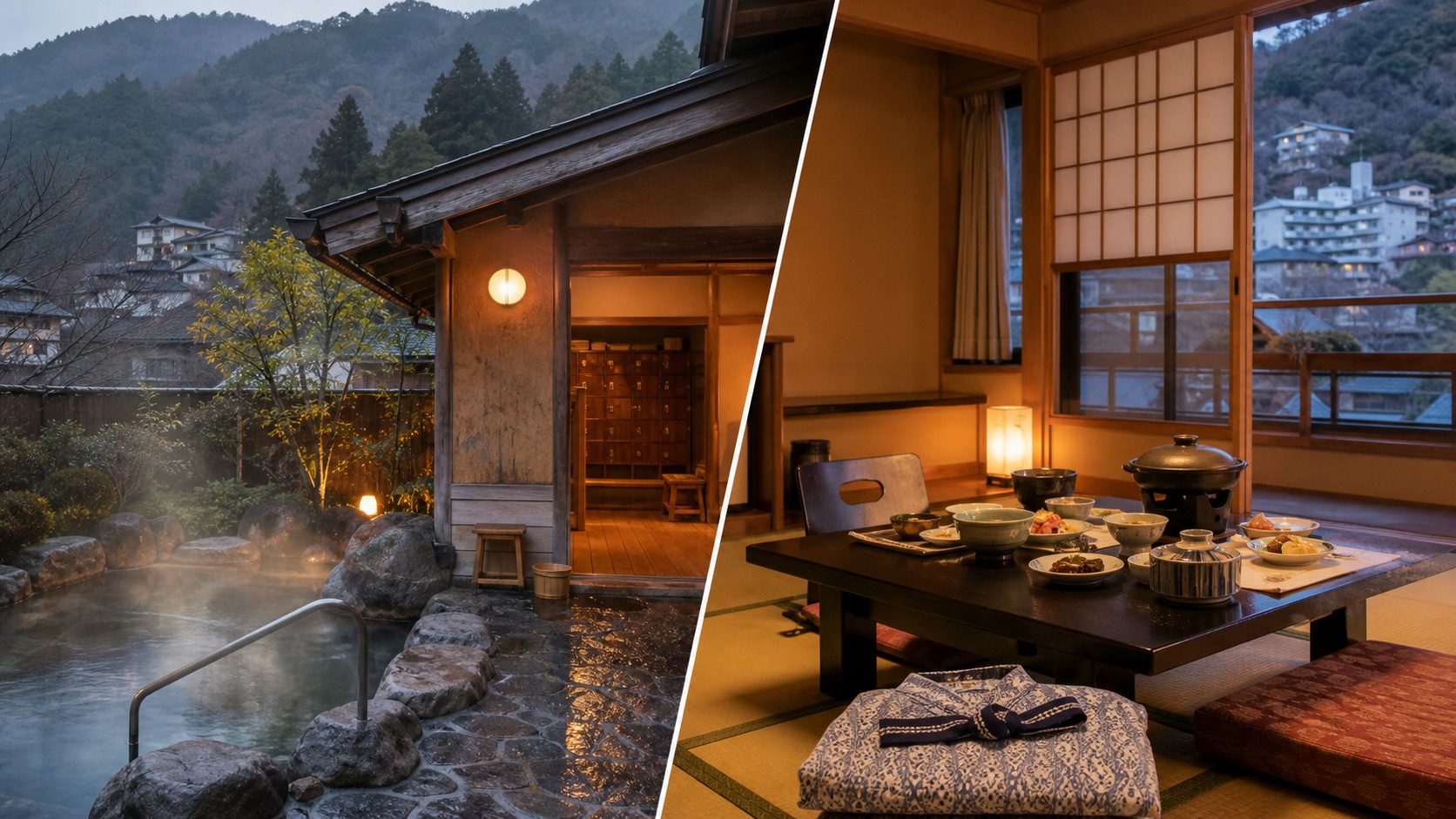
Choose a day-use onsen when bathing is one part of a city or regional itinerary. Choose an overnight ryokan when the accommodation, dinner, morning bath, slower pace, and local hospitality are the reason for the journey. The two options are not cheaper and more expensive versions of the same product. A day bath is a timed facility visit; a ryokan stay is an overnight schedule built around check-in, bathing, meals, and rest.
Japan National Tourism Organization guidance confirms that day-use baths are available in many cities and onsen towns, while a traditional ryokan commonly adds tatami rooms, futon bedding, yukata, dinner, breakfast, and one or more baths. Exact access, meal plans, tattoo rules, private-bath reservations, and opening times belong to the individual property.
If you only do one thing: decide whether you are buying a bath or an overnight experience before choosing the town.
Who should use this guide
This decision guide is for first-time onsen visitors, couples balancing privacy with budget, families who need a workable bathing arrangement, tattooed travelers checking access, and itinerary planners deciding whether a rural night is worth moving hotels. It also helps travelers who have already booked a city hotel and want to know whether a day bath can still deliver a meaningful onsen experience.
A day visit is usually a better fit when the trip has limited nights, the group prefers a familiar hotel, or not everyone wants the same bathing and meal routine. A ryokan stay is stronger when the group can arrive in time for dinner, wants a quiet evening, and is comfortable confirming Japanese-style room and bathing details before booking.
| Choose | Best for | Confirm first |
|---|---|---|
| Day-use onsen | A flexible half-day, city base, or first bath | Entry window, last admission, towels, tattoo policy, and transport home |
| Ryokan without meals | Travelers who want the room and baths but need meal flexibility | Nearby dinner options, check-in deadline, and bedding setup |
| Ryokan with dinner and breakfast | A complete slow-travel night | Meal time, dietary communication, per-person price, and arrival time |
| Room with private bath | Privacy, couples, families, or guests avoiding a shared bath | Whether the room bath uses onsen water and how occupancy is priced |
What a day-use onsen actually gives you
A day bath can be a complete first onsen experience when the goal is bathing rather than lodging. You enter during a published window, store belongings, wash before entering the bath, bathe quietly, dress, and continue the day. Some facilities add rest rooms, food, massage, multiple baths, or private-bath rentals; others are deliberately simple.
The advantage is control. You can keep a city hotel, avoid moving luggage, and leave if the group is tired. The constraint is the facility clock. Last admission may be earlier than closing, day access can pause during cleaning, and a ryokan may reserve some baths or hours for overnight guests. Never assume that a hotel with an onsen accepts outside visitors.
For a first attempt, choose a facility with a clear official page, simple station or bus access, and enough time after bathing to return without rushing. Heat, dehydration, and alcohol do not combine well with a long hot bath. Follow posted instructions and leave if you feel unwell.
What an overnight ryokan adds
A ryokan night adds sequence and atmosphere. Arrival is normally earlier than at a business hotel because staff may explain the room, prepare futon bedding, and serve dinner at a set time. Guests can often bathe before dinner, again later, and sometimes in the morning. The room, local food, quiet hours, and hospitality are part of the purchase.
Meal-inclusive rates are commonly shown per person rather than as one room total. Compare the final booking price and plan name, not a search-result teaser. A property may offer room-only, breakfast-only, or half-board plans, and the same room can have several options. Dietary needs must be discussed before booking; a multi-course meal cannot always be redesigned at check-in.
Rural ryokan can also solve the transport experience by placing you in the onsen town after day visitors leave. The tradeoff is less flexibility. A late train, missed bus, or ambitious sightseeing list can interfere with dinner and check-in. The ryokan night is worth it when you protect the stay from the rest of the itinerary.
Use this five-step decision
Step 1: Name the experience. Write one sentence: “We want to try a shared Japanese bath,” or “We want one quiet night with dinner and repeated baths.” The first points to day use; the second points to a ryokan.
Step 2: Check the group. Confirm comfort with nudity, gender-separated facilities, tattoos, mobility, children, and shared meal timing. Do not make one traveler negotiate a surprise at reception.
Step 3: Test the route. Find the exact station or bus stop, the arrival that meets check-in, and the next-day exit. A cheap room that requires a taxi both ways may not be the better choice.
Step 4: Compare the complete purchase. For day use, include admission, towels, private-bath fee if needed, and transport. For a ryokan, include the actual number of guests, meals, bathing arrangement, and luggage movement.
Step 5: Obtain written confirmation. Save the plan name, check-in and meal deadline, tattoo answer, private-bath reservation, room type, cancellation terms, and transport instructions.
Privacy, tattoos, families, and accessibility
JNTO's current onsen guidance says public bathing is generally nude and gender-separated. Towels and long hair stay out of the bath, and guests wash first. Tattoo policies remain property-specific: some facilities allow tattoos, some accept a small cover, some offer private baths, and some restrict entry. A national trend is not permission at a particular bath.
A private bath may be reserved for a time slot, attached to the room, or available without a formal booking. Ask whether it is suitable for the intended group and whether it contains onsen water. Families should also check age and mixed-gender rules, which vary. Travelers who use mobility aids should verify steps, changing-room layout, handrails, lift access, and assistance directly with the property.
Privacy is not only about bathing. A room meal, shared dining hall, futon setup, and staff entry can feel unfamiliar. A clear plan reduces surprise without stripping the experience of its character.
Build the onsen into the wider route
A day bath works best after a moderate activity and before an easy return. Avoid placing it after a long exposed hike when the facility is the final transport connection. An overnight works best at the end of a transfer or outdoor day, followed by a light morning. Check-out plus a long train is usually easier than arriving from across Japan just before dinner.
If the onsen town has limited food, reserve the meal plan or identify a confirmed alternative. If luggage forwarding is part of the route, verify whether the ryokan receives and sends bags, the cutoff time, and the next destination. Keep medication and one overnight set with you.
Common mistakes and better fixes
| Common mistake | Better action |
|---|---|
| Booking a distant ryokan after a full sightseeing day | Remove the final attraction and protect check-in and dinner. |
| Assuming every ryokan offers day bathing | Find an explicit day-use page or contact the property. |
| Comparing a room rate with a per-person meal plan | Compare final totals for the same number of guests. |
| Waiting until arrival to discuss tattoos or dietary needs | Obtain the property's written answer before the cancellation deadline. |
| Taking photos in the bathing area | Leave the phone outside and follow all posted privacy rules. |
What to verify on official sources
Read the property's own page for the exact plan, bath access, hours, cleaning closures, tattoo policy, towels, private-bath method, room type, meals, dietary process, children, access, payment, and cancellation. Recheck shortly before travel because day-use access and transport can change.
Use JNTO for national context and etiquette, but let the chosen facility control the visit. A booking platform summary, old blog, or social video is not a substitute for the property rules.
Related tools and next steps
- Trip Planner — protect the check-in and meal window in the wider route.
- Budget Calculator — compare the complete day-use and overnight totals.
- Where to stay in Japan — choose a base before comparing properties.
- Onsen etiquette for first-time visitors — prepare for bathing rules and privacy.
Official sources
- JNTO: How to Best Enjoy Japan's Onsen (checked 2026-08-30)
- JNTO: Japanese Ryokan Guide (checked 2026-08-30)
- JNTO: Hot springs in Japan (checked 2026-08-30)
Plan your next step
FAQ
Is a day-use onsen enough for a first visit?
Yes. A clearly documented day bath can provide the complete bathing routine without moving hotels. Choose one with simple transport, enough time, and rules you have checked.
Is a ryokan price per room or per person?
Many ryokan plans are priced per person and may include dinner and breakfast. Read the exact plan and compare the final total for the actual number of guests.
Can tattooed travelers use an onsen?
It depends on the individual facility. Ask about public-bath entry, cover sheets, private baths, and in-room baths before booking.
Do I need a private bath as a couple?
Only if bathing together or additional privacy matters. Most public baths are gender-separated; private options may require a reservation or a specific room plan.
Can I arrive late for a ryokan dinner?
Do not assume so. Meal preparation and service are scheduled. Confirm the latest arrival and contact the property immediately if transport is disrupted.
Can I visit a ryokan onsen without staying overnight?
Only when the property explicitly offers day use. Access can be limited by cleaning, occupancy, or season, so verify it on the official page or directly.