
Kanazawa Garden and Craft Day: A Practical Walking Route
Plan a Kanazawa day around Kenrokuen, the National Crafts Museum, nearby art, walking time, weather, tickets, and a realistic return to the station.
At a glance
- Best for
- First-time
- Main decision
- Which spending range fits the route
- Time needed
- 15-30 minutes for a planning pass
- Official checks
- Opening hours, transport schedules, weather, reservations
- Related tool
- Japan Costs And Tips
choose the garden and one craft museum as fixed anchors before adding anything else.
Quick answer
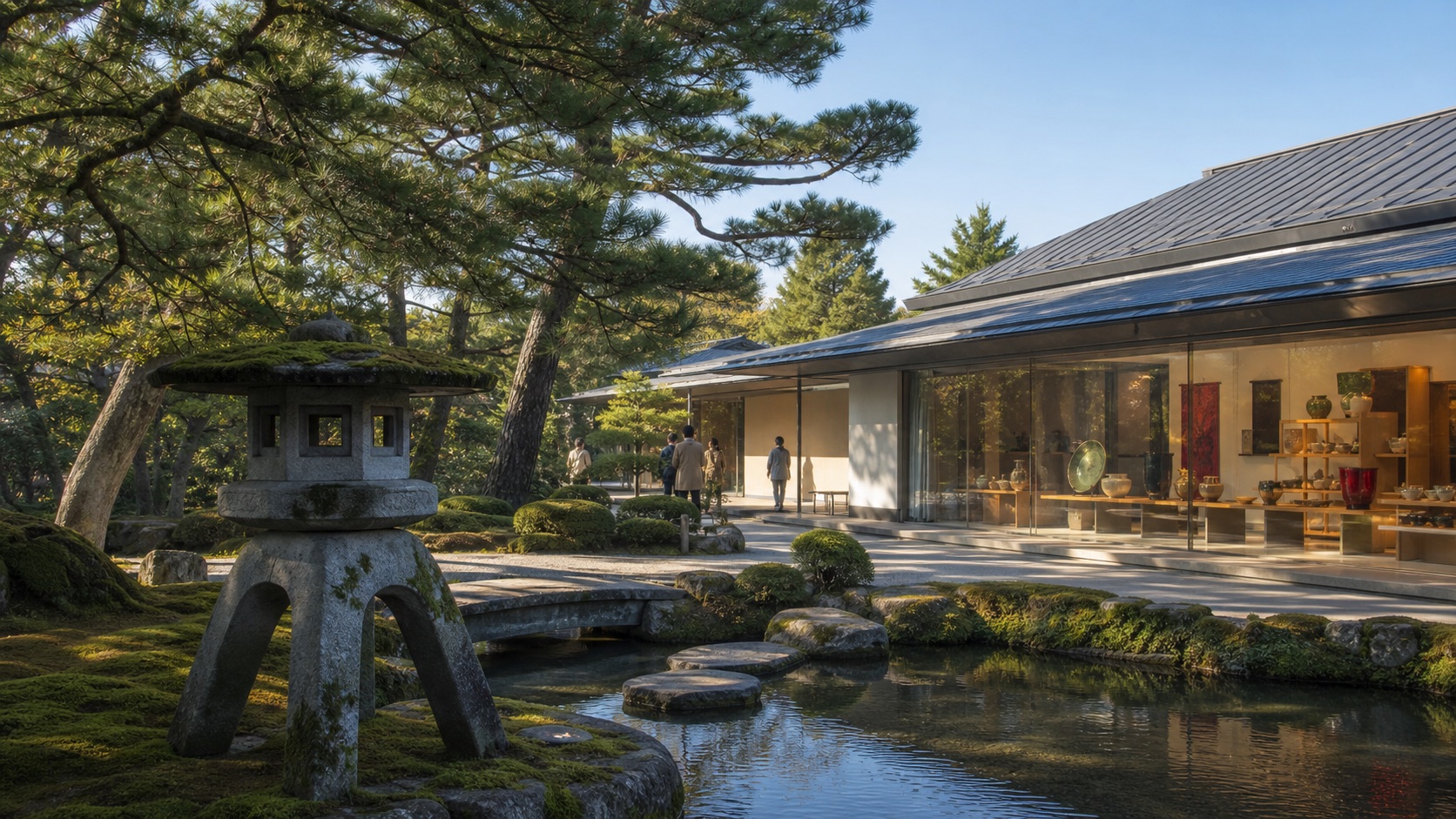
Start at Kenrokuen when you want the garden at its quietest, then move through the nearby museum zone rather than crossing the city repeatedly. The National Crafts Museum is the strongest craft anchor for modern ceramics, lacquer, textiles, metalwork, wood, bamboo, glass, and design. Add one smaller museum, tea-culture stop, or Kanazawa Castle segment only after checking the current exhibition and walking conditions.
Visit Kanazawa's official art-and-nature itinerary says the central sights around Kenrokuen are compact and walkable. It places the National Crafts Museum within a short walk of the garden and describes further museums along the Art Path. This cluster is more useful than a list of shops spread across the city.
If you only do one thing: choose the garden and one craft museum as fixed anchors before adding anything else.
Who should use this route
This guide is for first-time Kanazawa visitors, craft and design travelers, gardeners, rainy-day planners, and people arriving by Hokuriku Shinkansen who want one coherent cultural day. It works as a full day at a slow pace or a focused half-day when the group chooses only the two anchors.
The route does not assume every museum is open or that every visitor wants contemporary art. Current exhibitions, weather, mobility, and the time of the return train should determine the optional stop.
| Time available | Recommended route | Remove first |
|---|---|---|
| About 3 hours | Kenrokuen plus one craft museum | Castle interior and distant districts |
| About 5 hours | Garden, National Crafts Museum, and one nearby art stop | Long lunch or shopping detour |
| Full day | Garden and museum zone, then one heritage district | A second distant district |
| Heavy rain or snow | Museum-led route with a shorter garden visit | Steep outdoor paths |
Start with Kenrokuen deliberately
Visit Kanazawa lists Kenrokuen as open year-round with seasonal hours and a paid admission. Those details can change, so use the current official listing for the travel date. Enter early if the schedule allows and the group values quieter paths, but do not rush past the garden merely to check a famous sight.
Choose a short internal route based on season, weather, and mobility. Stone paths, slopes, and wet surfaces can take longer than the map suggests. The most famous lantern is not the only reason to visit; the garden's water, borrowed scenery, trees, and seasonal maintenance create the experience.
Confirm the gate that best connects to the next museum. Exiting on the wrong side can add unnecessary climbing and retracing.
Use the National Crafts Museum as the craft anchor
Visit Kanazawa's official itinerary identifies the National Crafts Museum as Japan's only national museum dedicated to modern crafts and design. Its scope includes ceramics, glass, lacquerware, wood and bamboo crafts, textiles, metalwork, industrial design, and graphic design. The relocated historic buildings also add architectural interest.
Check the museum's current exhibition, ticket, opening, closure, photography, and language information. A craft museum is not a guaranteed display of every Kanazawa technique on every date. Read the exhibition description so the visit matches the group's interests.
Allow time to look rather than treating the museum as a short indoor break. Crafts reward attention to material, process, surface, and use.
Choose one optional museum, not all of them
The official walking route continues toward the Art Path and nearby museums. The Nakamura Memorial Museum focuses on tea culture and a collection that includes tea utensils, paintings, Kutani ware, Kaga lacquer, and metal inlay. Other nearby institutions cover prefectural art, history, contemporary art, and philosophy.
Choose the optional museum by subject and current exhibition. The 21st Century Museum of Contemporary Art may appeal to contemporary-art visitors, while a tea or traditional-art collection provides a more direct craft connection. Temporary closures and exhibition changes make official checks essential.
A museum cluster is valuable because the backup is close. It is not a command to enter every building.
Walk the compact center with a weather backup
Visit Kanazawa publishes walking estimates between major sights and describes the center as compact. It also presents the Kanazawa Loop Bus as a practical option for first-time visitors. Use walking for the garden and museum cluster when surfaces and stamina allow; use the loop bus or a taxi to reach or leave the district when weather, luggage, or mobility makes the walk poor value.
Do not rely on a fixed fare or frequency from this guide. Check current official transport information. The bus stop direction matters because loop routes can travel in different directions.
In rain, protect the garden segment but move more time indoors. In snow, check path and transport conditions before assuming normal walking speed.
Add a heritage district only when time remains
Higashi Chaya can extend the day with historic streets, tea culture, and craft shopping, while Nagamachi provides a different samurai-district context. Pick one. Visit Kanazawa's walking information places Higashi Chaya within a manageable but meaningful walk from Kenrokuen; the return to the station must still fit.
Historic districts are living places. Keep voices low, follow photography rules, and do not enter private buildings or block lanes. For shopping, distinguish a gallery or documented workshop from a generic souvenir store. Ask about material, maker, care, shipping, and tax-free handling before a high-value purchase.
Large or fragile crafts may be safer with professional shipping. Verify export and destination-country rules for the material.
Build the day step by step
Step 1: verify Kenrokuen hours and choose the gate that supports the next stop.
Step 2: verify the National Crafts Museum exhibition and closure calendar.
Step 3: choose one nearby optional museum by current subject.
Step 4: decide the lunch area and a weather-resistant alternative.
Step 5: add only one heritage district if the station return remains comfortable.
Step 6: remove the final stop before compressing the garden or museum anchors.
Keep lunch and shopping subordinate to the route
Plan lunch near the museum zone or the one heritage district you have chosen. A famous market can be worthwhile, but crossing the center for a single dish often consumes the margin needed for the craft collection. Check restaurant hours and queue expectations, then keep a simpler cafe or station meal as the backup.
For craft shopping, decide whether the goal is a small usable souvenir, a documented regional technique, or a collectible work. That question determines how much time to give galleries and whether shipping, insurance, care instructions, or customs checks are needed. Photograph the maker and material information only with permission, and keep receipts with the object rather than packing them in a different bag.
Common mistakes and better fixes
| Common mistake | Better action |
|---|---|
| Trying to visit every museum around Kenrokuen | Choose one craft anchor and one optional subject. |
| Entering and leaving the garden from inconvenient gates | Plan the exit around the next museum. |
| Assuming all crafts are always displayed | Read the current exhibition description. |
| Adding both major heritage districts | Choose Higashi Chaya or Nagamachi. |
| Ignoring the station return | Set the departure buffer before adding shopping. |
What to verify on official sources
Check Kenrokuen's current hours, admission, gate, seasonal access, and weather notices. Check each museum's exact exhibition, closure, last admission, ticket, photography, accessibility, and language support. Check Visit Kanazawa for current walking and loop-bus information.
For craft purchases, use the maker, gallery, or store as the source for material, care, shipping, returns, and tax-free procedure. A tourism article cannot verify an individual object.
Related tools and next steps
- Trip Planner — fix the two anchors and remove weak extras.
- Hokuriku guide — place Kanazawa in the wider route.
- Japan 10-day itinerary — compare Kanazawa with the full route and available nights.
- Japan transport hub — protect the station connection.
Official sources
- Visit Kanazawa: Art and Nature on Foot (checked 2026-08-30)
- Visit Kanazawa: Kenrokuen Garden (checked 2026-08-30)
- Visit Kanazawa: walking and loop-bus information (checked 2026-08-30)
- Visit Kanazawa: official itineraries (checked 2026-08-30)
Plan your next step
FAQ
How long do I need for Kenrokuen and a craft museum?
About three hours can support a focused garden and one museum visit. Add more time for a second exhibition, lunch, weather, or slower walking.
Which Kanazawa museum is best for crafts?
The National Crafts Museum is the strongest broad craft anchor. Check its current exhibition to confirm the materials and period on display.
Can I walk between Kenrokuen and the museums?
Yes, the official tourism route treats the central cluster as walkable, but choose the garden exit carefully and account for rain, slopes, and mobility.
Should I add Higashi Chaya or Nagamachi?
Choose one based on interest and the station return. Higashi Chaya emphasizes historic tea-district atmosphere; Nagamachi adds samurai-district context.
Does the Kanazawa Loop Bus accept IC cards?
Visit Kanazawa lists nationwide transport IC cards on the loop bus, but verify the current route, direction, payment, and timetable for your date.
Is this Kanazawa route suitable in rain?
Yes with more museum time, a shorter garden segment, and current bus information. Wet paths can slow the outdoor sections.