
Furano and Biei Flower Season: Route and Timing Planner
Plan Furano and Biei by current bloom reports, transport, one realistic flower circuit, weather, crowd timing, and a backup that still works outside peak lavender.
At a glance
- Best for
- First-time
- Main decision
- Which bases and transfer days make the route realistic
- Time needed
- 30-45 minutes to compare route options
- Official checks
- Opening hours, transport schedules, weather, reservations
- Related tool
- Budget Calculator
read the official flower diary or live view within a few days of travel and choose the route from what is actually blooming.
Quick answer
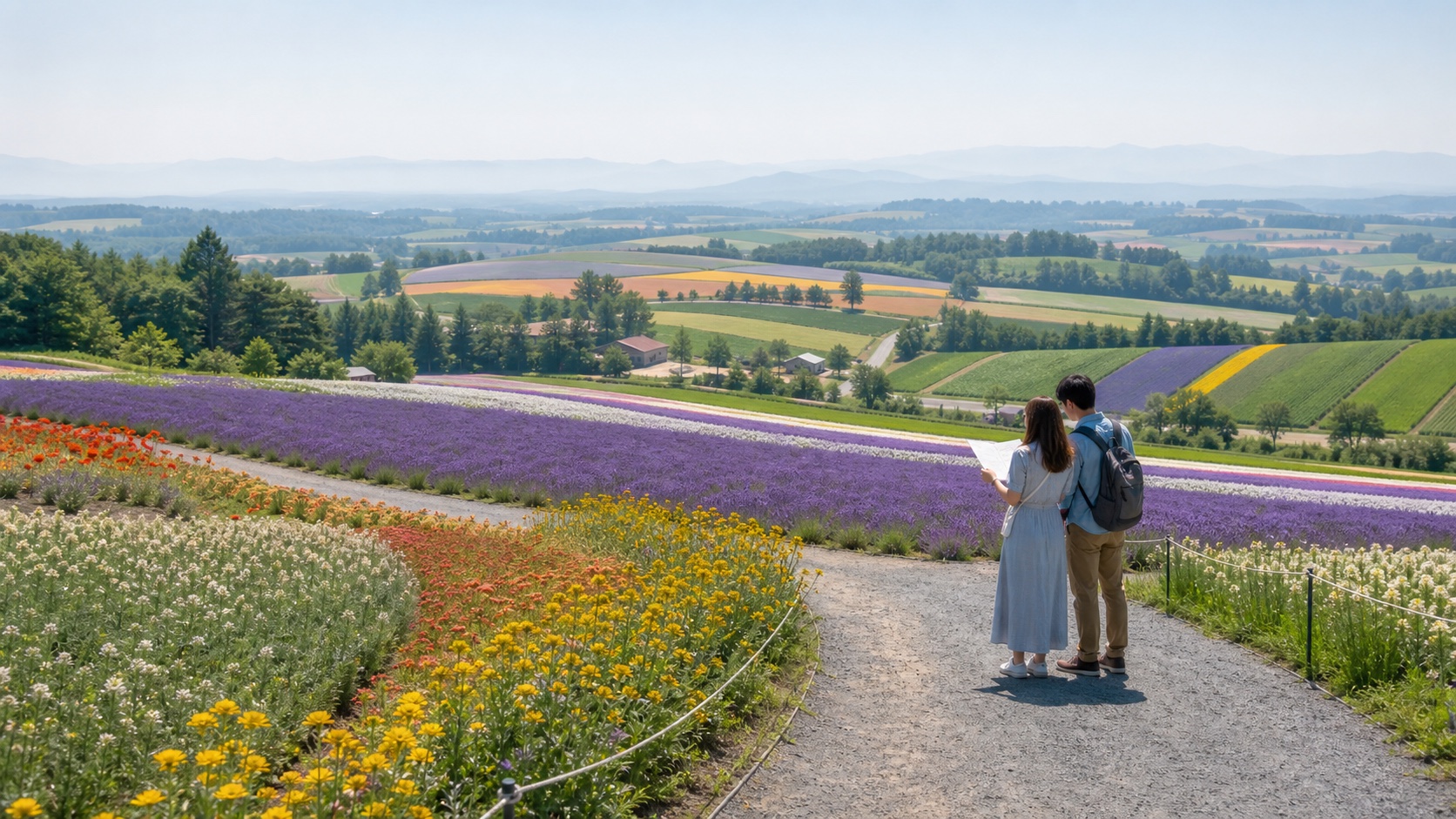
Choose one Furano and Biei circuit, then check current bloom reports rather than booking around a single “peak lavender” date. Farm Tomita says early lavender varieties generally begin coloring in late June, with the usual peak around early to mid-July and harvesting continuing afterward, but weather and field management change the actual view. Other flowers, farms, hills, and seasonal landscapes can make the trip worthwhile outside that narrow window.
For a day trip, use either a rail-and-bus plan focused on places with confirmed public transport or a car plan with fewer stops and reserved time for parking. Do not combine every famous pin between Sapporo, Furano, Biei, and Asahikawa in one rushed day.
If you only do one thing: read the official flower diary or live view within a few days of travel and choose the route from what is actually blooming.
Who this guide is for
This planner is for first-time Hokkaido summer visitors, photographers, families, rail travelers, and drivers deciding whether Furano and Biei fit a Sapporo or Asahikawa itinerary. It also helps travelers whose dates miss the expected lavender peak.
This is not a bloom forecast. Farm Tomita, individual gardens, transport operators, road authorities, and Hokkaido weather information control the visit. The practical goal is a resilient route with two or three anchors, not a promise that every photographed field will look the same.
| Route style | Best for | Main constraint |
|---|---|---|
| Rail and seasonal local transport | Travelers avoiding a rental car | Timetable, walking, luggage, and limited stop choice |
| Rental car from Asahikawa | Biei plus selected Furano fields | Parking, rural roads, fatigue, and one-way terms |
| Rental car from Sapporo | A transfer day with a flower stop | Long total driving and city traffic |
| One or two local nights | Weather flexibility and early starts | Hotel location and evening transport |
Understand the flower calendar without overpromising
Lavender is only one part of the Furano and Biei growing season. Different fields use different varieties and planting plans, so color can continue through other flowers before and after the best-known lavender period. Farm Tomita publishes current news, field information, weather, and live views; use those sources close to the visit.
Do not use a social-media photograph as a current condition report. The image may be from another year, a restricted viewpoint, a telephoto angle, or a field that has already been harvested. Weather can move development, and agricultural work can change access.
When dates are fixed, plan for “seasonal landscape” rather than “exact purple field.” A garden, hill route, local food stop, craft visit, or indoor photo gallery can keep the day useful.
Build a realistic one-day route
Step 1: choose the overnight base: Sapporo for a long day, Asahikawa for northern access, or Furano/Biei for an early local start. Step 2: choose one headline farm or garden after checking current conditions. Step 3: add one Biei landscape area or second flower stop. Step 4: add lunch and a weather-resistant stop. Step 5: remove anything that creates a fragile return.
Farm Tomita can occupy more time than the map suggests because visitors walk between fields, shops, cafés, and viewing areas. Parking and station transfers also take time. A Biei road or hill is not one attraction; safe stops and legal parking determine how long the landscape circuit takes.
If using seasonal trains or buses, build from the actual operator timetable and verify service dates. A station name near a field does not mean frequent all-day service.
Rail, bus, bicycle, tour, or rental car
Rail works when the itinerary is designed around served locations and the traveler accepts walking and limited flexibility. Seasonal services may improve access, but dates and stops change. A guided bus or tour can connect highlights without driving, though the schedule may not follow current bloom priorities.
A bicycle offers a slower landscape experience but requires fitness, suitable weather, road awareness, and a route that respects hills and traffic. Check rental return times and whether the bicycle is appropriate for the terrain.
A car provides flexibility but does not create unlimited time. Use designated parking, never stop in a traffic lane or farm entrance, and keep navigation changes off the moving road. Rural scenery is also a working agricultural landscape.
Use respectful field and photography behavior
Stay on marked paths and public viewpoints. Do not enter rows, private fields, driveways, or farm structures for a cleaner photograph. Keep tripods and group poses from blocking paths. Follow drone and commercial-photography rules at each property.
Flowers are crops and managed displays, not a backdrop visitors may rearrange. Do not touch, pick, or place objects in a field. Keep children supervised and pets within the facility's current rules.
Arriving early can reduce crowd pressure, but only within published opening hours. Farm Tomita explicitly states that admission is not allowed outside opening hours, which vary by season.
Prepare for sun, rain, and temperature changes
Hokkaido summer can include strong sun, heat, rain, wind, and cool mornings. Check JMA and local conditions, carry water, use sun protection, and bring a light layer and rain protection. Paths can be uneven or muddy.
Smoke, heavy rain, poor visibility, road closure, or severe weather should change the route. Keep one indoor or town-based alternative. A fixed garden ticket or lunch reservation should not push the group into unsafe road or weather decisions.
For accessibility, verify slope, surface, toilets, wheelchair availability, parking, and the route between transport and the viewing areas with each facility.
Decide whether to stay overnight
One or two local nights can turn an uncertain day trip into a flexible regional stay. You can use the clearest morning for fields, move an indoor stop to rain, and avoid crossing Hokkaido twice in one day. The hotel should match the transport plan: near a station for rail, or with confirmed parking for a car.
A Sapporo day trip can still work when the group accepts an early departure, limited stops, and a late return. It becomes weak when the plan includes both distant Biei roads and several Furano attractions.
If continuing to eastern or northern Hokkaido, make the flower day part of a one-way route rather than returning only because the hotel was booked first.
Common mistakes and better fixes
| Common mistake | Better action |
|---|---|
| Booking one historic peak date as a guarantee | Check the current official flower diary and live conditions. |
| Putting every Furano and Biei pin into one day | Choose two or three anchors and protect the return. |
| Driving onto private land for a photograph | Use only designated roads, parking, paths, and viewpoints. |
| Ignoring seasonal transport dates | Build the route from the current operator timetable. |
| Treating rain as a failed day | Keep a town, food, craft, or indoor alternative. |
What to verify on official sources
Verify current blooms, live view, opening hours, access, seasonal train or bus, road status, parking, admission, accessibility, photography, drone rules, shops, and temporary closures. Check weather and road information before departure.
Use Farm Tomita for its fields and facility, HOKKAIDO LOVE! for regional context, and the actual operator for transport. Other gardens control their own information.
Related tools and next steps
- Trip Planner — compare Sapporo, Asahikawa, and local bases.
- Hokkaido driving planner — keep the road day realistic.
- Hokkaido region guide — connect the flower route to the wider trip.
- Weather and alert basics — prepare a verified weather backup.
Official sources
- Farm Tomita Official Website (checked 2026-08-30)
- Farm Tomita: Official FAQ and typical lavender timing (checked 2026-08-30)
- HOKKAIDO LOVE!: Biei seasonal flower context (checked 2026-08-30)
Plan your next step
FAQ
When is lavender usually best in Furano?
Farm Tomita says early varieties generally begin coloring in late June and the usual peak is around early to mid-July, but current weather and field reports must be checked.
Can I visit Furano and Biei without a car?
Yes, when the route is built around current rail, seasonal transport, tours, and walkable stops. Do not assume every scenic field has frequent service.
Is Furano a day trip from Sapporo?
It can be with an early departure and limited stops, but a local or Asahikawa base gives more weather and timing flexibility.
What if lavender is past peak?
Check other flowers, Biei landscapes, local food, crafts, and indoor stops. Plan for a seasonal landscape rather than one exact field.
Can I enter fields for photographs?
Only where the facility explicitly provides a path or public area. Never enter rows, private farms, or driveways.
Should I reserve a Farm Tomita visit?
Follow the current official facility guidance. Opening hours, access, cafés, group rules, and seasonal operations can change.