
Beppu vs Yufuin: Which Onsen Base Fits Your Kyushu Trip?
Compare Beppu and Yufuin by transport, onsen variety, ryokan style, evening atmosphere, family needs, and onward route before booking an Oita stay.
At a glance
- Best for
- First-time
- Main decision
- Which base reduces time, cost, and luggage friction
- Time needed
- 20-30 minutes before booking hotels
- Official checks
- Hotel location, cancellation rules, room size, station access
- Related tool
- Where To Stay Hub
choose the accommodation experience first, then confirm how the town fits the arrival and onward route.
Quick answer
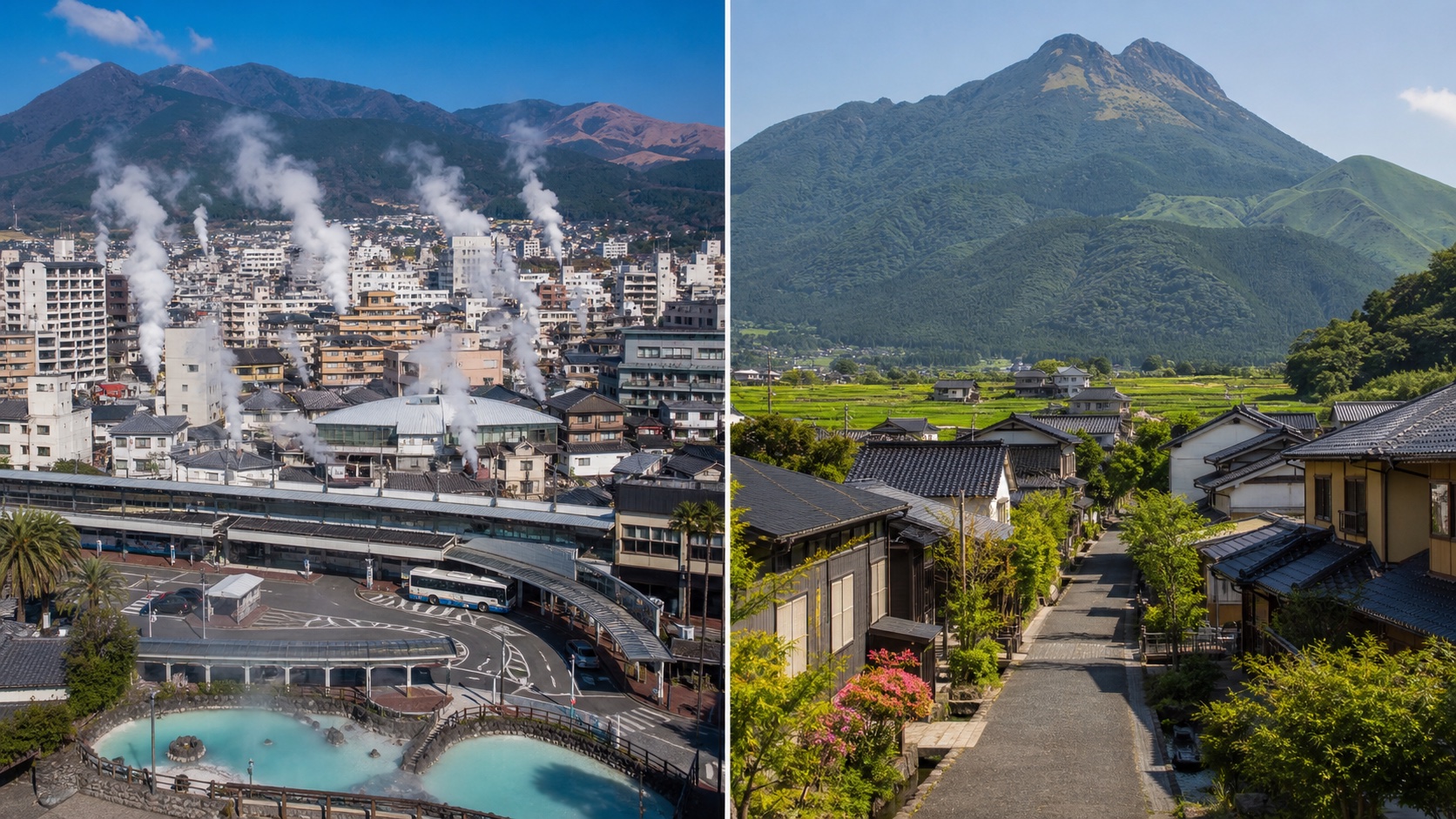
Choose Beppu when you want onsen variety, urban transport, public baths, geothermal sights, and flexibility after arrival. Choose Yufuin when the accommodation, quiet streets, Mount Yufu setting, and slower ryokan experience are the main purpose of the stay. Neither town is universally better; they solve different trips.
Beppu is the more forgiving base for a late arrival, an unstructured evening, or a traveler who has not booked every meal. The official tourism site describes eight distinct hot-spring areas, known collectively as Beppu Hatto. Yufuin is the stronger choice when a carefully selected inn and an unhurried morning matter more than seeing multiple onsen districts.
If you only do one thing: choose the accommodation experience first, then confirm how the town fits the arrival and onward route.
Who should choose each base
Beppu generally fits first-time Kyushu visitors, bath enthusiasts, families needing transport options, solo travelers who want public facilities, and routes continuing toward Oita or another rail connection. Yufuin fits couples, ryokan-focused stays, repeat visitors, slower itineraries, and travelers willing to pay for the room and dinner experience they actually want.
Travelers with tattoos, limited mobility, young children, dietary needs, or a preference for private bathing should ask the accommodation directly. An area's reputation does not guarantee that a particular bath, room, shuttle, or meal fits the guest.
| Decision | Beppu | Yufuin |
|---|---|---|
| Main reason to stay | Compare several onsen areas and geothermal sights | Enjoy a specific ryokan and quiet setting |
| Arrival flexibility | Higher | Lower when dinner and shuttle times are fixed |
| Evening style | Urban choices and local baths | Mostly accommodation-centered |
| One-night fit | Good for sightseeing plus bathing | Best when the inn itself justifies the night |
Why Beppu works as a flexible base
Beppu is not one compact onsen street. Its eight hot-spring areas include different landscapes and bathing traditions. Kannawa is associated with rising steam and geothermal cooking; Myoban has a mountain onsen atmosphere; central Beppu gives easier station access and Takegawara's historic presence. The official site provides access information between areas, which matters because a hotel near the station is not automatically walkable to every onsen district.
Choose a Beppu hotel by the experience that must be easiest. Stay near the station for rail arrival and an uncomplicated departure. Stay around Kannawa when steam-filled streets, jigoku sights, and an onsen neighborhood are the priority. Verify the last bus or hotel shuttle rather than assuming taxis will always be the preferred solution.
Public and community baths have local rules. Some facilities are simple and may not provide the shower, towel, soap, multilingual service, or card payment expected at a resort. Read the facility's current information and bring a small bathing kit when appropriate.
Why Yufuin works as a stay-first destination
Yufuin is most rewarding when the trip leaves time to arrive before check-in, walk without luggage, enjoy dinner at the accommodation, and have a quiet morning. The town is served by rail and bus, and the official Yufu access page should control the route choice. A map may make the center appear small, but a ryokan outside the walkable core can depend on a shuttle or taxi.
Do not choose Yufuin only because a social post shows Mount Yufu or a photogenic lake. Choose it because the selected lodging, room, bath, meal plan, and atmosphere justify the schedule. Shops and daytime attractions do not all stay open into the evening, so a room-only booking without a dinner plan deserves closer attention.
For a one-night stay, protect the inn's check-in and meal time. For two nights, use the extra day for a genuinely slow pace or a carefully connected Oita excursion rather than filling every hour.
Transport and route fit
Check both the arrival and departure, not just the journey between the towns. Beppu can fit naturally between Fukuoka, Oita, and other eastern Kyushu travel. Yufuin may fit a scenic train or bus plan, but reservations, operating days, and seasonal demand can affect the ideal connection.
A Beppu-to-Yufuin day trip can work, yet it should not be used to avoid choosing. If the trip's main goal is a Yufuin ryokan evening, sleep there. If the goal is Beppu's onsen variety, stay in Beppu and make Yufuin optional. Moving hotel bags for a small difference in scenery creates more friction than value.
| Route shape | Better base | Reason |
|---|---|---|
| Late arrival, early onward train | Beppu | More forgiving urban transport and dining. |
| One special ryokan night | Yufuin | The stay itself is the destination. |
| Onsen comparison and geothermal sights | Beppu | Eight onsen areas provide more variety. |
| Quiet two-night reset | Yufuin | A slower accommodation-centered rhythm fits. |
Budget and booking decisions
Compare total stay cost, not the lowest room price. A Yufuin rate may include dinner and breakfast; a Beppu business hotel may leave meals and bathing fees separate. Private baths, in-room baths, station pickup, child meals, and special dietary arrangements can change the real total.
Read cancellation terms before booking because a ryokan meal plan is operationally different from a standard city room. Confirm whether the quoted price is per person or per room, whether local taxes or bathing charges are collected separately, and whether the exact room includes the bath shown in the listing.
How to compare two real hotel listings
Open the two exact room plans side by side and record arrival cutoff, dinner inclusion, bath type, bed or futon setup, station transfer, cancellation date, and final tax-inclusive total. Then add the cost and time of reaching the onsen district or station the next morning. This comparison often reveals that the apparently cheaper room solves fewer needs. Save the room-plan name in the booking note because photographs shared across a property may show a different room category.
Onsen etiquette and accessibility
Wash before entering a shared bath, keep towels out of the water, and follow the facility's posted rules. Do not assume tattoo policies are the same across a town. Ask the exact facility about covers, private baths, or permitted times. Guests who need a family bath should reserve it when the inn requires a time slot.
Hot water can affect people with some health conditions. Keep the first soak short, hydrate, and follow medical advice. Accessibility varies widely: a modern hotel may have lifts while a traditional inn may have steps, floor seating, or a bath without handrails. Request precise information rather than relying on a general accessibility icon.
Common mistakes
Common mistakes include booking Yufuin after the inn's dinner time, selecting a Beppu hotel far from the intended onsen area, moving between both towns with large luggage for one night each, assuming every bath accepts tattoos, and choosing a room from a photograph without confirming the exact room type.
The better method is to list the non-negotiables: arrival time, main onsen experience, private or shared bath, meal plan, child or dietary needs, budget, and next-day departure. The base that solves more of those items is the right choice.
What to verify on official sources
Use Beppu Tabi for the eight onsen areas, current access, information centers, and local bathing guidance. Use Yufu City's official tourism access page for current rail, bus, and road information. Confirm operating hours, fares, reservations, tattoo rules, accessibility, meals, and shuttles with the actual operator or accommodation.
Related tools and next steps
- Region Finder — compare Kyushu with other regional bases.
- Budget Calculator — compare room-only and meal-included totals.
- Trip Planner — test Beppu or Yufuin against the wider route.
- Kyushu guide — connect Oita with Fukuoka and other stops.
Official sources
- Beppu Tabi official English tourism site (checked 2026-08-30)
- Beppu official access guide (checked 2026-08-30)
- Beppu official bathing etiquette feature (checked 2026-08-30)
- Yufu City official tourism access (checked 2026-08-30)
Plan your next step
FAQ
Is Beppu or Yufuin better for a first onsen trip?
Beppu is usually easier for a first visit because it offers more transport and bathing options. Yufuin is better when a specific ryokan and quiet stay are the main goal.
Can I visit Yufuin as a day trip from Beppu?
Yes, subject to current train or bus schedules. Stay overnight in Yufuin instead when the ryokan evening is the reason for going.
Which town is easier without a car?
Both can work. Beppu has broader urban transport, while central Yufuin is walkable after arrival. Check the exact hotel's distance and shuttle rather than judging the town name.
Which is better for families?
Beppu is often more flexible, but a Yufuin inn with a confirmed family bath and child meal can be excellent. Ask the exact property about beds, meals, baths, and access.
Are tattoos allowed in Beppu and Yufuin onsen?
Policies vary by facility. Contact the bath or accommodation directly and ask about covers, private baths, or permitted times.
Should I stay one night in each town?
Usually not on a short trip. Choose the stronger base and visit the other only if the transport and purpose justify moving luggage.