
Missed Japan Cherry Blossoms? Build a Better Backup Plan
Use bloom stage, tree variety, elevation, latitude, weather, and route cost to find a realistic spring alternative without chasing forecasts across Japan.
At a glance
- Best for
- Winter
- Main decision
- Which spending range fits the route
- Time needed
- 15-30 minutes for a planning pass
- Official checks
- Opening hours, transport schedules, weather, reservations
- Related tool
- Japan Costs And Tips
check a same-day official bloom update before changing a hotel or buying a long-distance ticket.
Quick answer
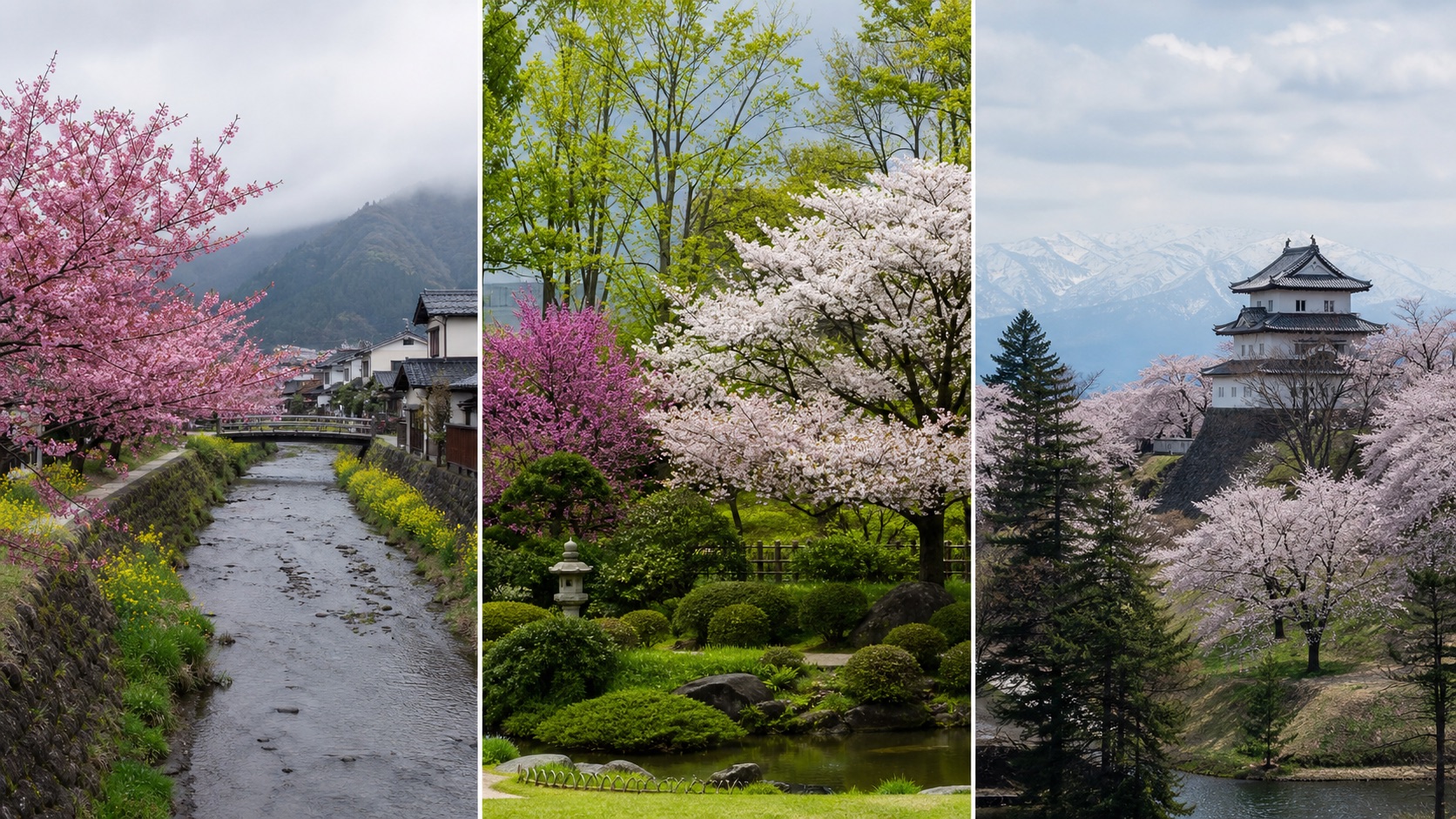
If peak cherry blossom timing moves, do not immediately rebuild the trip around a distant forecast. First check the actual bloom stage in the city you are already visiting. Then look for a different variety, a cooler or higher nearby area, a botanical garden, or another seasonal landscape that fits the same hotel and transport plan. Move to another region only when the experience justifies the added travel and the current official update supports it.
JNTO's forecast guidance makes the central limitation clear: blossom dates change with weather. The broad season progresses across climates, elevations, and varieties, but one forecast date is not a guarantee for one tree or park. A resilient trip treats blossoms as a layer on top of a good Japan itinerary, not as the structure holding the entire route together.
If you only do one thing: check a same-day official bloom update before changing a hotel or buying a long-distance ticket.
Who needs an alternative plan
This guide is for travelers with fixed flights, nonrefundable hotels, a spring trip that lands before or after expected peak, or several cities where the bloom stages differ. It also helps photographers and families decide whether an extra transfer is worth the uncertain reward.
The plan is not designed to promise blossoms. It is designed to protect the trip from a missed prediction. Travelers who can change dates freely may follow the season more aggressively; most international visitors gain more by keeping a strong route and making one evidence-based local adjustment.
| Current local stage | Best response | Avoid |
|---|---|---|
| Buds or very early bloom | Look for early varieties, plum, or a warmer nearby location | Booking a distant city from an old average date |
| Opening to near peak | Keep the route and choose several local parks | Waiting for one famous spot to become perfect |
| Petal fall | Use sheltered locations, late varieties, or cooler elevations | Assuming every tree in the city is finished |
| After the main display | Choose a later region only if the route remains sensible | Sacrificing two travel days for one uncertain park |
Understand what a forecast can and cannot tell you
Forecast tables usually refer to an observed representative tree or a city-level estimate, not every garden. “First bloom” and “full bloom” are different stages, and wind or rain can shorten the most photogenic period. Varieties also bloom on different schedules. A park with one dominant variety may change quickly; a garden with several varieties can provide a longer sequence.
Use forecast direction to choose a region, then use the destination's own official updates for the specific place. Check the date of the update and whether the image or stage report refers to the area you can actually enter. Social posts can show conditions, but official opening, reservation, crowd, and access rules still control the visit.
Do not treat a warm afternoon as proof that tomorrow is peak. The travel decision is whether the current evidence is strong enough to justify changing the route.
Use the local-first alternative ladder
Level 1: Change the park, not the city. Compare a famous river or castle with a botanical garden, larger landscaped park, or site known for more than one variety. This costs little and preserves the day.
Level 2: Change elevation or exposure. A hill, mountain area, or cooler inland location may run later than a low urban river. Access and weather must still be checked; elevation is not a guarantee.
Level 3: Make a nearby day trip. Choose a place reached without changing hotels and with other reasons to visit: a castle, historic district, garden, museum, or food area. Blossoms then improve a worthwhile day rather than justify it alone.
Level 4: Change one overnight. Move only when the official update is current, the later region fits the remaining route, and cancellation and transport costs are acceptable.
Level 5: Replace the flower goal. Plum, peach, rapeseed, wisteria, fresh green gardens, mountain snow, and spring festivals can all define the season. Verify the actual event and bloom status rather than substituting another prediction.
Early and late alternatives by route shape
Before the main Somei Yoshino season, some warmer locations and early-blooming varieties may already be active, while plum gardens can create a different but equally Japanese spring day. After central-city peak, northern regions and higher areas can run later. JNTO's April guidance highlights later opportunities in Tohoku and mountainous parts of Nagano and Niigata, but exact timing changes each year.
The correct alternative follows the route. A Tokyo traveler might consider a local garden, a nearby day trip, or a later highland stop already on the itinerary. A Kansai traveler should first compare Kyoto, Osaka, Nara, and nearby mountain areas before adding a long Tohoku transfer. A traveler already moving north can build Aomori or Hokkaido into the route when the official information supports it.
A “late blossom city” is not a universal answer. Travel date, current year, transport, weather, and the rest of the trip must agree.
Build a useful spring day even without peak bloom
Choose a place with at least three independent reasons to go. A castle park can offer history, water, and a town center. A landscaped garden can offer seasonal planting, tea, and shelter nearby. A mountain town can offer scenery, local food, and a walk even if flowers are early or late.
Schedule the outdoor site in the clearest part of the forecast, then add one indoor anchor. Rain does not automatically ruin blossom viewing, but strong wind and heavy rain affect petals and comfort. A museum, craft center, market, or bath prevents the whole day from depending on one tree.
For photography, carry rain protection and respect barriers. Do not shake branches, enter planted areas, reserve public space with an unattended sheet, or block paths for a photo.
Decide whether a chase is worth it
Calculate the real cost: extra rail or flight, hotel cancellation, luggage movement, lost time, weather risk, and what is removed from the original route. Then compare it with the confidence and uniqueness of the alternative. A current official “full bloom” report in a city already on the route can justify a small adjustment. A forecast for a distant place several days ahead usually cannot justify dismantling the trip.
Use this rule: no cross-country move for blossoms alone unless the destination would still be worth the trip with no flowers. This turns an uncertain seasonal chase into a sound travel decision.
Common mistakes and better fixes
| Common mistake | Better action |
|---|---|
| Treating first bloom as full bloom | Read the stage definition and destination update. |
| Using average dates as this year's condition | Use current-year forecasts and same-day local reports. |
| Changing hotels for one famous park | Try the local-first ladder before moving. |
| Assuming a city is completely finished | Check variety, elevation, and multiple official sites. |
| Building a day with no non-flower value | Choose history, food, gardens, or indoor anchors as well. |
What to verify on official sources
Check JNTO's current-year forecast context, then open the official park, garden, city, or tourism page for the destination's latest stage, opening hours, reservations, event dates, access, and crowd controls. Recheck weather through the Japan Meteorological Agency.
Do not publish or plan around a date from a previous year. Even a current forecast is conditional and should be checked again near the visit.
Related tools and next steps
- Trip Planner — compare the local-first and overnight alternatives.
- Region Finder — match a later or earlier region to the existing route.
- Japan itinerary hub — keep the core trip valuable without blossoms.
- Japan regions — compare realistic spring starting points.
Official sources
- JNTO: current cherry blossom forecast page (checked 2026-08-30)
- JNTO: Japan in April (checked 2026-08-30)
- JNTO: Spring in Japan (checked 2026-08-30)
Plan your next step
FAQ
What should I do if Tokyo cherry blossoms are early?
Check current local varieties and official park updates first. If the main display has passed, consider a cooler nearby area or a later northern stop already compatible with the route.
Are cherry blossom forecast dates guaranteed?
No. They are weather-dependent estimates. First bloom, full bloom, and individual park conditions can differ, so check the current destination update.
Should I change cities to find blossoms?
Only after checking local alternatives and only when the new city still makes sense without flowers. Include transport, hotel, luggage, and lost-time costs.
Can different cherry varieties bloom at different times?
Yes. Gardens and parks with multiple varieties can have a longer sequence than places dominated by one variety. Verify the specific site.
What can replace cherry blossoms on a spring trip?
Depending on verified timing, consider plum, peach, rapeseed, wisteria, fresh green gardens, mountain scenery, or a spring cultural event.
How late can cherry blossoms appear in Japan?
Northern and higher areas can bloom later than major central cities, sometimes into late spring, but exact dates vary every year. Use current official reports.