
Kyoto Gion Matsuri: Procession, Yoiyama, and Viewing Planner
Plan Kyoto’s Gion Matsuri by choosing the early or latter festival, checking the current official calendar and paid seats, managing heat and crowds, using rail-first transport, and respecting the religious event.
At a glance
- Best for
- First-time
- Main decision
- Which spending range fits the route
- Time needed
- 15-30 minutes for a planning pass
- Official checks
- Opening hours, transport schedules, weather, reservations
- Related tool
- Japan Costs And Tips
choose the exact festival phase before choosing the hotel, seat, or train.
Quick answer
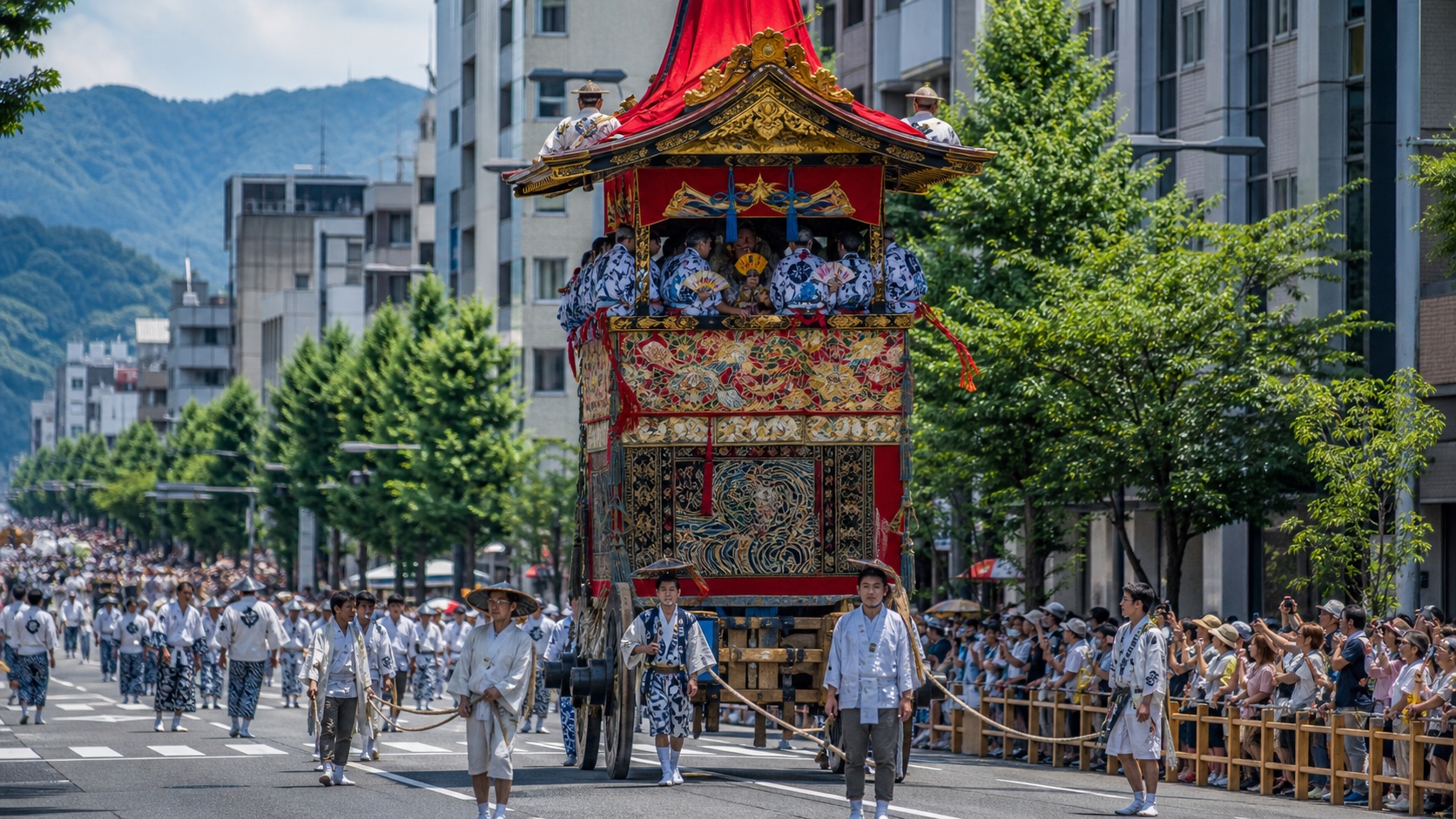
Choose one main Gion Matsuri experience: an early-festival procession, a latter-festival procession, a Yoiyama evening, or a religious event connected with Yasaka Shrine. Do not treat the whole month as one parade. Check Kyoto City's current official calendar, procession route, weather notices, and paid-seat sales for the exact year before booking travel.
Kyoto City's official guide explains that Gion Matsuri is a month-long July religious festival of Yasaka Shrine, with major float processions traditionally associated with July 17 and July 24 and Yoiyama periods before them. Annual operational details, paid seats, routes, restrictions, and ticket terms can change.
If you only do one thing: choose the exact festival phase before choosing the hotel, seat, or train.
Who this guide is for
This guide is for first-time festival visitors, photographers, families, cultural travelers, and anyone deciding whether to buy a paid viewing seat. It helps separate the religious festival, float processions, evening street atmosphere, and tourism logistics.
It is not the annual program. Weather, ceremonies, route controls, paid-seat rules, traffic, and crowd management are year-specific. Yasaka Shrine, Kyoto City, organizers, police, transport operators, and ticket sellers control the event.
| Experience | Best for | Main check |
|---|---|---|
| Early procession | Largest procession focus | Current route, start, closures, and heat |
| Latter procession | Different floats and festival rhythm | Current route and related events |
| Yoiyama evening | Lanterns, floats, music, and street atmosphere | Pedestrian controls, crowd flow, and final transport |
| Paid seat | Defined place and reduced standing | Official sale, seat type, weather, and refund terms |
Understand the festival before planning the spectacle
The official Kyoto guide traces Gion Matsuri to rituals associated with protection from epidemic and identifies Yasaka Shrine as the religious center. The float processions are major public highlights, but portable-shrine rituals and many smaller events are part of the month.
Approach the festival as a living religious and community tradition. Follow shrine etiquette, barriers, staff, and neighborhood rules. Do not enter float buildings, private homes, or restricted lanes because another visitor appears to do so.
Learning the difference between the early and latter festivals makes the day more meaningful and prevents an itinerary from placing a visitor on the wrong route or date.
Choose early procession, latter procession, or Yoiyama
The early procession generally has more floats and attracts very large crowds. The latter procession presents a different group of floats and related events. The routes and exact start details should be taken from the current official map, not memorized from this page.
Yoiyama evenings allow visitors to see illuminated floats, hear festival music, and experience the float neighborhoods before the processions. They can be densely crowded and hot, with pedestrian controls and difficult cross-street movement.
Choose one phase when the trip is short. Attending both procession and Yoiyama can be rewarding, but only with nearby accommodation, heat recovery, and a lighter daytime schedule.
Decide whether a paid seat solves your problem
An official paid viewing seat can provide a defined location, a clearer line of sight, and less standing uncertainty. It does not remove summer heat, rain, travel to the seat, crowds after the procession, or event changes. Premium products can be expensive and may include features that do not matter to every traveler.
Use only the current Kyoto City Tourism Association sales page and authorized ticket channel. Check seat location, arrival deadline, language support, shade, accessibility, companion seating, included items, prohibited items, weather policy, cancellation, refund, and electronic-ticket requirements.
Free viewing may suit flexible solo travelers who understand the route and can accept an imperfect view. Families, older travelers, and visitors needing a defined position may gain more value from a suitable official seat.
| Need | Paid seat may help | Still unresolved |
|---|---|---|
| Defined viewing place | Yes, for the purchased section | Travel and post-event crowd |
| Reduced standing | Often, depending on seat type | Heat, sun, and rain |
| Accessible viewing | Only if specifically confirmed | Route, toilets, and transport |
| Guaranteed event | No | Weather and operational change |
Use a rail-first arrival and an exit plan
Road closures and crowd controls make bus and taxi assumptions fragile. Use subway or private railway access where practical, then walk by an official route. Check which station exit is open and whether the crowd direction permits the intended crossing.
Choose the exit station before the event begins. The nearest station can become the most crowded. A longer walk to a different line may be easier, but confirm last trains and accessible routes.
Do not bring large luggage. Use hotel storage, lockers, or delivery before entering the festival area. Keep a paper hotel address and offline rail plan.
Plan for Kyoto's July heat and storms
Procession mornings and Yoiyama evenings can be hot and humid. Check the Japan Meteorological Agency and event notices, hydrate, use sun protection, take indoor or shaded breaks, and recognize heat-illness symptoms. Children and older travelers need conservative exposure.
An umbrella may be unsuitable in a dense viewing area and can block sightlines. Follow seat and organizer rules for rain gear. Bring only permitted compact items and protect tickets and electronics.
Natural disasters or dangerous weather can change or cancel the event. Read the official compensation and refund terms; transport and hotel costs may not be covered.
Photograph without obstructing the festival
Stay behind barriers, keep equipment within your space, and never lean into the route. Do not use tripods, step stools, drones, or large equipment where prohibited. A raised phone can obstruct many people behind you.
Ask before photographing residents, participants at close range, private displays, or interior spaces. The festival is not a staged photo shoot. Do not follow participants into restricted areas or block emergency and staff movement.
For a paid seat, read the camera and device rules attached to that section. A ticket does not grant commercial-use rights.
Keep families and groups together
Choose a meeting point outside the densest route, dress children with contact information, and assign one adult per child in heavy crowds. Mobile service can slow. A bright but respectful marker and a paper hotel card can help.
Use toilets before entering the viewing area and verify nearby facilities. Carry water and a simple snack only where permitted, and take all waste away. Do not expect a stroller to move through every crowd-control route.
Groups should agree on one must-see segment and permission to leave early. Staying together is more important than capturing every float.
Common mistakes and better fixes
| Common mistake | Better action |
|---|---|
| Treating Gion Matsuri as one parade | Choose the exact festival phase and date. |
| Buying from an old seat-sales article | Use the current official annual sales page. |
| Arriving by direct bus with no backup | Use rail first and plan the exit. |
| Ignoring heat because the seat is reserved | Plan hydration, shade, clothing, and early exit. |
| Blocking the route for photographs | Remain behind barriers and keep devices low. |
What to verify on official sources
Verify the annual calendar, procession route, Yoiyama map, paid-seat sale, authorized channel, seat terms, weather policy, prohibited items, photography, accessibility, toilets, road closure, station access, and last train. Check again on the event morning.
Use the evergreen official festival guide for context and the current annual page for operations. Do not use this article's publication date as proof of the current program.
Related tools and next steps
- Trip Planner — protect the festival phase and recovery time.
- Kyoto crowd-avoidance transport — build the rail-first arrival.
- Shrine and temple etiquette — understand the religious context.
- Kansai region guide — place festival nights in the wider route.
Official sources
- Kyoto City: Gion Matsuri Festival (checked 2026-08-30)
- Kyoto City: Current viewing-seat information (checked 2026-08-30)
- Kyoto Tourist Information Center: Gion Matsuri schedule context (checked 2026-08-30)
- Kyoto City: Getting Around Kyoto (checked 2026-08-30)
Plan your next step
FAQ
When is Kyoto Gion Matsuri held?
It is a month-long July festival with major events traditionally around the early and latter festival periods. Verify the current official annual calendar.
What is the difference between the early and latter processions?
They involve different groups of floats and routes within the festival. Use the current official map and choose the one that fits your dates.
Are Gion Matsuri paid viewing seats worth it?
They can provide a defined place and reduce standing uncertainty, but they do not remove heat, weather, travel, or event-change risk.
Can I watch the procession for free?
Free public viewing may be possible under current controls, but sightlines and crowds are uncertain. Follow barriers and annual official guidance.
What is the best transport for Gion Matsuri?
Use rail or subway first where practical, then walk by the official route. Plan a separate exit station and avoid large luggage.
Is Gion Matsuri suitable for children?
It can be, with conservative heat exposure, close supervision, toilets, a clear meeting plan, and permission to leave before crowds become difficult.