
Japan Temple and Shrine Etiquette: A First-Visit Guide
Visit Japanese temples and shrines respectfully with a practical sequence for gates, purification, prayer, shoes, photography, clothing, and crowded precincts.
At a glance
- Best for
- First-time
- Main decision
- How to fit a high-demand day into the wider Tokyo plan
- Time needed
- 15-30 minutes for a planning pass
- Official checks
- Ticket rules, entry systems, opening hours, weather
- Related tool
- Japan Itinerary Hub
read the signs at each entrance before copying what another visitor does.
Quick answer
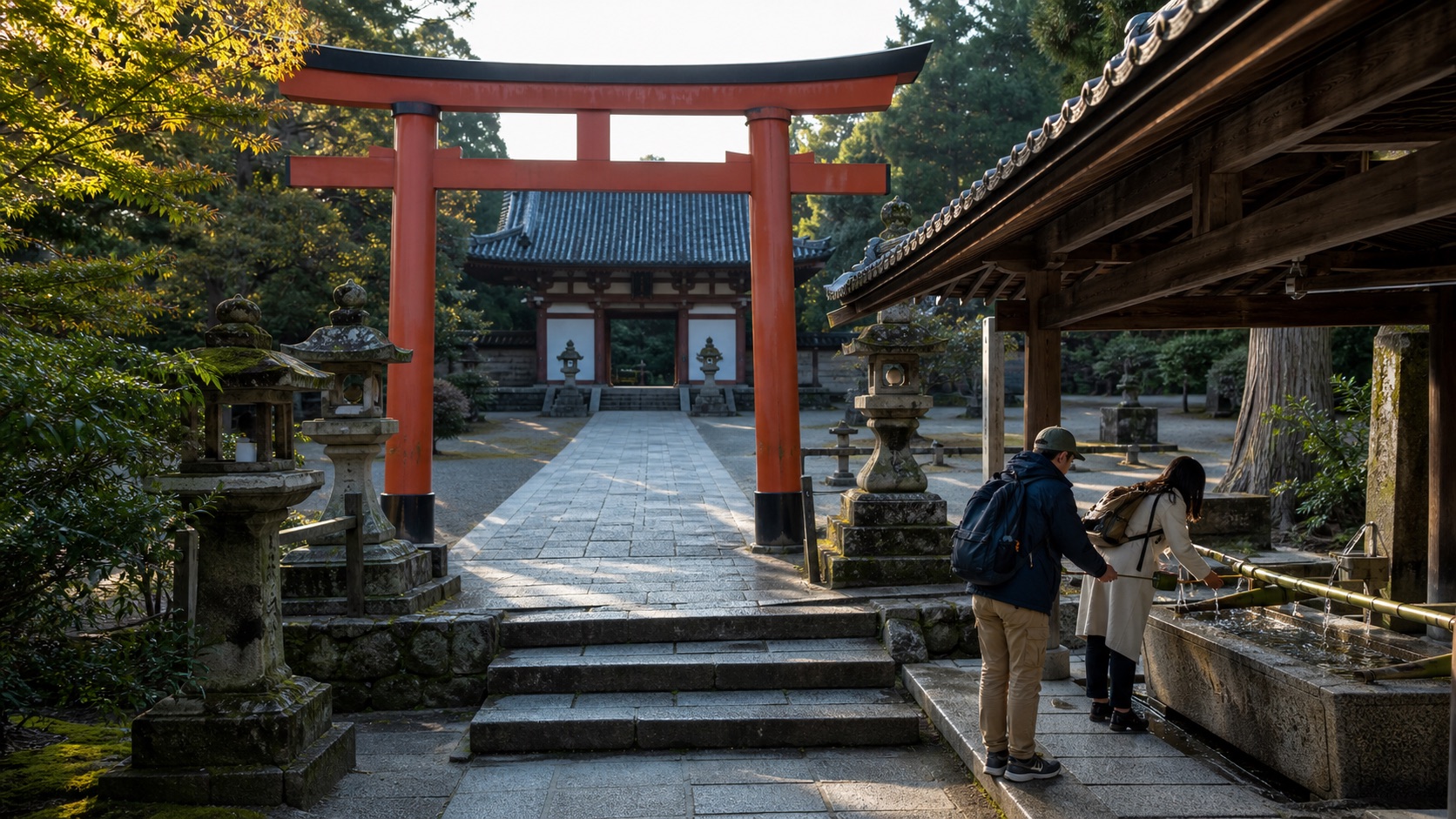
You do not need to perform every ritual perfectly to visit a Japanese temple or shrine respectfully. Slow down, keep your voice low, follow signs, stay out of restricted areas, and do not interfere with worship. At a Shinto shrine, visitors commonly bow at the torii, avoid the exact center of the approach, purify at the water basin when it is open, and use the local prayer sequence. At a Buddhist temple, calm behavior and silent prayer matter; clapping is not normally part of temple prayer.
The official Japan National Tourism Organization guide distinguishes shrines by their torii gates and temples by Buddhist gates and buildings. It also explains that individual sites may restrict photography, require shoes to be removed, or change access for ceremonies. The local site always controls the visit.
If you only do one thing: read the signs at each entrance before copying what another visitor does.
Who this guide is for
This guide is for first-time visitors building a Kyoto, Nara, Tokyo, Kamakura, Nikko, or regional heritage route. It is also useful for families, photographers, group leaders, and travelers who want to participate without turning worship into a performance. The goal is not to memorize a script. It is to understand which actions are broadly appropriate and which details are site-specific.
Religious precincts can include public paths, private residential edges, working offices, gardens, cemeteries, and sacred interiors. A route that treats every surface as a photo location will create more mistakes than a route with fewer stops and more time.
| Situation | Practical action | What controls |
|---|---|---|
| Entering a shrine | Pause, bow if comfortable, and walk to one side of the center | Posted flow and temporary barriers |
| Entering a temple | Enter calmly and follow the building's signs | Admission, ceremony, and shoe rules |
| Taking photographs | Look for permission before raising the camera | No-photo signs, staff instructions, and worshippers' privacy |
| A ritual is unfamiliar | Observe quietly or simply offer respectful silence | The site's own practice |
Know whether you are at a shrine or temple
A torii usually marks a Shinto shrine, while a sanmon or other Buddhist gate usually marks a temple. Large complexes can sit close together, and historic sites sometimes contain both traditions. Do not assume one prayer sequence applies to the entire neighborhood.
At shrines, the center approach is traditionally associated with the deity, so JNTO advises walking slightly to the left or right. At temples, there is no standard requirement to copy the shrine bow-and-clap sequence. Quietly joining your hands is a safe way to show respect when no other instruction is posted.
A destination's English name may not make the distinction obvious. Check the official site or the architecture at the entrance rather than relying on a map label.
Use the purification basin without contaminating it
When a temizuya or chozuya is open and ladles are provided, JNTO describes a sequence: pour water over the left hand, then the right, place water in the left hand to rinse the mouth, and never touch the ladle directly to the mouth. Do not drink from the ladle or return used water to the basin.
Some sites change the method, remove ladles, use running water, or close the basin. In that case, follow the current arrangement. Purification is not a hand-washing station for food, bottles, or muddy equipment. Families should supervise children so the basin remains clean and calm for other visitors.
Pray without turning the ritual into a show
At many shrines, the familiar sequence is an offering, two bows, two claps, silent prayer, and one final bow. A bell may be available, but a long queue, ceremony, or local notice can change the flow. Use a modest coin if you wish; there is no need to throw forcefully or block the front while arranging a video.
At temples, prayer is generally quiet and clapping is not customary. Incense may be available. JNTO advises extinguishing the flame by waving rather than blowing, then placing the incense as directed. Do not handle ritual objects or enter a marked sanctuary because someone else appears to do so.
Visitors may choose not to pray. A calm pause is respectful and avoids imitating a practice you do not understand.
Shoes, clothing, bags, and cultural property
Some temple buildings, halls, and traditional interiors require shoes to be removed. Wear clean socks and keep shoes where staff direct. Kyoto's official visitor guidance notes that bare feet on tatami can be inappropriate and recommends carrying socks. A small shoe bag can be useful when provided, but do not carry wet footwear over floors or displays.
Wear clothing that allows you to sit, bow, and remove shoes without difficulty. Remove a hat inside sacred buildings or while praying when local guidance asks. Carry backpacks in front or remove them in tight interiors so they do not strike screens, statues, railings, or other visitors. Do not touch cultural property.
Photography is permission, not a default
Outdoor photography may be welcome while interior photography is prohibited. A site can also restrict tripods, flash, commercial work, wedding-style sessions, drones, or photographs during worship. JNTO's FAQ specifically advises following signs at religious sites and asking permission before photographing people.
Do not photograph worshippers at close range, block a gate, step into a road, enter private property, or hold a queue for repeated poses. Kyoto's official Gion guidance emphasizes that historic districts are living neighborhoods, not theme parks. A quiet street beside a temple may still be a resident's entrance.
If a staff member asks you to stop, stop immediately. Arguing from an old blog or a social-media example does not establish permission.
Build a respectful route, not a checklist race
Allow time to approach, read notices, store luggage, remove shoes, and leave without cutting across a ceremony. Two or three meaningful sites in one district usually create a better day than six rushed entries connected by crowded buses.
Visit popular places early when official opening information supports it, but do not assume “early” means unrestricted access. Services, private observances, special openings, weather, and conservation work can change hours. Keep large luggage out of religious precincts where possible and use official storage or forwarding options.
For groups, agree on a meeting point outside the prayer area. A leader should explain the photo and voice rules before entering rather than correcting people beside worshippers.
Common mistakes and better fixes
| Common mistake | Better action |
|---|---|
| Clapping at a Buddhist temple | Pray quietly with hands together and follow local signs. |
| Putting the purification ladle to the mouth | Pour water into the left hand first. |
| Assuming indoor photography is allowed | Find explicit permission before taking the photograph. |
| Walking onto private property for a clear view | Stay on public paths and respect barriers. |
| Rushing a long list of sacred sites | Choose one district and allow time for each visit. |
What to verify on official sources
Check the site's official page for opening hours, admission, worship or ceremony closures, photography, shoes, accessibility, luggage, seasonal openings, and construction. Recheck on the day because religious observances and weather can change public access.
Use JNTO for the national distinction between shrines and temples, then let the local site determine behavior. Kyoto City guidance is particularly useful for crowded heritage districts, but it does not replace the instructions at a shrine or temple elsewhere.
Related tools and next steps
- Trip Planner — group sites by district and protect quiet time.
- First-time Japan travel guide — prepare for broader customs and logistics.
- Kyoto to Nara day trip — apply the etiquette in a practical heritage route.
- Kansai region guide — choose a base before building temple days.
Official sources
- JNTO: Shrine and Temple Traditions (checked 2026-08-30)
- JNTO travel FAQ: religious sites and photography (checked 2026-08-30)
- Kyoto City: local tips for respectful temple and shrine visits (checked 2026-08-30)
- Kyoto City: Mind Your Manners (checked 2026-08-30)
Plan your next step
FAQ
Do I have to bow at every shrine gate?
A small bow is customary but not a test. Enter calmly, avoid blocking others, and follow the site's flow.
Do I clap at a Buddhist temple?
No. Clapping is associated with common Shinto shrine prayer. At a temple, pray quietly with your hands together unless the site instructs otherwise.
Can I skip the purification basin?
Yes. If it is closed, crowded, or the method is unclear, do not improvise. Respectful behavior matters more than performing a ritual incorrectly.
Can I take photos inside temples and shrines?
Only where the site permits it. Interior worship areas, sacred objects, ceremonies, and people may be restricted even when outdoor photography is allowed.
What should I wear to a temple or shrine?
Wear practical, respectful clothing, bring clean socks for shoe-removal areas, and remove hats where posted or when entering sacred interiors.
Can children visit religious sites?
Yes, but adults should supervise voice level, purification basins, barriers, cultural property, and photography so worship is not disrupted.