
Vegetarian Convenience Store Meal Backup in Japan
Build a reliable vegetarian or vegan convenience-store backup meal in Japan by checking dashi, sauces, labels, protein, storage, allergies, and the difference between emergency food and a planned dining strategy.
At a glance
- Best for
- First-time
- Main decision
- Which spending range fits the route
- Time needed
- 15-30 minutes for a planning pass
- Official checks
- Opening hours, transport schedules, weather, reservations
- Related tool
- Japan Costs And Tips
verify the complete current label instead of relying on the product name or front photograph.
Quick answer
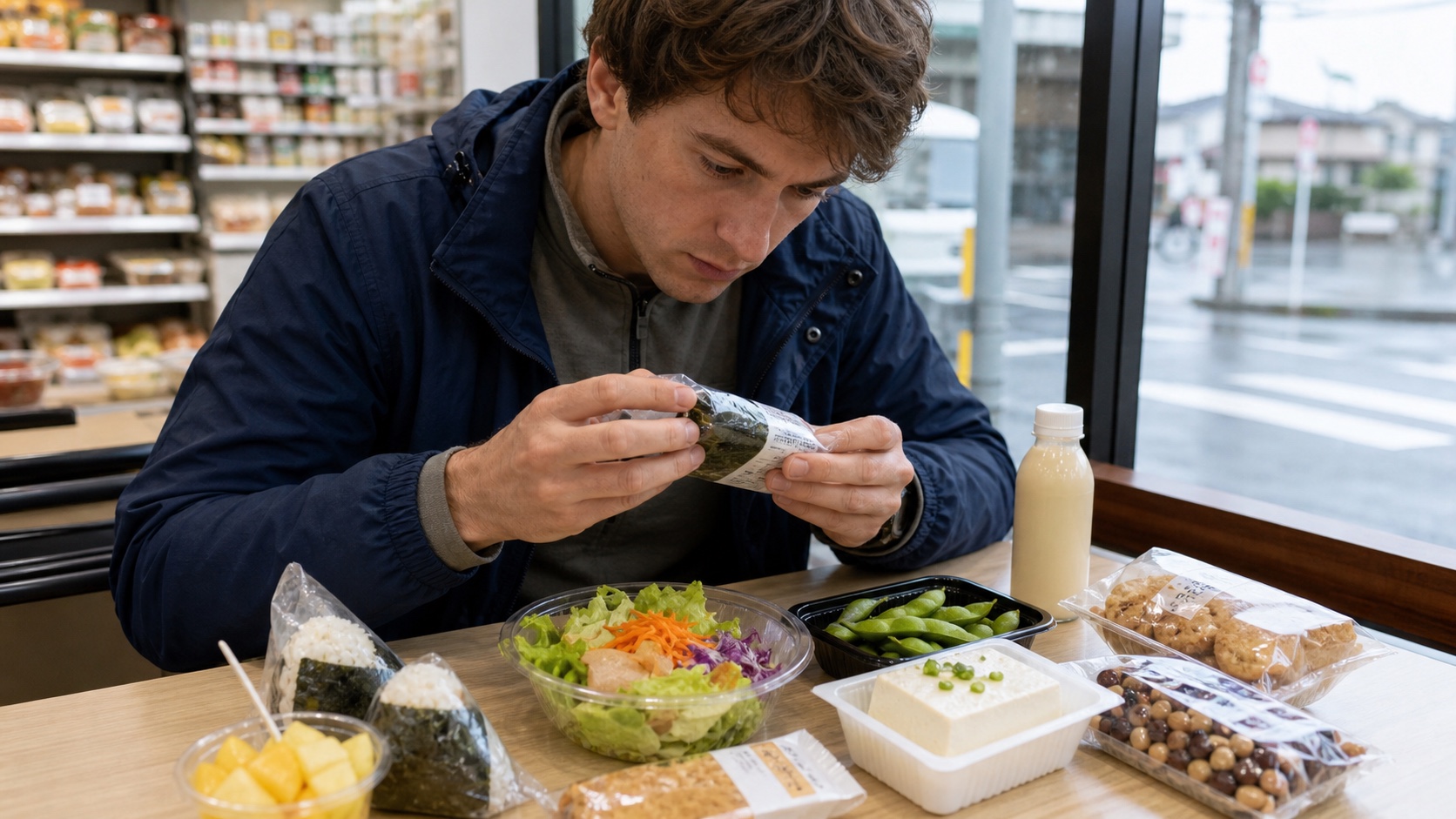
A convenience store can provide a useful vegetarian backup, but no familiar-looking product is automatically vegetarian or vegan. Build the meal from items whose current labels or staff information you can verify: plain rice or a suitable rice ball, edamame or beans, tofu, salad, fruit, a confirmed drink, and a sealed snack. Check dashi, fish extract, meat extract, gelatin, egg, dairy, alcohol, and shared preparation.
JNTO's official vegetarian and vegan guide identifies convenience stores as useful for emergency snacks and lists rice balls, edamame, tofu, salads, beans, and other possibilities. It also warns that stocks and sauces often contain meat or fish and that even natto sauce may contain fish-based dashi. Products and recipes change, so this is a method, not a shopping list.
If you only do one thing: verify the complete current label instead of relying on the product name or front photograph.
Who should use this backup plan
This guide is for vegetarian and vegan travelers who arrive late, miss a reservation, travel through rural stations, need breakfast before restaurants open, or want an emergency meal. It also helps companions understand why visible vegetables do not prove a dish fits the diet.
It is not a medical-allergy guarantee. A severe allergy, celiac disease, or medically prescribed diet requires confirmed ingredient and cross-contact information that a busy convenience store may not be able to provide.
| Meal component | Possible option | Check carefully |
|---|---|---|
| Staple | Plain rice, suitable onigiri, or bread | Filling, seasoning, shortening, dairy, and shared handling |
| Protein | Edamame, tofu, beans, or natto | Sauce, dashi, gelatin, and included packets |
| Vegetables | Plain salad, cut vegetables, seaweed | Dressing, flakes, egg, meat, and seafood garnish |
| Snack or drink | Fruit, nuts, soy drink, or sealed snack | Flavoring, dairy, honey, gelatin, and allergens |
Define the diet before entering the store
“Vegetarian” can mean different things. Decide whether the traveler avoids fish, seafood, meat, poultry, egg, dairy, honey, alcohol, animal-derived additives, or food prepared with shared equipment. Write the requirements in simple Japanese and English and keep a translation card offline.
Do not ask only “Is this vegetarian?” when a specific ingredient matters. Ask about dashi, bonito, meat extract, lard, gelatin, egg, milk, and the attached sauce. Staff may not know every production detail and may need the package.
When the answer remains uncertain, choose a simpler sealed product with a readable label or do not buy it. Hunger does not make an unclear claim reliable.
Build a meal, not a pile of carbohydrates
Start with a staple, add a protein source, add vegetables or fruit, and include water. A plain rice ball plus sweet bread may solve calories but leave the traveler hungry. Edamame, tofu, beans, or a verified soy product can improve balance, while a salad or fruit adds variety.
Check whether utensils, sauce, dressing, and reheating are included. A tofu pack may need a spoon; salad may include non-vegetarian dressing; a microwave item may be sealed with a separate garnish. Use only the portions and heating instructions on the current product.
For a late hotel meal, buy only what can be eaten promptly or refrigerated correctly. Do not keep chilled rice, tofu, salad, or prepared food in a warm room.
Watch for hidden fish and meat ingredients
Dashi is a frequent source of confusion because it can be made with bonito or other fish even when the visible ingredients are vegetables, tofu, noodles, or seaweed. Sauces for natto, noodles, inari sushi, simmered vegetables, and rice dishes may include fish or meat extracts.
Pastries and snacks can contain dairy, egg, gelatin, shortening, or flavorings. Soup, curry, and instant noodles may contain animal stock. A seaweed or plum rice ball may still change recipe or use a seasoning that does not fit the diet.
Read every purchase, including repeat brands. Recipes, factories, and limited editions change. An online list from another year is not evidence for the package in hand.
Use labels and translation tools cautiously
Japanese allergen labels can help identify listed allergens, but vegetarian status is broader than the mandatory allergen list. Fish stock, meat extract, processing aids, or shared equipment may require additional information. A translation app can misread small characters, line breaks, or compound ingredients.
Photograph the ingredient panel clearly and compare the full package, but do not upload another person's data or block the aisle. Use the manufacturer's official page when available and match the exact product code or package.
If the store sells an item under its private label, the retailer's customer service may have better information than a travel blog. Keep uncertainty explicit.
| Claim | What it does not prove | Next check |
|---|---|---|
| Vegetable flavor | No fish or meat stock | Stock, extract, and sauce |
| Contains no listed dairy allergen | Vegan production | All ingredients and shared equipment |
| Plant-based front label | Every included packet is vegan | Exact definition and attached sauces |
| Same appearance as last trip | Same recipe or factory | Current package and product code |
Separate vegetarian planning from allergy planning
A vegetarian traveler may accept shared equipment while a person with a severe allergy cannot. Do not combine the two questions. For severe allergy, ask about ingredients and cross-contact, carry prescribed medication, and choose providers able to communicate reliable controls.
A convenience store cannot always confirm factory lines, fryers, or in-store preparation. When the consequence of an error is serious, use a pre-researched restaurant, accommodation, or sealed product with manufacturer confirmation.
Medical advice should come from a qualified professional. This guide cannot decide whether a product is safe for an individual condition.
Prepare before rural travel and late arrival
JNTO notes that vegetarian options can be more difficult outside major cities and recommends advance communication with accommodations. Do not expect a rural ryokan to change a set meal at check-in. Send specific requirements early and obtain confirmation.
Carry one or two shelf-stable foods from a verified source for low-frequency transport days. Keep water and an emergency snack separate from the main luggage. Map store hours near the station, because “there is a convenience store” does not prove it is open after the last train.
A convenience-store meal is a backup, not a reason to skip research for every day. Plan restaurants and accommodations first, then use the store for resilience.
Eat and dispose responsibly
Use designated seating, the hotel, or another permitted place. Do not open a full meal in a crowded aisle or eat while walking where local rules discourage it. On trains, choose an appropriate long-distance service and keep smells and packaging controlled.
Follow consumption dates and refrigeration guidance. Keep chilled food cold and discard it when storage has been uncertain. Public trash bins are limited, so use store facilities where permitted or carry waste to the hotel.
Reduce waste by buying one balanced meal rather than many “maybe” items whose ingredients remain uncertain.
Common mistakes and better fixes
| Common mistake | Better action |
|---|---|
| Choosing by visible vegetables | Check stock, sauce, extract, and garnish. |
| Using a fixed internet product list | Read the current package each time. |
| Buying only rice and bread | Add verified protein, vegetables or fruit, and water. |
| Treating vegetarian and allergy checks as identical | Confirm cross-contact separately for medical risk. |
| Waiting until rural check-in to request a meal change | Contact the accommodation well in advance. |
What to verify on official sources
Verify the exact product's current ingredients, attached sauces, allergens, manufacturer, storage, consumption date, and preparation. Ask the accommodation or restaurant about dietary requests and cross-contact before arrival. Use JNTO for planning context, not product approval.
When a label or answer remains unclear, choose another item. Do not publish or share a product as universally vegetarian based on one package or one trip.
Related tools and next steps
- Trip Planner — store meal confirmations with rural days.
- Convenience-store food guide — understand the wider backup strategy.
- Department-store food hall guide — compare a larger prepared-food option.
- First-time Japan planning hub — prepare communication and arrival logistics.
Official sources
- JNTO: Vegetarian and Vegan Guide to Japan (checked 2026-08-30)
- JNTO: Japanese Food Etiquette (checked 2026-08-30)
Plan your next step
FAQ
Are Japanese convenience-store rice balls vegetarian?
Some may fit, but the filling, seasoning, stock, and recipe vary. Read the current package and check sauces or extracts.
Is kombu onigiri always vegan?
No product is guaranteed by its name. Seasoning or recipe can include ingredients that do not fit the diet, so verify the current label.
Is natto vegan in Japan?
The fermented beans may be suitable, but JNTO warns that the included sauce often contains fish-based dashi. Check every packet.
Can staff confirm a severe food allergy?
They may help with the package, but a store may not confirm factory or cross-contact controls. Use a provider and product with reliable medical-risk information.
What makes a balanced vegetarian convenience-store meal?
Combine a verified staple, protein such as beans or tofu, vegetables or fruit, and water rather than buying only rice and sweets.
Should I rely on convenience stores for a rural Japan trip?
Use them as a backup, not the whole plan. Confirm accommodation meals early and carry a verified shelf-stable option.