
Lost Property or Passport in Japan: What to Do First
Follow the right recovery path for an item lost on transport, in a business, or in public, and know when to contact the police, card issuer, phone carrier, insurer, or embassy.
At a glance
- Best for
- Rainy day
- Main decision
- Which spending range fits the route
- Time needed
- 15-30 minutes for a planning pass
- Official checks
- Opening hours, transport schedules, weather, reservations
- Related tool
- Japan Costs And Tips
record the exact time, place, vehicle or facility, item details, and every reference number before moving to the next contact.
Quick answer
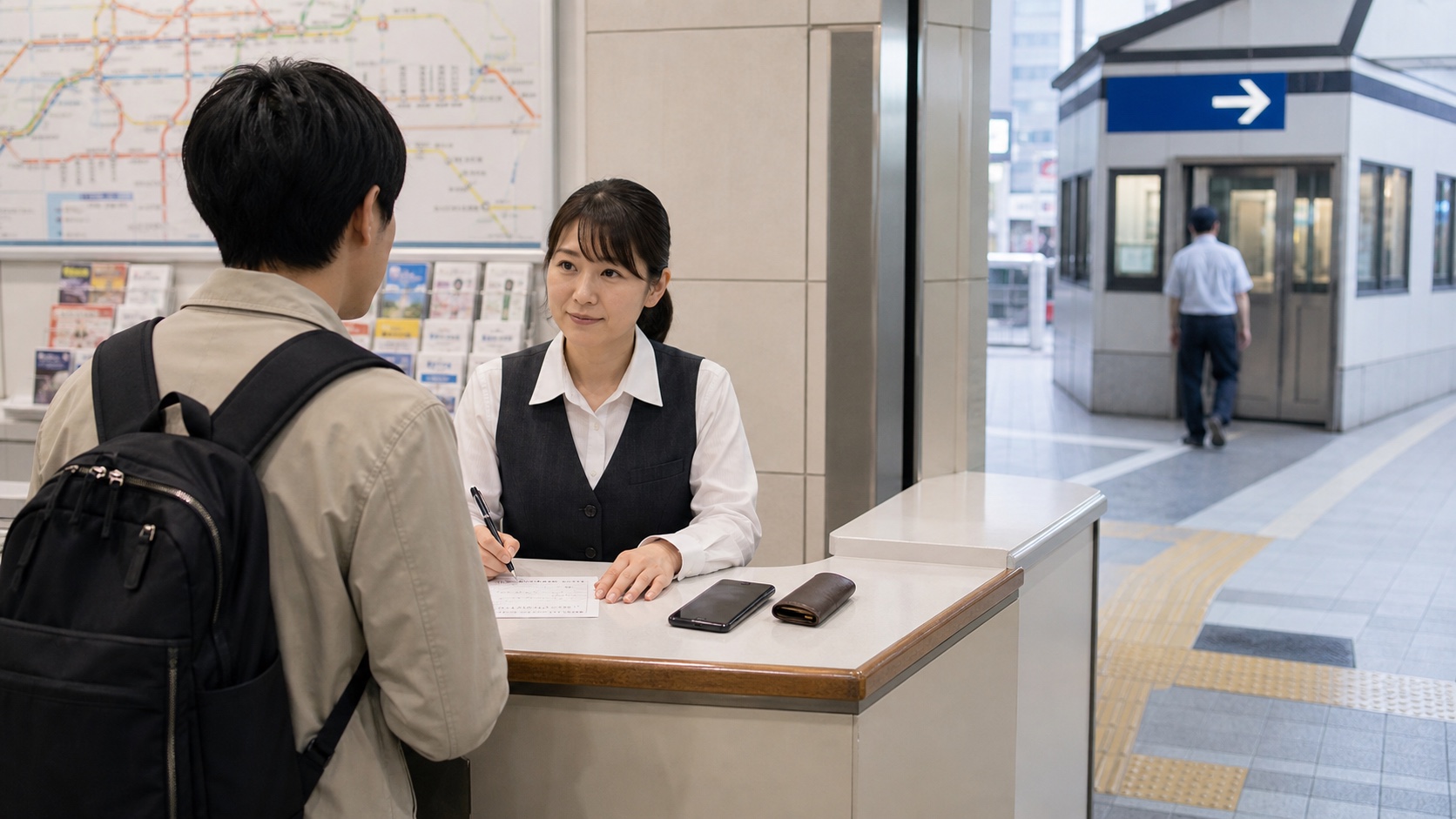
Start where the item most likely left your control. Contact the railway, airport, taxi, hotel, shop, museum, or attraction first when the loss happened inside its property or vehicle. Go to a nearby police box or police station when the place is uncertain, the item may have been stolen, or you need an official loss report. Block payment cards and a missing phone immediately through their issuers. For a lost passport, obtain the police documentation requested by your embassy or consulate and contact your own government mission in Japan.
Japan National Tourism Organization guidance states that a police report may be needed for passport replacement or insurance. Tokyo Metropolitan Police guidance also tells travelers to report lost property at a police station or koban, while a transport operator or facility may hold an item before it reaches police.
If you only do one thing: record the exact time, place, vehicle or facility, item details, and every reference number before moving to the next contact.
Who this guide is for
This guide is for visitors who lose a bag, wallet, payment card, phone, passport, camera, medication, ticket, or other property in Japan. It is also useful before travel because the fastest recovery often depends on information prepared earlier: serial numbers, a passport copy, card-issuer contacts, hotel address, travel insurance details, and access to accounts from another device.
This is not a substitute for instructions from police, an operator, an embassy, an insurer, or an issuing bank. Procedures differ by prefecture and organization. Use the decision path below, then follow the authority that actually holds the case.
| Where it was lost | First contact | Save |
|---|---|---|
| Train, station, bus, airport, or taxi | The operator or facility lost-and-found channel | Line, direction, time, car, seat, receipt, and inquiry number |
| Hotel, shop, restaurant, museum, or attraction | The facility | Visit time, transaction, floor, table, locker, and staff contact |
| Street, park, or uncertain place | Nearby police box or police station | Loss-report details and reference number |
| Passport or suspected theft | Police, then your embassy or consulate | Police documentation and consular instructions |
Step 1: freeze the situation before searching widely
Stop and reconstruct the previous hour. Check pockets, bag compartments, the hotel room, the payment counter, the restroom, the last seat, and any locker receipt. Ask a companion to call the item while another person checks the immediate area. Do not scatter the group or miss the last train while everyone repeats the same search.
Write an identifying description that does not rely only on color. Include brand, model, size, contents, marks, serial or IMEI number, case, strap, and language. For a wallet, list card issuers and approximate cash without publishing full account numbers. For a bag, identify one unusual internal object that helps establish ownership.
If the missing item can be misused, protection comes before recovery. Lock a phone remotely if the official device service is available, call card issuers, and secure important accounts from a trusted device.
Step 2: contact the place that controlled the space
Japanese transport operators and major facilities generally operate their own lost-and-found process. An item left on a train may move with the train, be collected at a terminal, remain with the operator for a period, and later transfer to police. Contact the correct operator rather than every railway in the city.
Provide the route in operational language: departure station, approximate time, destination, direction, train type, car number, seat, transfer, and where you noticed the loss. For a taxi, use the receipt, company, vehicle number, payment record, pickup, and drop-off. For a business, provide the floor, table, locker, purchase time, and receipt.
Ask what the next step is if the item is not yet registered and when to check again. A search database may not update immediately after property is handed in.
Step 3: use the police route correctly
Tokyo Metropolitan Police says a lost-property report can be made at a police station or police box. Local procedures and online availability vary, so follow the police authority for the place of loss. A police report records the loss; it does not prove that an item has already been found.
Bring identification if available and show a written description, location, date, and time. Ask for the report or reference information needed by an insurer, embassy, card issuer, or phone carrier. Use emergency number 110 for an emergency, crime, or immediate danger, not as a general lost-and-found hotline. A nearby koban or station is the normal in-person route for ordinary lost property.
If theft is suspected, say why and follow police instructions. Do not accuse a person publicly or attempt to recover property through confrontation.
Step 4: handle a lost phone, wallet, or cards
For a phone, contact the carrier, use the device maker's official lost-device controls, change exposed passwords, and preserve the IMEI or serial number. Remote location is a lead, not permission to enter private property or confront someone. Share it with police or the relevant operator.
For payment cards, contact each issuer through an official number. Check recent transactions and ask about replacement, emergency cash, or digital-wallet consequences. Preserve enough alternate payment for lodging and transport. Do not write complete card numbers in a police note or unsecured message.
If residence cards or other government documents are involved, follow the issuing authority's current replacement instructions. This visitor guide does not generalize procedures for residents.
Step 5: replace a passport through your own government
JNTO advises travelers to contact their embassy when a replacement passport is needed and notes that a police report may be required. The Ministry of Foreign Affairs of Japan maintains a current directory of foreign missions in Japan, but the replacement rules come from the traveler's own government.
Contact the embassy or consulate before traveling across the city. Ask what police document, photographs, citizenship evidence, itinerary, fee, appointment, and guarantor or witness are required. A photocopy does not replace a passport, but it can help identify the document and support the consular process.
After replacement, contact the airline, immigration authority, hotel, rail-pass issuer, or other organization if the old passport number was tied to a booking or eligibility document. Follow the embassy's advice about onward travel.
Build a recovery record
Use one note for every contact. Record organization, channel, staff name if provided, date and time, reference number, next action, and promised update. Photograph receipts and forms without exposing them publicly. Keep the original police or operator document where the insurer or embassy requires it.
If property is found after you leave Japan, collection or shipping rules depend on the custodian. Tokyo police publishes a process for some property shipping requests, but travelers must contact the appropriate police office first and may need identification and to pay shipping. Do not mail forms without confirming the case and destination.
| Record | Why it matters |
|---|---|
| Operator or police reference | Connects later calls to the correct case |
| Item identifiers | Helps distinguish similar property and prove ownership |
| Issuer cancellation time | Documents card or phone protection |
| Consular instructions | Prevents an unnecessary trip with missing documents |
Common mistakes and better fixes
| Common mistake | Better action |
|---|---|
| Calling police before the known train or shop | Contact the operator or facility first, then file the appropriate police report. |
| Waiting to block a card or phone | Protect the account immediately while recovery continues. |
| Giving only “black bag” as a description | Add brand, size, marks, contents, and identifiers. |
| Going to an embassy without calling | Confirm appointment, police document, proof, photographs, and fee first. |
| Treating a remote phone location as a recovery order | Share the information with police or the operator and avoid confrontation. |
What to verify on official sources
Verify the exact transport or facility lost-and-found channel, local police procedure, report availability, collection location, identification, retention, shipping, and hours. For a passport, use your own embassy or consulate's current emergency-document page. For cards and phones, use the issuer or carrier's official support channel.
Keep emergency numbers separate from ordinary inquiries. In Japan, 110 is police emergency and 119 is fire or ambulance. JNTO's visitor hotline and local tourist information can help with language and navigation, but do not replace the responsible authority.
Related tools and next steps
- IC cards and cash checklist — prepare a payment backup.
- Offline phone and navigation backup — keep hotel and route details accessible.
- Japan emergency alerts — separate lost property from a wider emergency.
- Japan planning hub — prepare documents before departure.
Official sources
- JNTO: Staying Safe in Japan (checked 2026-08-30)
- Tokyo Metropolitan Police: Lost and Found (checked 2026-08-30)
- Tokyo Metropolitan Police: Living Guide (checked 2026-08-30)
- Japan MOFA: Foreign Missions in Japan (checked 2026-08-30)
Plan your next step
FAQ
Where should I report an item lost on a train in Japan?
Contact the railway operator first with the line, direction, time, car, seat, and stations. Also follow police reporting instructions when the operator advises it or the place is uncertain.
Should I call 110 for an ordinary lost item?
No. Use a police box or police station for an ordinary lost-property report. Call 110 for an emergency, crime, accident, or immediate danger.
What should I do first after losing a credit card?
Contact the official issuer immediately to block the card and review transactions, while continuing the operator and police recovery process.
How do I replace a lost passport in Japan?
Follow police instructions for the necessary report, then contact your own embassy or consulate for its current replacement-document requirements.
Can police ship found property after I leave Japan?
Some custodians may offer a procedure, but you must contact the appropriate office first, confirm eligibility and documents, and expect shipping costs and restrictions.
What details help recover a lost item?
Provide the exact place and time, route or vehicle, brand, model, marks, contents, serial number where applicable, and every inquiry reference.