
Kyoto Craft Shopping: A Respectful Route for Meaningful Souvenirs
Learn first, then shop for Kyoto ceramics, lacquerware, textiles, bamboo, metalwork, and other crafts with a route that respects makers, neighborhoods, budgets, and packing limits.
At a glance
- Best for
- First-time
- Main decision
- Which spending range fits the route
- Time needed
- 15-30 minutes for a planning pass
- Official checks
- Opening hours, transport schedules, weather, reservations
- Related tool
- Japan Costs And Tips
learn enough to name the material and technique before deciding what to buy.
Quick answer
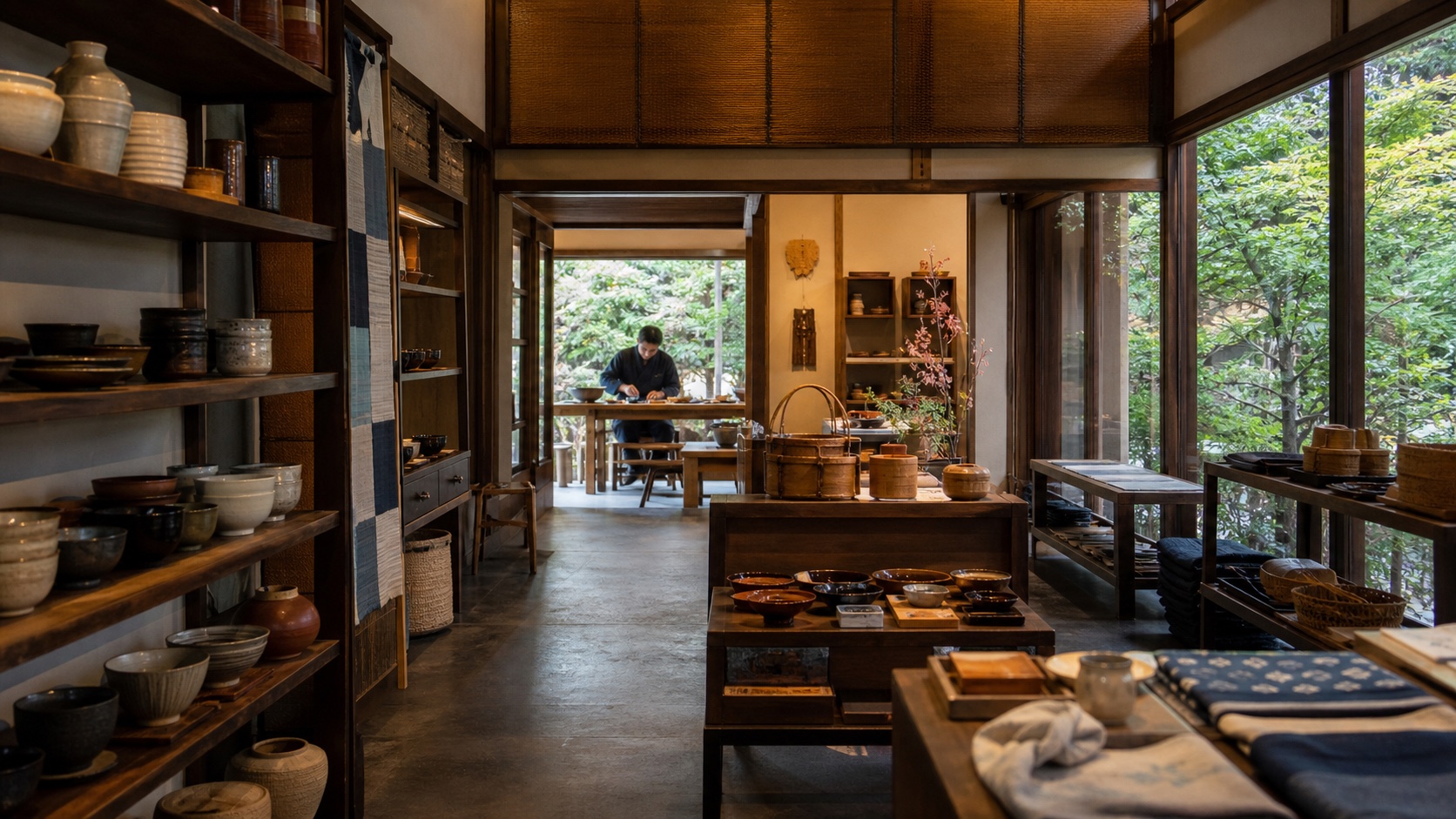
Begin with the Kyoto Museum of Crafts and Design or another verified learning stop, choose one or two craft categories, then shop in a district that fits the rest of the day. Ask about the maker, material, technique, care, origin, and shipping instead of buying only by appearance. A meaningful Kyoto souvenir does not need to be old or expensive; it should have a clear relationship to the craft and a use you understand.
Kyoto City's official tourism guidance says the museum presents Kyoto's traditional craft disciplines and production processes, while its shopping pages connect visitors with shops, markets, sweets, textiles, and contemporary uses of traditional techniques. Current exhibitions, workshops, opening hours, and store stock remain site-specific.
If you only do one thing: learn enough to name the material and technique before deciding what to buy.
Who should use this route
This guide is for visitors seeking ceramics, lacquerware, textiles, paper, bamboo, metalwork, incense, tea utensils, or practical design goods with Kyoto context. It helps first-time buyers avoid a random souvenir crawl and helps repeat visitors spend more time with a specific material or maker.
It is not an authenticity certificate or valuation service. “Made in Japan,” “designed in Kyoto,” “Kyoto craft,” “antique,” and “handmade” can describe different things. The seller or maker must explain the individual object, and high-value purchases may require written provenance, insurance, export checks, and specialist advice.
| Goal | Best starting point | Useful question |
|---|---|---|
| Understand many craft types | Kyoto Museum of Crafts and Design | Which technique made this surface or form? |
| Buy practical contemporary work | Museum shop or documented craft retailer | Who made it and how should it be used? |
| Meet a maker or try a workshop | Officially listed booked experience | What is included, translated, and taken home? |
| Browse a market | Market's current official schedule | Is the seller the maker, dealer, or collector? |
Start at the museum to build a vocabulary
Kyoto City's official coverage of the Kyoto Museum of Crafts and Design explains that it presents craft categories, tools, materials, production processes, and contemporary directions. Use the visit to compare ceramics, dyeing and weaving, lacquer, metal, wood, bamboo, paper, and other disciplines before a shop's product selection narrows the story.
Check the museum's own current site for hours, closure dates, admission, exhibitions, demonstrations, workshops, photography, and shop access. An older tourism feature can explain the institution without guaranteeing today's program. Allow enough time to read or watch process material rather than using the museum only as a retail entrance.
Take notes about materials and care, not photographs of every display. Photography rules vary, and a short written list makes later shopping more deliberate.
Choose one geographic route after the learning stop
Okazaki works when the museum, nearby cultural institutions, and a craft-focused shop or workshop are the main day. Central Kyoto works when shopping must connect with Shijo, Karasuma, Kawaramachi, or Nishiki. Gion and Kiyomizu can add pottery and traditional streets, but Kyoto City's guidance reminds visitors that these are living neighborhoods with private lanes and local rules.
Do not combine Okazaki, Kiyomizu, Arashiyama, and a northern workshop simply because each appears in a craft search. Choose one area after the museum. The transfer saved can become time for a proper conversation, demonstration, or careful purchase.
Markets require special checks. Kyoto's official market guide says schedules can be irregular and directs visitors to the market's own site. A familiar monthly date does not guarantee operation during weather, ceremonies, or special events.
Ask questions that respect both maker and buyer
Begin with the object: who made or designed it, where it was produced, which material and technique were used, how it should be cleaned, whether food contact is appropriate, and whether repair is possible. For textiles, ask about fiber, dye, color transfer, washing, and sunlight. For lacquer, ceramics, bamboo, and metal, ask about moisture, heat, microwave, dishwasher, rust, and storage.
Do not demand a long free demonstration or bargain in a fixed-price store. Ask before photographing people, workspaces, tools, or production. A maker may be comfortable explaining a process while protecting patterns, clients, or unfinished work.
If language is difficult, use short questions and the written product card. A translation app can help, but do not turn an uncertain machine translation into a firm claim about provenance.
Distinguish a craft purchase from a generic souvenir
A useful object can be both contemporary and rooted in traditional skill. The Kyoto museum's official coverage emphasizes that crafts continue to evolve in fashion, architecture, interiors, and daily life. Do not reject a modern form merely because it is not an antique pattern.
At the same time, a Kyoto-themed motif does not establish Kyoto production. Read the label and ask. For an expensive object, request a receipt, maker information, material description, care instructions, and any box or certificate normally provided. If the answer remains unclear, buy it only as a design object at the price you are comfortable paying.
| Label or claim | What it may mean | What to verify |
|---|---|---|
| Kyoto design | Designed locally but possibly produced elsewhere | Designer and place of production |
| Traditional technique | A recognized process used in a modern object | Technique, material, and maker |
| Handmade | Some or all steps performed by hand | Which steps and by whom |
| Antique or vintage | Age claim with different legal and market meanings | Age, condition, provenance, export rule |
Book workshops as experiences, not shopping shortcuts
A workshop can clarify material and labor, but it may be designed for beginners and may not take place in a production studio. Verify the provider, venue, language, duration, age limit, accessibility, cancellation, clothing requirements, and what the participant actually makes. Ask whether firing, drying, finishing, or later shipping is required.
Kyoto City's experience listings can help discovery, while the operator controls the booking. Do not arrive at a small workshop without a reservation because an old article mentioned demonstrations. When a maker is teaching, follow tool and photography rules and avoid comparing a beginner's output with retail work.
For families, choose one process with a realistic attention span. A shorter structured activity can be more meaningful than several rushed retail stops.
Pack and ship according to material
For ceramics, protect rims, handles, lids, and contact between pieces. For lacquer, avoid abrasion, heat, and pressure. For textiles and paper, protect against moisture and crushing. For bamboo, wood, plant materials, and antiques, check destination-country biosecurity and customs rules before buying.
Ask whether the shop offers domestic hotel delivery, international shipping, tracking, insurance, customs documentation, and damage claims. Keep receipts and product descriptions outside the wrapped parcel. Photograph condition before shipment when the seller permits.
Do not let tax-free packaging or a beautiful gift box replace protective packing. Airline baggage limits and import rules remain the traveler's responsibility.
Shop without damaging Kyoto's neighborhoods
Kyoto City's responsible-travel guidance asks visitors to respect residents, avoid unauthorized photographs of geiko and maiko, stay out of private property, use public transport, reduce waste, and support local culture. These rules still apply when a street is full of shops.
Do not block a narrow lane while comparing maps, arrange product photography on a resident's doorway, or eat while walking where local guidance asks visitors not to. Carry a reusable bag when practical, but let staff pack fragile work correctly. Keep groups small inside compact shops.
Respectful shopping means leaving time, asking permission, paying the posted price, and treating the craft as more than a background for social media.
Common mistakes and better fixes
| Common mistake | Better action |
|---|---|
| Buying by Kyoto motif alone | Ask about maker, material, technique, and production place. |
| Crossing the city for many small shops | Choose one learning stop and one shopping district. |
| Photographing makers without asking | Request permission before photographing people or work. |
| Trusting an old market schedule | Check the organizer for the exact date. |
| Buying fragile work without a transport plan | Resolve packing, shipping, insurance, and customs first. |
What to verify on official sources
Verify the museum or workshop's current hours, closure, exhibition, language, reservation, age limit, accessibility, photography, cancellation, and shipping. Verify a shop's maker claims, materials, care, returns, tax-free participation, and delivery before payment. Verify markets with the organizer.
Use Kyoto City's official travel pages for context and responsible behavior, then use the museum, maker, shop, or organizer as the final source for the individual experience or object.
Related tools and next steps
- Trip Planner — keep the route to one practical district.
- Budget Calculator — include workshops, packing, and shipping.
- Temple and shrine etiquette — prepare for craft markets and shops near religious sites.
- Kansai region guide — fit Kyoto shopping into the wider route.
Official sources
- Kyoto City: Crafts and Design (checked 2026-08-30)
- Kyoto City: Museum of Crafts and Design (checked 2026-08-30)
- Kyoto City: Monthly and Seasonal Markets (checked 2026-08-30)
- Kyoto City: Responsible Travel (checked 2026-08-30)
Plan your next step
FAQ
Where should I start a Kyoto craft shopping day?
Start at the Kyoto Museum of Crafts and Design or another verified learning stop, then choose one nearby shopping area based on the material you want.
How can I tell whether a souvenir was made in Kyoto?
Read the product information and ask who made it, where it was produced, which material and technique were used, and whether written maker information is available.
Can I photograph artisans at work?
Only with permission. Workshops may protect people, clients, patterns, tools, and unfinished work even when the retail area permits photographs.
Do Kyoto craft markets run every month?
Schedules vary and can be irregular. Check the official organizer for the exact date, weather policy, and location.
Are Kyoto craft workshops suitable for children?
Some are, but verify age, tools, duration, language, supervision, accessibility, and whether finishing or later shipping is required.
Should I ship expensive crafts home?
Consider insured professional shipping when the object is fragile, large, or valuable. Confirm tracking, customs documents, damage claims, and destination rules first.