
Hakone Weather Backup Plan: What to Do When Views Disappear
Rebuild a Hakone day around live transport status, museums, onsen, shorter loops, and an early return when rain, wind, fog, or closures remove the views.
At a glance
- Best for
- Family
- Main decision
- Which spending range fits the route
- Time needed
- 15-30 minutes for a planning pass
- Official checks
- Opening hours, transport schedules, weather, reservations
- Related tool
- Japan Costs And Tips
check Hakone Navi's operation status before leaving the Tokyo-area gateway.
Quick answer
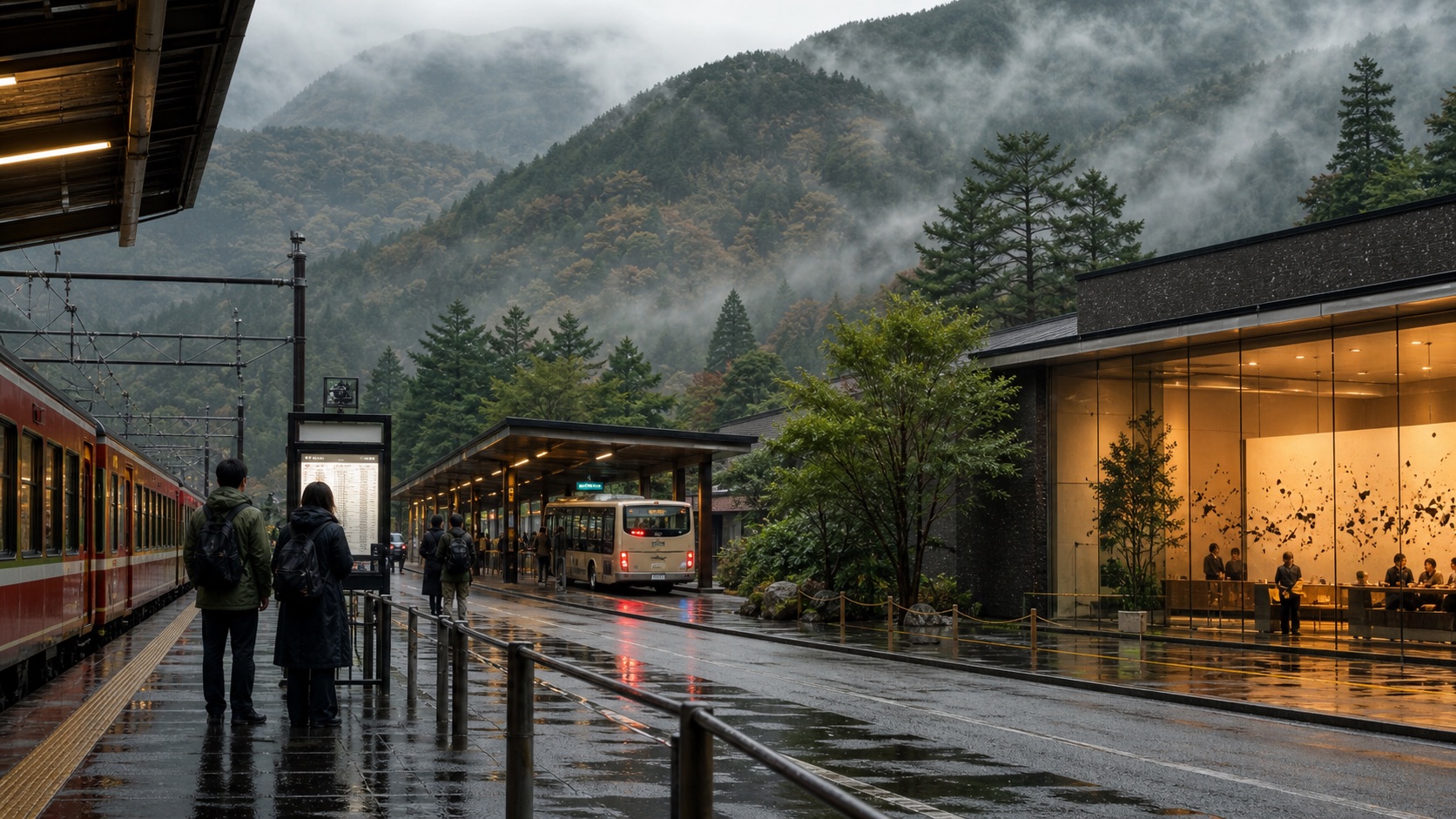
When Hakone is cloudy but transport is operating, keep the trip and shift value from Mount Fuji views to art, onsen, food, and a shorter mountain loop. When wind, heavy rain, snow, volcanic controls, or maintenance suspends a key link, stop treating the classic round course as one connected route. Choose one accessible area, verify the return, and remove the lake or ropeway segment that no longer works.
Hakone Navi's official home page publishes real-time operation and congestion information. Its ropeway guidance states that service may be suspended for adverse weather, maintenance, or mechanical trouble. This live status matters more than a generic forecast.
If you only do one thing: check Hakone Navi's operation status before leaving the Tokyo-area gateway.
Who should use this plan
This guide is for day trippers from Tokyo, overnight visitors, families, museum travelers, and anyone whose Hakone plan depends on Mount Fuji, the ropeway, Owakudani, or Lake Ashi. It is most useful when the forecast is uncertain rather than clearly dangerous.
Bad visibility is not the same as unsafe travel, and a closed ropeway is not the same as a closed region. The right response depends on what operates, where the group is staying, and whether the replacement still justifies the transport time.
| Condition | Best response | Verify |
|---|---|---|
| Cloud or light rain, normal transport | Museum plus onsen or a shortened loop | Museum tickets and final return |
| Ropeway suspended | Stay on one side of the mountain or use the official replacement route | Current bus and rail status |
| Cruise suspended or poor lake conditions | Museum, Gora, Sengokuhara, or Hakone-Yumoto focus | Port notices and return route |
| Severe weather or broad disruption | Delay, stay near the hotel, or return early | Official warnings and operator instructions |
Separate visibility from operation
Mount Fuji may disappear behind cloud while trains, buses, the ropeway, and cruise operate normally. In that case, decide whether the group still values the volcanic landscape, lake, museums, and onsen. Do not cancel solely because a weather app shows a cloud icon.
Conversely, sunshine at the hotel does not prove the ropeway or lake service is operating. Mountain wind and maintenance can affect individual links. Read the live operation panel and the specific operator page.
A view-dependent day should have a non-view anchor before tickets and transfers are purchased.
Build an art and onsen fallback
Hakone is a major museum destination. Hakone Navi describes the Pola Museum of Art's large collection and forest setting, and its official planning material lists the Open-Air Museum, Okada Museum of Art, Narukawa Art Museum, and other choices. Some sites include outdoor areas, but the core collection can still provide value in poor visibility.
Choose one museum near the transport that is operating. Pola Museum is linked by bus in the Sengokuhara area; the Open-Air Museum is near the mountain railway; Okada Museum is in Kowakudani. Verify current route, opening, admission, exhibition, and indoor/outdoor balance with the venue.
Add an onsen only when the facility explicitly allows the intended access. Day-use hours, tattoos, towels, cleaning, and private baths vary. An overnight ryokan can absorb poor weather better than a rushed Tokyo day trip.
Shorten the classic loop
The standard round course can involve mountain rail, cable car, ropeway, cruise, and bus. Its appeal is the connected sequence, but that also creates several failure points. When one segment closes, do not preserve the full geographic loop at any cost.
A Gora and museum day can use the mountain railway and nearby buses. A Hakone-Yumoto day can combine the town, food, and confirmed bathing. A Sengokuhara day can focus on art and indoor attractions when its bus corridor is operating. A Lake Ashi day makes sense only when lake-area access and return services are clear.
Use Hakone Navi's route search for the current origin and destination, then protect an earlier return because mountain roads can be delayed.
Decide at three checkpoints
The night before: check weather, official transport notices, museum closures, hotel access, and whether the main view-dependent activity still has value.
Before leaving the base: check live Hakone operation status again. If a key segment is suspended, switch to a prepared single-area plan before buying the wrong pass or train.
At the gateway: check the latest status at Odawara or Hakone-Yumoto. Keep the phone available and know the final normal return.
Do not keep escalating commitment simply because the group has already traveled partway.
Passes and tickets in disrupted conditions
A transport pass can still be convenient when several included services operate, but it does not guarantee operation or compensation. Read the current pass conditions and service notices. Compare the live route with individual tickets when the loop is substantially reduced.
Museum combination products or discounts can be useful only after choosing the venues. Do not buy a broad attraction product before checking current exhibitions, closures, and the time needed to reach them.
Keep receipts and ask staff about operator procedures when a paid service is suspended. This guide cannot determine refund eligibility.
Families, luggage, and overnight guests
Families should reduce transfers earlier than solo travelers. Wet platforms, stairs, buses, strollers, and tired children turn a small disruption into a difficult day. Choose one museum with food and rest options, then add only a confirmed nearby activity.
Leave large luggage at the accommodation or use a confirmed forwarding or storage service. A crowded mountain bus is not a good place to carry several suitcases. Overnight guests should ask the property about shuttle changes and the best route during suspension.
Carry a waterproof layer and warm layer because Hakone can feel cooler than central Tokyo, particularly around exposed mountain links.
Know when Tokyo is the better backup
Keep the day in Tokyo when several Hakone transport links are disrupted, severe weather advice is active, the only desired experience is a Fuji view, or the replacement requires more mountain travel than the group can comfortably manage. A Tokyo museum, neighborhood food day, or later Hakone date can preserve more value than continuing because tickets were already considered.
If Hakone is the only possible day, compare the cost of changing reservations with the quality of the reduced plan. An overnight guest with a confirmed hotel route may still have a calm onsen and museum day, while a Tokyo day tripper facing a long disrupted return may be better rescheduling. Make the decision before entering the mountain network whenever official information is clear enough.
Common mistakes and better fixes
| Common mistake | Better action |
|---|---|
| Canceling because Fuji is hidden | Compare the remaining art, onsen, and landscape value. |
| Assuming the whole loop works | Check every key operator segment. |
| Forcing a detour around a closed link | Choose one side of the mountain and shorten the day. |
| Buying a pass before checking status | Build the live route first, then compare tickets. |
| Returning on the last practical bus | Use an earlier return when roads or weather are unstable. |
What to verify on official sources
Check Hakone Navi for live operation, congestion, route search, timetable, seasonal weather context, and operator notices. Check the ropeway and cruise pages for their own status and maintenance. Check each museum or onsen for opening, ticket, last admission, access, photography, and temporary closure.
Use JMA and local emergency guidance for severe weather. A tourism fallback is never more important than an official warning.
Related tools and next steps
- Trip Planner — save a normal loop and a one-area backup.
- Hakone day trip or two days — decide whether an overnight reduces pressure.
- Onsen day visit or ryokan — choose the right weather-resistant experience.
- Japan transport hub — rebuild the route after a suspension.
Official sources
- Hakone Navi: live Hakone operation information (checked 2026-08-30)
- Hakone Navi: transportation and route planning (checked 2026-08-30)
- Hakone Navi: ropeway operation and weather conditions (checked 2026-08-30)
- Hakone Navi: Pola Museum of Art (checked 2026-08-30)
Plan your next step
FAQ
Is Hakone worth visiting if Mount Fuji is hidden?
Yes when transport is operating and the group values museums, onsen, volcanic scenery, food, or a slower mountain day. Choose a non-view anchor first.
Where should I check Hakone transport status?
Use Hakone Navi's live operation information and the specific ropeway, cruise, rail, or bus operator page before departure.
What should I do if the Hakone Ropeway is closed?
Follow official replacement guidance or stay on one side of the mountain. Do not force the full round course through a long improvised detour.
Which Hakone museums work in bad weather?
Pola, Okada, and other museums can anchor a poor-visibility day, while the Open-Air Museum has substantial outdoor space. Verify the exact venue and conditions.
Should I buy the Hakone Freepass before checking weather?
Check the live route first. A pass may still be useful, but it does not guarantee that every included service operates.
When should I cancel or leave Hakone early?
Delay or leave when official warnings, broad transport disruption, or the group's safety and comfort make the replacement day poor value.