
Yaeyama Island Hopping with Kohama: A Practical Ferry Plan
Plan Kohama from Ishigaki with a current ferry check, one-island rule, bicycle and luggage decisions, sea-condition buffer, and respectful Yaeyama pacing.
At a glance
- Best for
- First-time
- Main decision
- Which base reduces time, cost, and luggage friction
- Time needed
- 20-30 minutes before booking hotels
- Official checks
- Hotel location, cancellation rules, room size, station access
- Related tool
- Where To Stay Hub
take a screenshot of the operator's same-day return options and operating status before leaving Ishigaki Port.
Quick answer
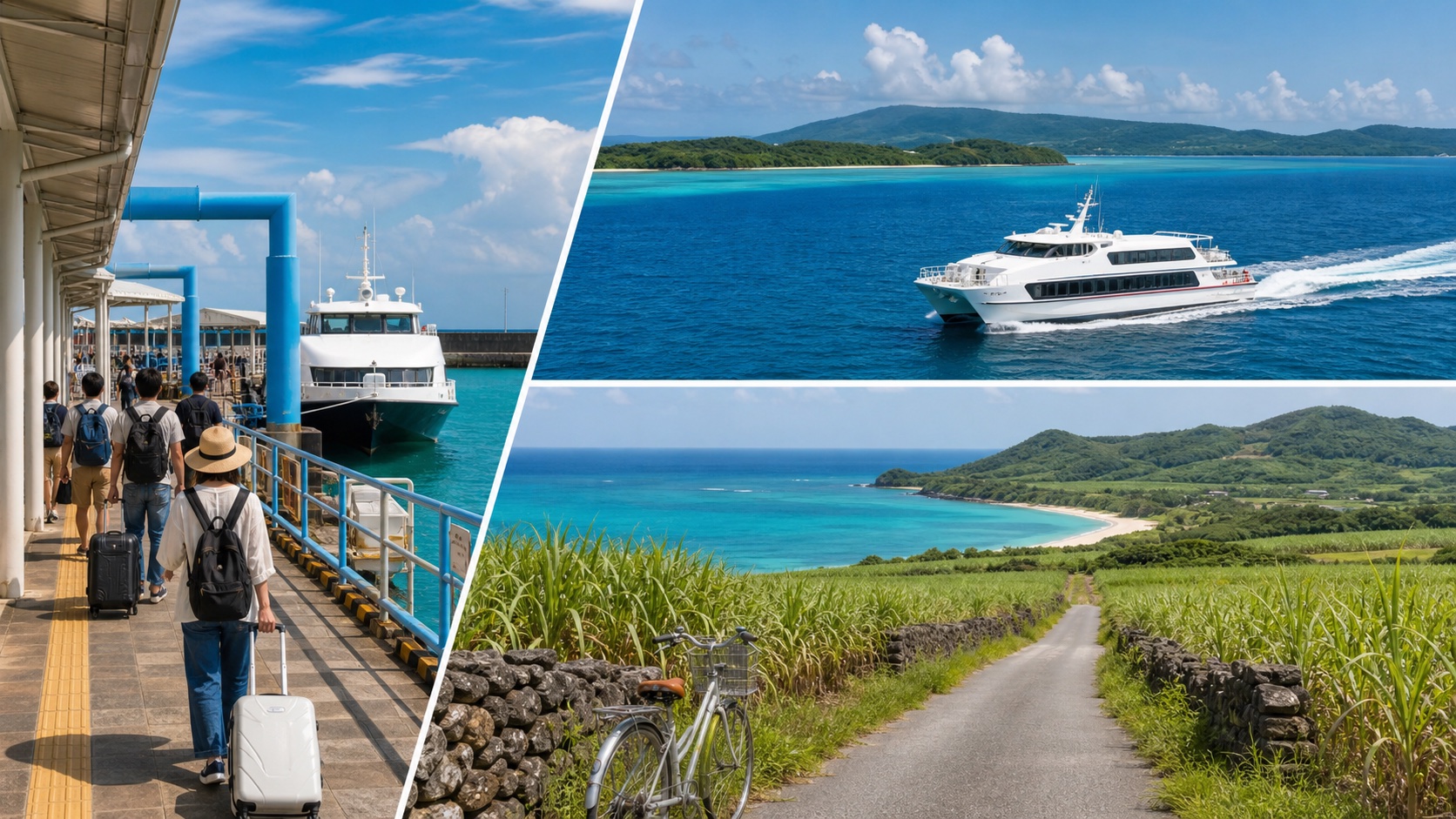
For a first Yaeyama island-hopping day, choose one main island. Kohama works well when you want a slower bicycle or shuttle-based landscape of sugarcane fields, low hills, beaches, and small-island life. Ishigaki should remain the operational base unless an island accommodation is part of the plan.
The Official Okinawa Travel Guide states that high-speed ferries reach Kohama from Ishigaki, Taketomi, and Iriomote's Ohara Port, with journeys generally taking 20 to 40 minutes depending on the service. That short crossing does not make a multi-island day automatically easy. Sea conditions, separate operator timetables, local transport, heat, and the final return still control the day.
If you only do one thing: take a screenshot of the operator's same-day return options and operating status before leaving Ishigaki Port.
Who should choose Kohama
Kohama suits repeat Okinawa visitors, couples, cyclists, slow travelers, and anyone who wants a quieter island day than a rapid attraction circuit. Taketomi is often the simpler first island because the crossing is short and the village experience is compact. Iriomote is better when a guided nature activity is the clear goal. Kohama sits between them: more space and route planning than Taketomi, less expedition structure than an Iriomote activity day.
Travelers who dislike heat, cannot cycle safely, or need guaranteed step-free transport should arrange a local shuttle, tour, or accommodation transfer in advance. A bicycle should be an informed choice, not a default.
| Island choice | Best for | Planning focus |
|---|---|---|
| Kohama | Bicycle scenery and a slower island day | Heat, rental return, and ferry buffer |
| Taketomi | Simple first outing and compact village time | Respectful village access and return crowds |
| Iriomote | Guided nature and active excursions | Correct port, guide, and weather rules |
| Two islands | Experienced visitors with a current connection | One delay can remove the second island or return |
Start at Ishigaki Port, not with an abstract map
Ishigaki City's remote-island terminal is the working gateway for passenger services to Taketomi, Iriomote, Kuroshima, Kohama, and Hatoma. Ticket counters, shops, food, tour desks, and an ATM are inside, but that does not remove peak-time queues. Arrive early enough to find the correct company and boarding area.
Two major operators publish schedules and operating status: Anei Kanko and Yaeyama Kanko Ferry. Check the company named on the ticket. Services and through-connections should not be assumed interchangeable merely because both use the terminal. The current operator page controls departure, fare, reservation method, and disruption.
Leave large bags at the hotel or a suitable facility on Ishigaki. A rolling suitcase is a poor companion on a small-island bicycle and can complicate boarding or local transfer.
Step-by-step Kohama day
Step 1: Check sea conditions and both the outbound and return. Read the current timetable and live operating status on the travel morning. Keep at least two return options when the published schedule allows it.
Step 2: Reach the terminal with a margin. Confirm the operator, ticket method, boarding place, and any fuel surcharge or same-day condition. Do not arrive based on the boat's departure minute.
Step 3: Solve movement on Kohama before arrival. Reserve or identify a bicycle, shuttle, tour, or hotel transfer. The island's gentle image does not mean every route is short, shaded, or flat in strong heat.
Step 4: Choose two or three anchors. Sugar Road, a village walk, a viewpoint such as Mt. Ufudaki, and a beach or cafe can create a full day. Do not race through every marked place.
Step 5: Return to the port early. Allow time for rental return and local transfer. The ferry will not wait because a bicycle route took longer than expected.
Bicycle, heat, and beach decisions
The official Okinawa guide notes that many Kohama accommodations offer bicycle rentals. Confirm the bicycle type, e-assist availability, helmet, return time, payment, and breakdown contact. An e-bike can help in heat and on inclines, but it does not reduce sun exposure or make an unpaved route safe.
Carry more water than a city walk requires, use sunscreen and a hat that can be secured, and plan shade. In the hottest part of the day, a shorter route or shuttle may be more enjoyable than forcing a full island loop.
Use designated swimming areas and follow local signs, lifeguards, accommodation guidance, and marine-activity operators. Coral coasts can have currents, sharp surfaces, limited facilities, and seasonal hazards. A beautiful shoreline is not automatic permission to swim.
When two islands can work
A two-island day is reasonable only when the current timetable provides a direct or reliable connection, the first island activity has a fixed end, the second visit has a clear purpose, and there is a protected return to Ishigaki. It is not enough that a route existed in last year's PDF.
Kohama plus Taketomi may look attractive on a map, while Kohama plus Iriomote may appear efficient because ferries can connect in some periods. In practice, the second island can turn into waiting at a port. First-time visitors should spend the saved transfer time on one island.
| Common mistake | Better move |
|---|---|
| Choosing three islands by map distance | Choose one island by the actual experience. |
| Using an old timetable PDF | Open the operator's current timetable and status. |
| Cycling with large luggage | Store bags on Ishigaki and carry a day pack. |
| Swimming at an unsupervised pretty beach | Use designated areas and current local safety guidance. |
| Taking the final return before a flight | Sleep on Ishigaki and fly the following day. |
Weather and cancellation fallback
Typhoons, strong wind, and sea conditions can disrupt ferries. Check the Japan Meteorological Agency forecast and operator status. When service is uncertain, keep an Ishigaki day ready: food, town, a museum, a protected coastal stop, or another activity that does not depend on an exposed crossing.
If the outbound operates but later conditions are expected to worsen, follow the operator's guidance and consider returning early. Do not attach an island day to the same evening's flight. Travel insurance and flexible bookings help, but they do not create a boat.
Overnight on Kohama or return to Ishigaki
Stay on Kohama when the accommodation, quiet evening, or early-morning landscape is the main reason for the island. Confirm the property's port transfer, dinner, breakfast, bicycle return, and response to ferry disruption. Return to Ishigaki when the next day involves a flight, another operator, or a fixed tour from the main terminal. An island night adds depth but removes some transport redundancy, so it should be chosen for the stay itself, not to avoid checking the final afternoon boat.
Keep essential medication, one change of clothes, and booking contacts in the day bag whenever a weather delay could unexpectedly extend the stay.
What to verify on official sources
Check Visit Okinawa for Kohama's destination overview, Ishigaki City for the terminal, and the chosen ferry operator for the current timetable, fare, ticket rules, and operating status. Confirm bicycle, shuttle, beach, activity, and accommodation information with the actual provider.
Recheck on the morning of travel. Ferry information is one of the facts that should never be copied once and treated as permanent.
Related tools and next steps
- Trip Planner — keep an Ishigaki night before and after the island day.
- Region Finder — prepare a non-ferry alternative.
- Season Packing Planner — plan sun, heat, rain, and marine gear.
- Okinawa guide — compare Yaeyama with Okinawa's main island.
Official sources
- Official Okinawa Travel Guide: Kohama Island (checked 2026-08-30)
- Ishigaki City: remote-island terminal (checked 2026-08-30)
- Anei Kanko: current timetable (checked 2026-08-30)
- Yaeyama Kanko Ferry: timetable and status (checked 2026-08-30)
Plan your next step
FAQ
How long is the ferry from Ishigaki to Kohama?
The Official Okinawa Travel Guide gives a general range of 20 to 40 minutes depending on the service. Check the chosen operator's current timetable for the exact sailing.
Is Kohama a good first Yaeyama island?
Yes for travelers who want a slow bicycle or shuttle-based landscape day. Taketomi is usually simpler for the shortest first outing.
Can I combine Kohama and Iriomote in one day?
Only when the current timetable and a fixed local plan make the connection reliable. Most first-time visitors should give one island the full day.
Do I need to reserve a bicycle on Kohama?
Reserve when cycling is essential, especially for an e-bike or busy period. Confirm the return time, helmet, payment, and breakdown contact.
What happens if ferries are canceled?
Follow the operator's live status and instructions. Keep an Ishigaki backup day and avoid a same-day flight after the island.
Can I swim at any Kohama beach?
No. Use designated areas and follow current local, lifeguard, accommodation, or operator guidance about currents, weather, and seasonal hazards.